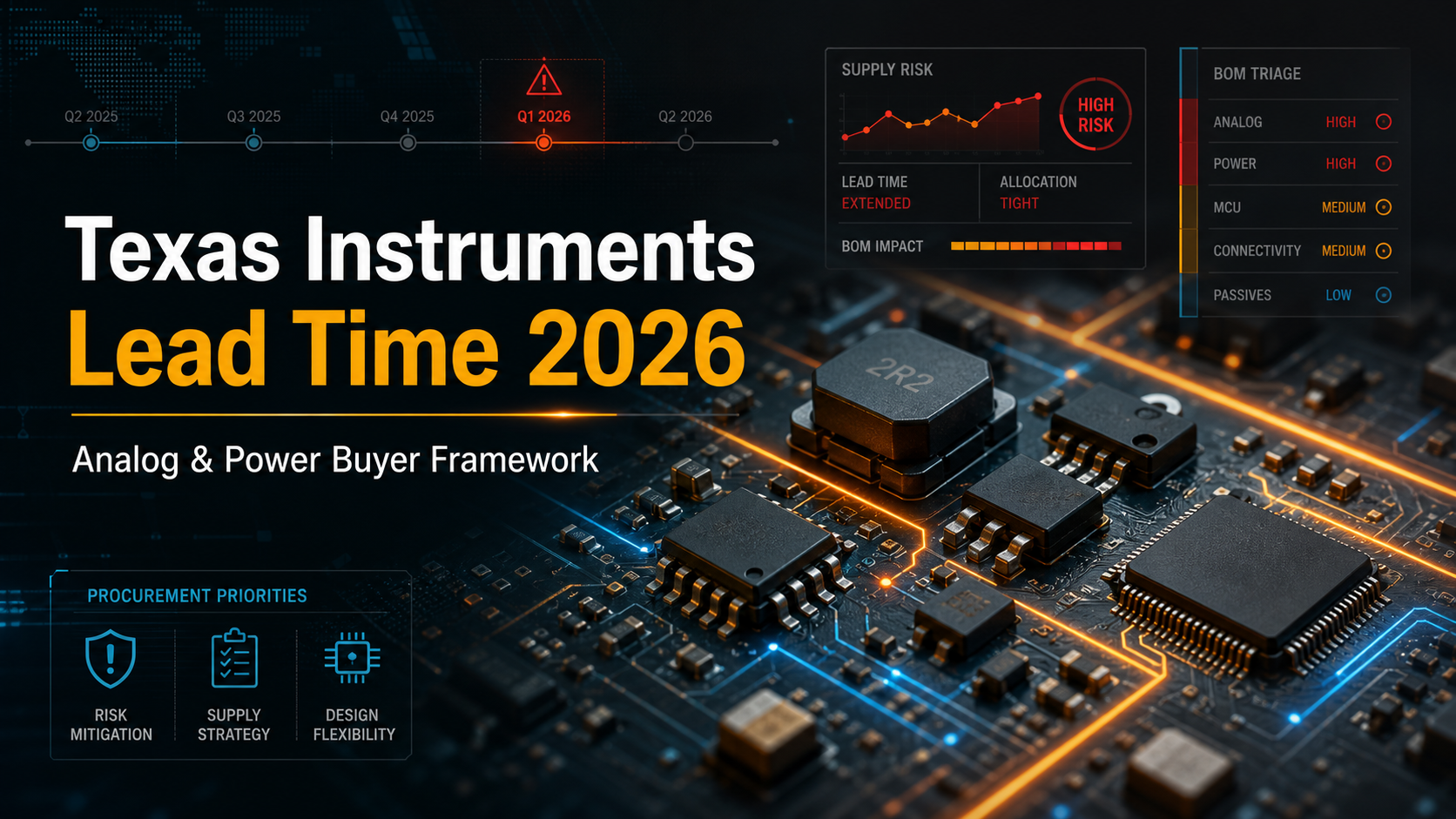
A buyer-facing framework for Texas Instruments analog and power IC exposure in 2026, covering what is confirmed, where price and lead-time pressure is most likely to show up, and which actions sourcing teams should take first.

Electronic components blog
Follow electronic components market updates, part selection guides, replacement strategies, EOL notices, and supply-chain risk signals built for sourcing teams and engineers.
Latest Articles
Showing 3 articles connected to procurement strategy, with coverage across semiconductor market signals, component sourcing decisions, cross-reference work, and lifecycle risk.

A buyer-facing framework for Texas Instruments analog and power IC exposure in 2026, covering what is confirmed, where price and lead-time pressure is most likely to show up, and which actions sourcing teams should take first.


A 2026 buyer and engineering guide to Murata MLCC exposure in AI-server and high-reliability designs, covering high-capacitance ceramic capacitor demand, source boundaries, DC-bias checks, dielectric limits, and substitution risk.

A buyer checklist for the STMicroelectronics June 2026 price adjustment, covering confirmed notice facts, BOM exposure review, quote validity, alternate boundaries, and incoming quality checks.
Blog FAQ
A quick guide to what this archive covers, how it supports sourcing and engineering work, and how to navigate it efficiently.
The blog focuses on semiconductor market updates, component sourcing strategy, replacement-part analysis, obsolete and EOL risk, technical selection guidance, and supply-chain signals that affect real purchasing and engineering decisions.
No. It is written for sourcing teams, buyers, and engineers who need faster context on market moves, lifecycle signals, technical tradeoffs, second-source choices, and part-level decision making.
Use the topic filters to narrow the archive to one theme, such as pricing, cross-reference, obsolescence, or application-driven guidance, so you can review related posts without scanning the full list.
Start with the newest posts for current market signals, then move through older pages when you need broader historical context on sourcing patterns, manufacturer updates, and engineering decisions.