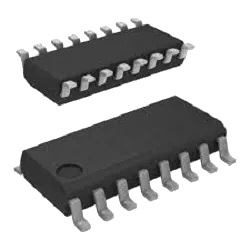
- DDR5
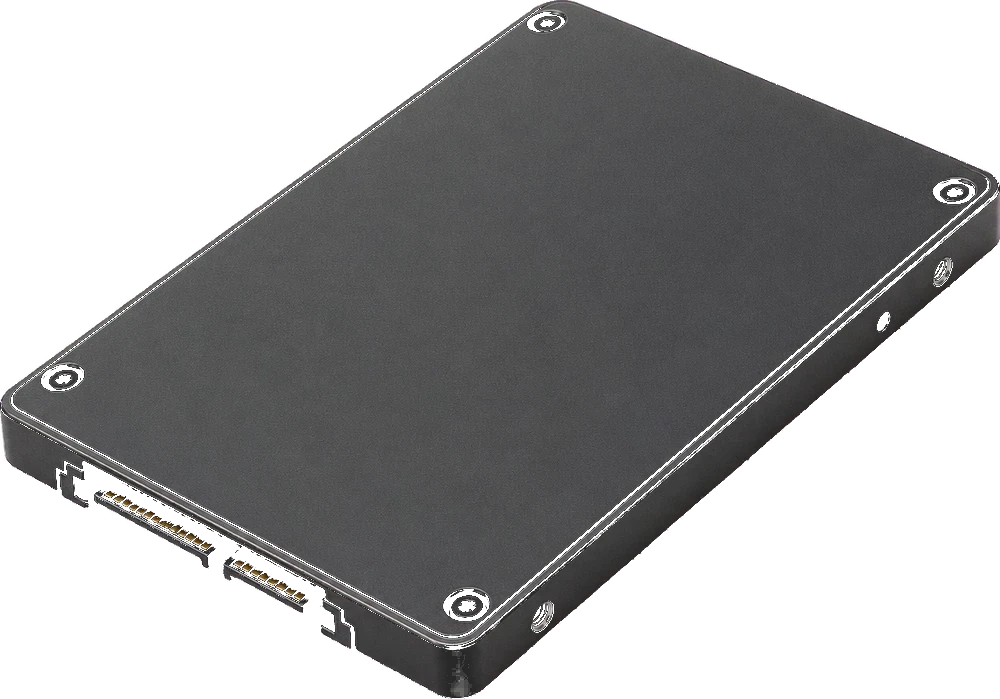
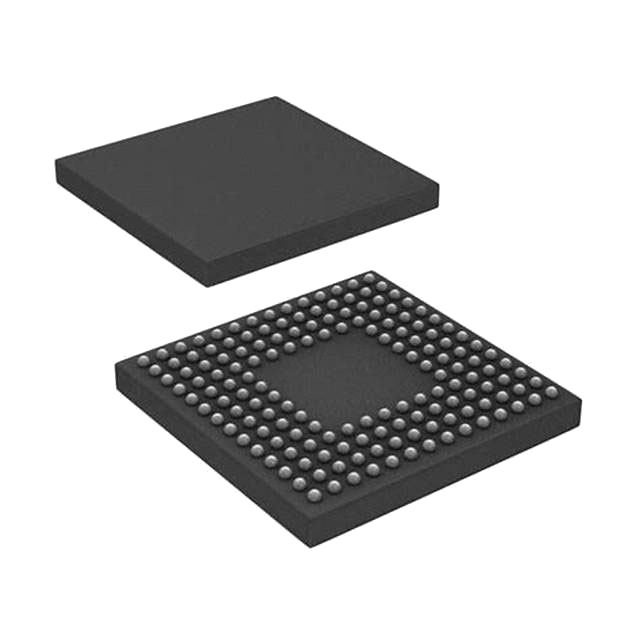
- NAND Flash
- SSD
- DRAM
2026 Memory and SSD Procurement Strategy: DDR5, NAND, eMMC, and UFS Risk Checks
A procurement framework for 2026 memory sourcing, covering DDR5, NAND flash, SSD, eMMC, UFS, allocation risk, authenticity checks, and RFQ timing.
Quick facts
- A 2026 memory procurement strategy should separate market evidence, engineering constraints, and sourcing action before buyers lock a PO.
- DDR5, LPDDR, raw NAND, eMMC, UFS, and SSDs carry different risks; capacity alone is not enough to approve a substitute.
- For SSD procurement and managed-flash buys, controller behavior, firmware, endurance, retention, interface, and lifecycle status can matter as much as price.
- Open-market memory offers need traceability, label photos, date-code review, packaging evidence, and sample-screening rules before production release.
For 2026 memory sourcing, the buyer's question should not be "Is there a memory shortage?" That framing is too broad to guide a purchase order. A better question is: which BOM lines have allocation, lifecycle, compatibility, or authenticity risk, and what evidence is required before procurement commits?
This article is written for IT procurement, hardware sourcing, SQE, NPI, and engineering teams buying DDR5, LPDDR, raw NAND, eMMC, UFS, and SSDs. It turns broad memory-market noise into a practical review system: risk signal, engineering constraint, sourcing action, and evidence required before PO.
Source Basis and Evidence Boundary
This article reflects public information reviewed through August 4, 2026, plus TrustCompo procurement judgment. Market-sensitive claims should be rechecked before quoting customers because memory and SSD pricing can move faster than normal approval cycles.
| Evidence layer | Examples used in this article | How to treat it |
|---|---|---|
| Public market evidence | Global Electronics Association reporting on AI-driven memory reallocation; Avnet Integrated's 2026 memory and storage market analysis; DigiKey's 2026 memory challenge article; storage-industry reporting on NAND and SSD pricing pressure | Useful for market context and RFQ timing, but not enough to approve a specific part. |
| Manufacturer or product evidence | Current datasheets, product pages, lifecycle notes, package drawings, validation lists, and SSD product briefs for the claimed MPN | Required for engineering acceptance and substitute review. |
| TrustCompo procurement judgment | Whether to lock supply, qualify alternates, avoid spot buys, add inspection steps, or route a BOM line to lifecycle management | Should be tied to BOM criticality, source path, application risk, and available evidence. |
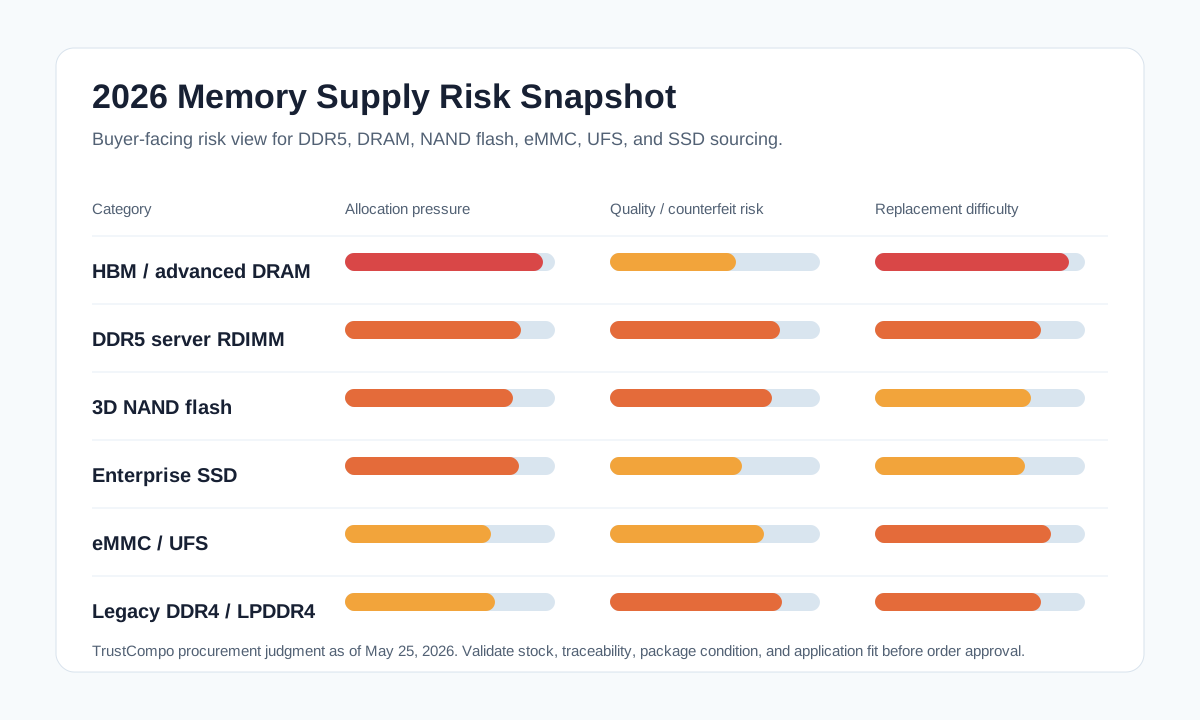
The public market signal is consistent enough to justify earlier planning: AI infrastructure and server demand are absorbing more high-end DRAM and storage capacity, while many manufacturers report longer lead times or higher prices. That does not mean every memory part is equally constrained. It means procurement should stop treating memory as a last-minute commodity line item.
Executive Buyer Matrix by Memory Type
Use this matrix before opening RFQs. It gives procurement and engineering a shared first-pass view.
| Memory or storage class | 2026 risk signal | Engineering constraint | Sourcing action | Evidence needed before PO |
|---|---|---|---|---|
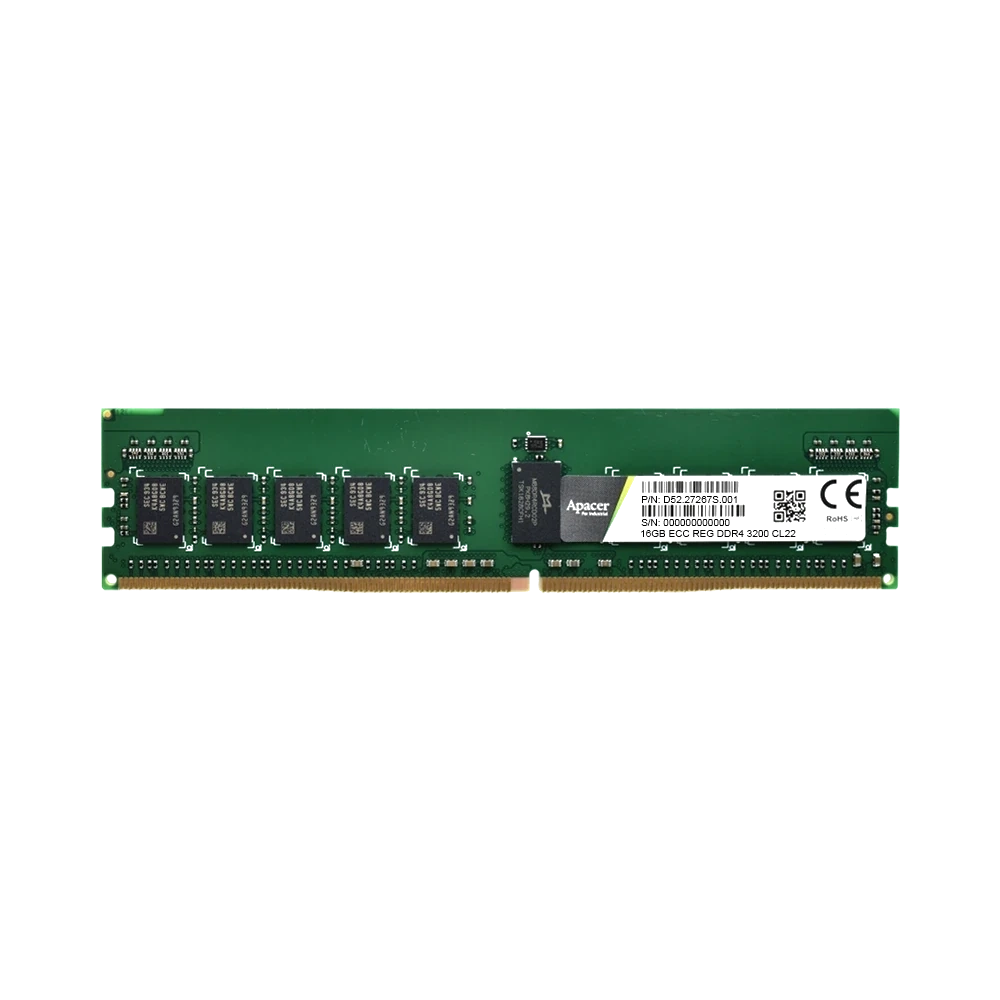
| DDR5 RDIMM / server DIMM | High-capacity modules compete with AI servers and cloud refresh cycles | ECC, registered/buffered status, rank, speed bin, timing, SPD, CPU-platform validation | Lock forecasted demand early; keep exact manufacturer and module-house path visible | Datasheet or module spec, validation list, label photos, date code, packaging condition, supplier traceability |
| LPDDR4 / LPDDR5 / LPDDR5X | Mobile, edge AI, embedded compute, and selected server designs can compete for constrained packages | BGA package, voltage rails, speed grade, timing, thermal profile, board layout dependency | Avoid late substitutes; qualify at design stage or controlled ECO stage | Exact package drawing, datasheet, lifecycle status, AVL approval, sample functional test |
| Raw NAND flash | Enterprise SSD and high-density storage demand can pull NAND allocation toward larger accounts | NAND type, density, organization, bus width, package, bad-block behavior, ECC requirements | Review controller compatibility and qualify alternates before shortage timing | Manufacturer datasheet, controller support evidence, endurance/retention target, sample test plan |
| eMMC | Mature embedded products often depend on specific controller behavior and package continuity | Density, eMMC version, package, voltage, temperature grade, boot behavior, firmware | Approve at least one controlled alternate for long-life programs; monitor EOL risk | Datasheet, lifecycle status, package/ball map, temperature grade, firmware/host validation |
| UFS | Mobile, networking, and edge platforms may be sensitive to firmware and host-controller compatibility | UFS generation, package, performance class, power states, temperature grade | Source by exact approved part unless engineering clears an alternate | Product page or datasheet, host compatibility, label and lot records, sample functional test |
| Client / industrial SSD | Price and availability can shift quickly; consumer and industrial channels are not equivalent | Interface, form factor, controller, NAND type, endurance, power-loss behavior, temperature | Separate repair buys, sample buys, and production buys; do not mix grade assumptions | SSD product brief, endurance rating, TBW/DWPD where available, firmware/version policy, warranty and traceability |
| Enterprise SSD | Data-center demand can reserve capacity months ahead | NVMe generation, U.2/U.3/E1.S/M.2 form factor, endurance class, thermal design, firmware support | Treat as capacity reservation; align forecast, delivery windows, and approved model list early | Product brief, capacity roadmap, firmware support statement, approved vendor path, delivery schedule |
RFQ Timing: When to Lock Supply, Qualify Alternates, or Avoid Spot Buys
Memory and SSD procurement should be handled by decision state, not by one generic shortage rule.
| Situation | Procurement decision | Why |
|---|---|---|
| Exact MPN is platform-validated and production starts inside 90 days | Lock supply or reserve allocation | A late substitute may require system validation, BIOS/firmware review, or customer approval. |
| Exact MPN is available but quote validity is short | Requote on a fixed cadence and shorten internal approvals | Daily or weekly quote movement can make normal PO cycles too slow. |
| Exact MPN is single-source with no released alternate | Start alternate qualification now | Memory substitutes often fail on timing, package, firmware, or qualification boundaries. |
| Supplier offers same capacity but different suffix/package/temperature grade | Do not approve without engineering review | Capacity is not equivalence. Package, interface, and lifecycle can break the design. |
| Open-market offer has mixed date codes, relabeled packaging, or no original label | Quarantine commercially until traceability is proven | Fragmented supply increases counterfeit, reclaimed, and mixed-lot risk. |
| Long-life industrial product depends on older eMMC, DDR4, or NAND | Plan bridge stock or lifecycle review | Legacy memory may remain buyable, but support can narrow while newer demand absorbs supplier attention. |
For IT procurement strategy, this is the practical shift: move from "find a lower price this week" to "protect the production window with validated supply, documented source path, and clear engineering boundaries."
DDR5 and LPDDR: Module, Platform, and Validation Checks
DDR5 sourcing is not one category. A desktop UDIMM, server RDIMM, LRDIMM, industrial module, and embedded LPDDR design have different approval paths.
For DDR5 RFQs, include:
- exact MPN or approved manufacturer list
- module type: UDIMM, SODIMM, RDIMM, LRDIMM, CAMM, or board-level DRAM
- ECC, registered/buffered status, rank, organization, and speed bin
- CPU or platform validation requirement
- acceptable date-code window and packaging condition
- new/unused requirement, traceability level, and sample-screening expectation
For LPDDR, the substitute boundary is usually tighter because the memory is board-level and package-specific. Procurement should not widen sources without engineering sign-off on package, timing, voltage rails, thermal behavior, and host-controller support.
Representative DDR5 product anchor:
| Category | Example anchor | Procurement use |
|---|---|---|
| DDR5 RDIMM | Samsung M321R8GA0BB0-CQK | Use as a high-capacity server-memory example for checking exact module type, validation path, density, speed, packaging, and source traceability. |
NAND, eMMC, and UFS: Do Not Substitute by Density Alone
For flash memory, "same capacity" is one of the most common bad shortcuts. Two devices can share a density and still differ in interface, package, voltage, controller behavior, endurance, retention, temperature, firmware, or lifecycle.
| Flash class | Must-check constraints | Common procurement mistake |
|---|---|---|
| Raw NAND | NAND type, page/block size, bus width, ECC requirement, bad-block behavior, package, voltage, retention | Replacing a raw NAND only by density while ignoring controller support. |
| eMMC | eMMC version, package/ball map, boot behavior, voltage rails, temperature grade, lifecycle, firmware behavior | Assuming a newer or larger eMMC is drop-in because the host interface name matches. |
| UFS | UFS generation, package, performance class, power states, host compatibility, firmware policy | Treating UFS as generic mobile storage without system validation. |
| Industrial SSD | Interface, form factor, controller, NAND type, endurance, power-loss protection, temperature, firmware support | Buying a consumer SSD for an industrial slot because capacity and connector match. |
| Enterprise SSD | NVMe generation, form factor, endurance class, namespace behavior, firmware support, thermal design | Approving a drive without checking qualification list, delivery window, and firmware management. |
Representative product anchors for RFQ and evidence review:
| Category | Representative SKU | Why it matters |
|---|---|---|
| eMMC | Micron MTFC32GAPALBH-IT | Managed NAND example for package, temperature, density, and lifecycle review. |
| eMMC | Samsung KLM8G1GETF-B041 | Secondary eMMC reference for density/package checks and long-life sourcing conversations. |
| Raw NAND | Micron MT29F4G08ABADAH4 | Raw NAND example where controller support, package, and retention assumptions must be verified. |
| Raw NAND | Kioxia TC58NVG2S0HTA00 | Secondary raw NAND reference for alternate-source and datasheet comparison work. |
| UFS | Samsung KLUEG8UHGC-B0E1 | UFS example for host compatibility, package, temperature, and lifecycle review. |
| Enterprise SSD | Samsung MZQL21T9HCJR-00W07 | Enterprise SSD example for interface, endurance, capacity planning, and delivery-window control. |
Case Candidate: Toshiba / Kioxia THGBMNG5D1LBAIL
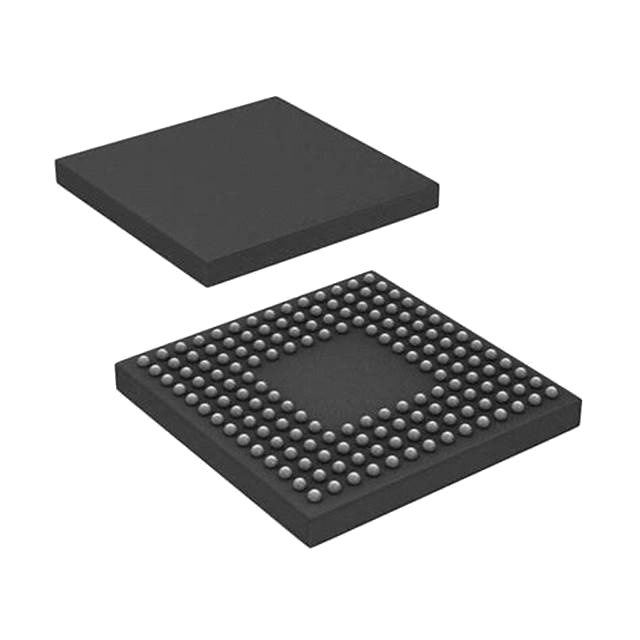
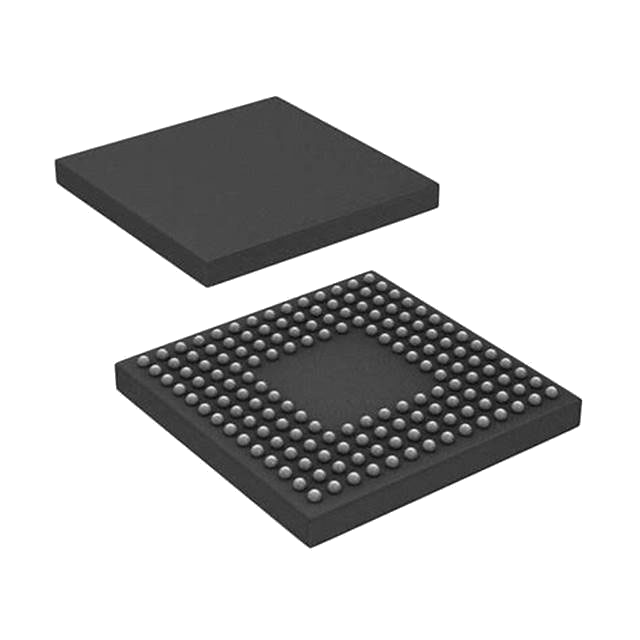
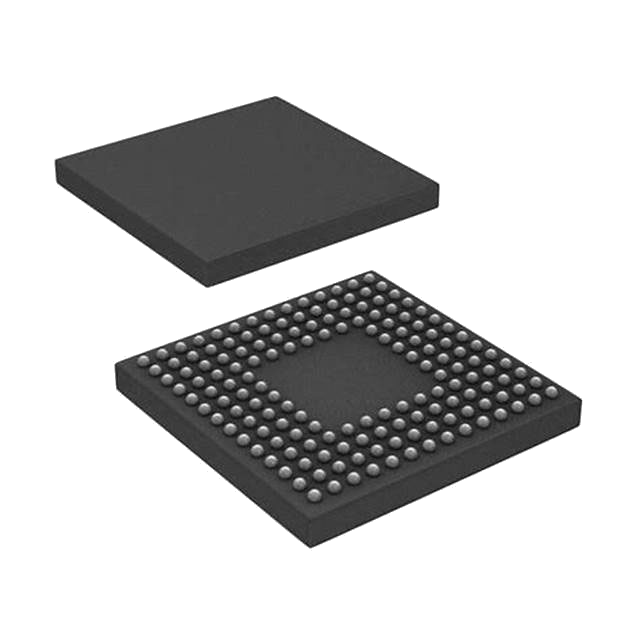
THGBMNG5D1LBAIL is a useful eMMC procurement case because it looks simple on a short RFQ line: Toshiba/Kioxia, 4GB eMMC, BGA package. In practice, it is exactly the kind of older embedded-memory part that can turn into a sourcing and qualification problem.
Public distributor records list the device as a 32Gbit / 4GB eMMC in a 153-WFBGA / FBGA-153, 11.5mm x 13mm package, with 200MHz clock frequency, 2.7V to 3.6V supply, tray packaging, and -25°C to +85°C operating temperature. DigiKey lists the part status as obsolete, while Mouser marks the lifecycle as End of Life / scheduled for obsolescence. LCSC also lists it as discontinued and identifies it as an eMMC 5.0 device.
That makes it a clean buyer lesson: do not replace THGBMNG5D1LBAIL with another 4GB eMMC by capacity alone.
| THGBMNG5D1LBAIL review point | Why it matters before substitution |
|---|---|
| Brand transition | Toshiba Memory became Kioxia in 2019. Packaging, labels, and documents may reference Toshiba Memory or Kioxia depending on production and documentation timing. |
| Lifecycle status | Obsolete/EOL distributor status means bridge stock and replacement planning should start before open-market supply becomes fragmented. |
| Package | 153-WFBGA / 11.5mm x 13mm package fit must be confirmed against the PCB footprint and assembly process. |
| Interface and version | eMMC 5.0 behavior, host support, boot partitions, RPMB, EXT_CSD fields, and timing mode support should be checked before approving a replacement. |
| Voltage and temperature | VCC, VCCQ, I/O voltage mode, and -25°C to +85°C application fit must be reviewed against the end product's real operating environment. |
| Source evidence | Because the part is older, buyers should request label photos, date code, lot code, tray condition, new/unused status, and supplier source path before PO. |
For a live BOM, TrustCompo would treat THGBMNG5D1LBAIL as a lifecycle and qualification case: first secure traceable bridge stock if the current design still depends on it, then ask engineering whether a current eMMC or managed-NAND alternative can pass package, voltage, boot, firmware, endurance, retention, and host-validation checks.
SSD Procurement: Separate Client, Industrial, and Enterprise Decisions
SSD procurement looks simple when the RFQ says "1.92 TB NVMe" or "2 TB M.2." It is not simple in production.
Before approving an SSD buy, ask:
- Is this a client SSD, industrial SSD, or enterprise SSD?
- Which interface and form factor are required: SATA, PCIe/NVMe, M.2, U.2, U.3, E1.S, or custom module?
- What endurance class matters: TBW, DWPD, write workload, retention, and warranty boundary?
- Does the system require power-loss protection, fixed firmware, thermal throttling behavior, or long lifecycle support?
- Is the supplier offering manufacturer-new stock, pull stock, refurbished drives, or mixed-source inventory?
- Can the supplier hold the same model and firmware policy across the production window?
For enterprise or infrastructure programs, treat SSD sourcing as capacity reservation. For repair, lab, or noncritical service stock, buyers can sometimes tolerate more flexibility, but that flexibility should be documented and kept out of production lots.
Authenticity and Mixed-Lot Controls
Constrained markets increase the appeal of incomplete offers. Memory and storage lots need a quality gate before price comparison becomes the only decision.
For DDR5, DRAM, eMMC, UFS, NAND, and SSDs, request:
- label photos at all packaging levels
- date code, lot code, country of origin, and quantity per lot
- manufacturer-original packaging evidence where possible
- statement of new/unused status
- source-path evidence from the supplier
- sample electrical, functional, or system-level test plan
- clear disposition rule for mismatched labels, mixed date codes, or missing documentation
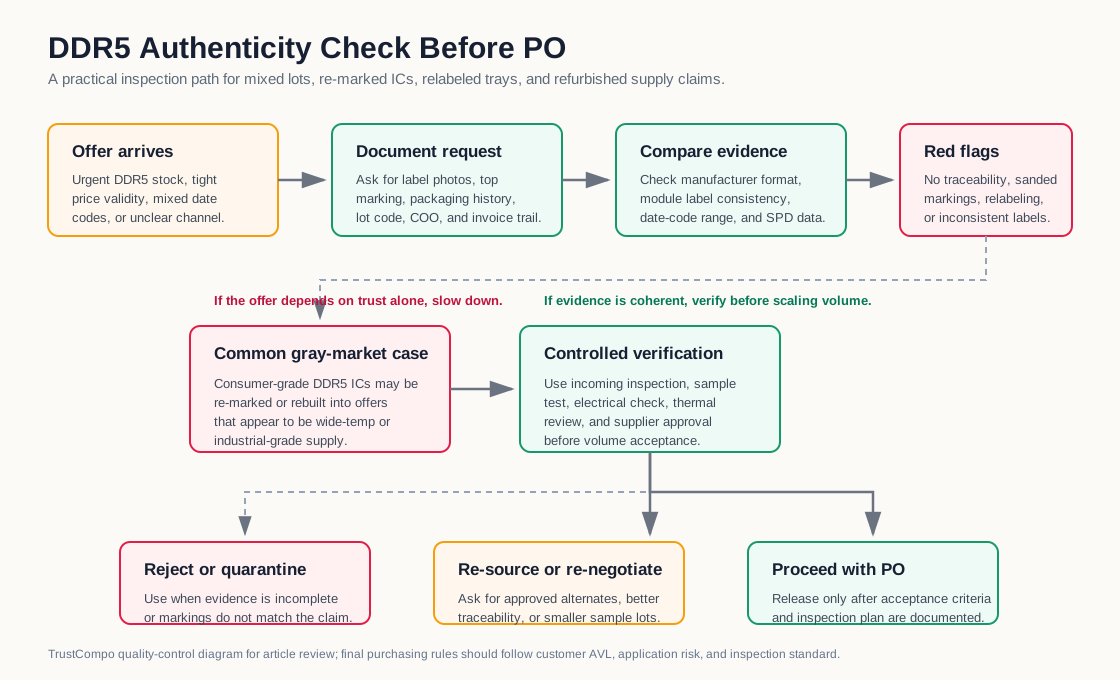
The key rule is the same across memory classes: do not approve production memory or SSD stock from an unclear source path just because the capacity and interface look correct.
Memory Sourcing Recommendations for BOM Owners
The practical workflow is a closed loop: identify exposure, define engineering boundaries, open the RFQ with enough detail, check source evidence, then release only the lots that match both technical and traceability requirements.
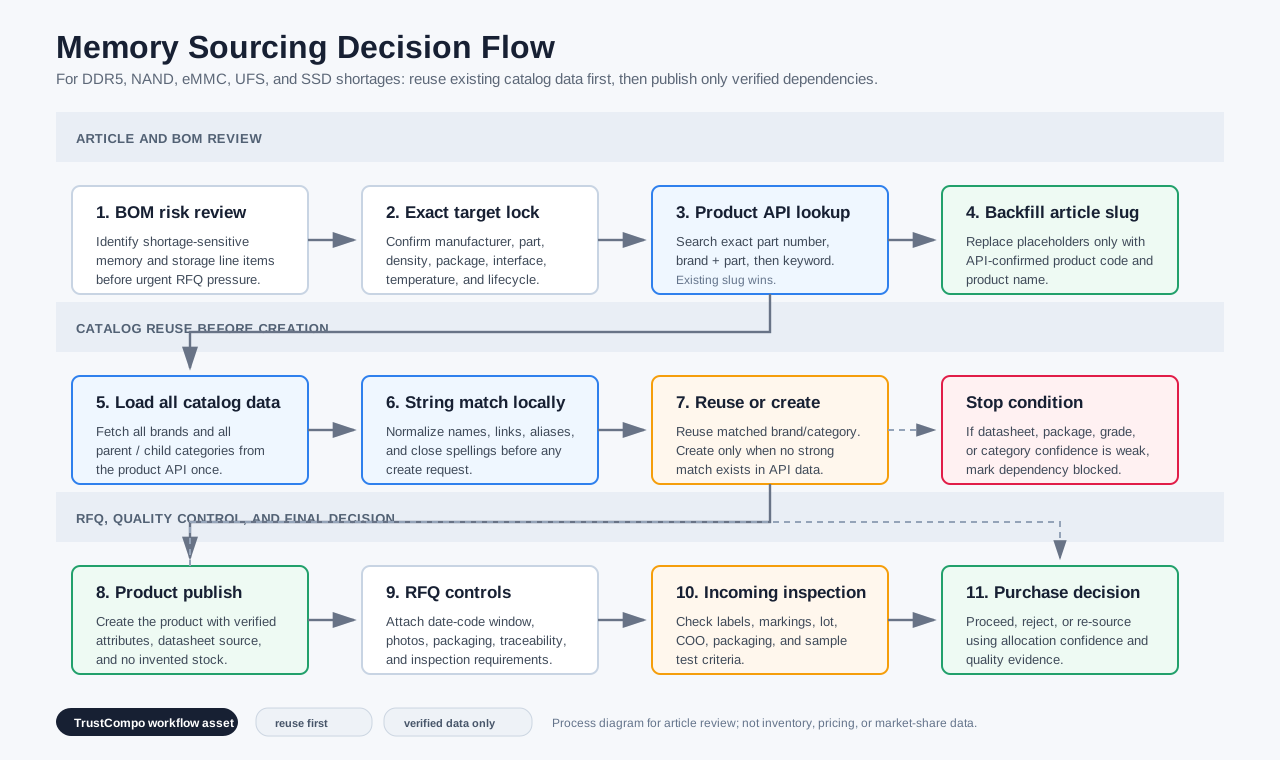
- Segment the BOM by memory class: DDR5, LPDDR, raw NAND, eMMC, UFS, SSD, NOR, EEPROM, and MRAM.
- Mark each line by exact-part dependency, approved alternates, lifecycle status, demand window, and replacement difficulty.
- For high-risk lines, open RFQ earlier with full technical constraints instead of asking for "same or equivalent."
- Ask engineering to define the true substitution boundary before procurement widens suppliers.
- Attach inspection requirements to the RFQ: packaging photos, label evidence, date-code range, sample testing, and disposition rules.
- Use bridge stock only when it is tied to real demand and a qualification or lifecycle plan.
- Recheck market-sensitive lines every 30 days while pricing, lead time, or quote validity is moving.
If a BOM contains constrained or lifecycle-sensitive memory, TrustCompo can support global sourcing, alternative solutions, quality assurance, obsolete component management, submit a BOM review RFQ, and BOM tools support.
Sources Reviewed
Public sources reviewed for this article include:
- Global Electronics Association / GlobeNewswire, April 13, 2026, on AI-driven memory supply reallocation, constrained availability, and rising prices.
- Avnet Integrated, February 9, 2026, "Riding the AI Supercycle: Navigating the 2026 Memory & Storage Market."
- DigiKey, January 2, 2026, "The 2026 Memory Challenge."
- Tom's Hardware storage and memory reporting from late 2025 through July 2026, used as secondary market context for NAND, DRAM, and SSD pricing pressure.
- Kioxia corporate-name notice, July 18, 2019, confirming Toshiba Memory's change to Kioxia from October 1, 2019.
- DigiKey and Mouser product records for Kioxia America / Toshiba Memory THGBMNG5D1LBAIL, used as external distributor evidence for obsolete/EOL status and key eMMC attributes.
- Kioxia e-MMC product overview, used for current eMMC family context; exact THGBMNG5D1LBAIL acceptance still requires the matching datasheet and supplier traceability.
Use these as market context, not final purchasing authority. For every order, the source of truth remains the current manufacturer datasheet, product page, lifecycle notice, approved-vendor record, and supplier traceability packet tied to the exact MPN.