- DDR4
- DRAM
- Samsung
- Micron
DDR4 DRAM Cross-Reference Guide 2026: Samsung, Micron, CXMT, Nanya, and Winbond Checks
A buyer and engineering guide to DDR4 DRAM cross-reference checks, covering Samsung, Micron, CXMT, Nanya, Winbond, package compatibility, speed grade, refresh behavior, firmware risk, and sourcing evidence.
Quick facts
- Public reporting published between April and June 2026 shows AI-driven HBM and server-memory demand is tightening broader memory supply conditions.
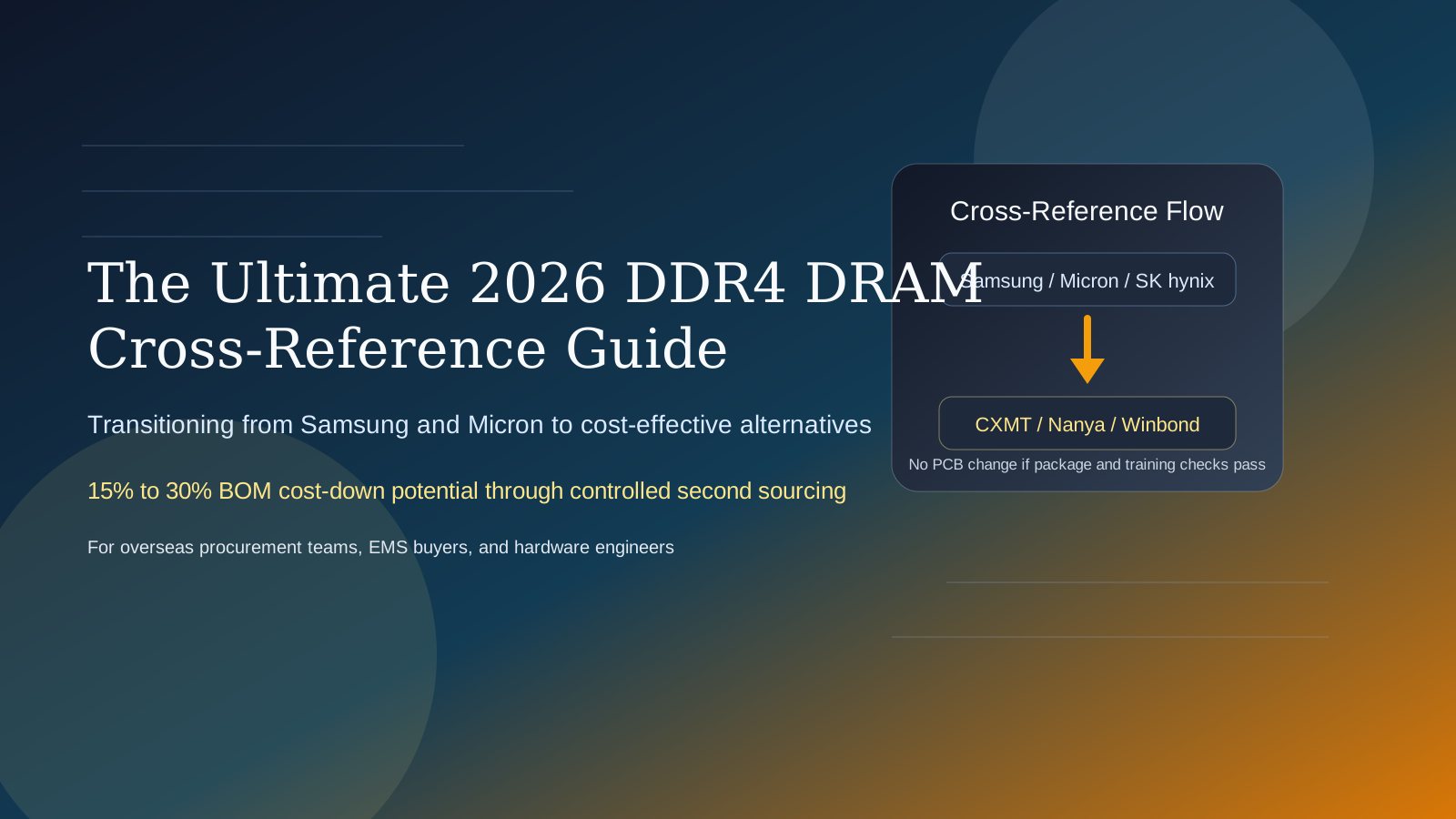
- For many embedded and industrial DDR4 designs, the fastest cost-down path is not a board redesign but a controlled second-source review.
- Pinout, package, voltage, speed grade, and bank-refresh behavior should be checked before any DDR4 drop-in approval.
- CXMT, Nanya, and Winbond are now common evaluation targets when buyers want lower DDR4 BOM cost with better lifecycle flexibility.
A practical buyer and engineering workflow for evaluating DDR4 alternatives without treating any cross-reference as automatically production-approved.
The DDR4 market in 2026 is no longer behaving like a quiet, mature commodity category. Public reporting released on April 13, 2026 by the Global Electronics Association said AI demand is redirecting memory supply and creating longer lead times and higher prices across the electronics industry. Additional industry reporting published in February to June 2026 also pointed to suppliers and channel partners prioritizing HBM, DDR5, server DRAM, and AI-related storage programs. Those reports are useful market context, not proof that every DDR4 part is short or that every alternate is safe.
For overseas procurement teams, that shift creates a familiar problem: mainstream designs still depend on DDR4 4Gb and 8Gb devices, but the biggest memory makers have more incentive to push capacity, investment, and engineering attention toward higher-margin products. The result is not always an immediate stock-out. More often, it shows up as shorter quote validity, thinner low-density supply, awkward date-code windows, and a higher risk that a legacy part becomes expensive long before it becomes officially obsolete.
That is why second sourcing matters now. For many networking, industrial, smart-home, repair, and embedded projects, the practical question is not whether to redesign around DDR5. It is whether a qualified alternative from CXMT, Nanya, or Winbond can keep the build running with better commercial flexibility and less lifecycle anxiety.
This guide is built for that decision. It does three things:
- decodes the naming logic behind common Samsung, Micron, and alternative DDR4 part numbers
- gives a practical 2026 cross-reference matrix for the most searched DDR4 scenarios
- shows the engineering gates that decide whether a part is a realistic approval candidate
Evidence Boundary and Approval Rule
This article is a cross-reference workflow, not a certification list. It separates three kinds of information:
| Layer | What It Supports | What It Does Not Prove |
|---|---|---|
| Public market reporting | Why procurement teams are reopening DDR4 second-source reviews in 2026 | A universal DDR4 shortage, a guaranteed price increase, or a confirmed EOL notice for every listed part |
| Product-page and datasheet anchors | Representative MPN context for density, organization, package, speed, and sourcing discussion | Full suffix-level equivalence across every package, temperature grade, and firmware assumption |
| TrustCompo judgment | A practical sequence for buyer/engineering review before RFQ, sampling, or AVL release | Automatic drop-in approval, JEDEC compliance for a specific customer board, or lifecycle guarantees |
Approval rule: do not release a DDR4 alternate to production until engineering confirms package and ball map, density and organization, speed/timing tables, controller training, refresh behavior, temperature grade, lifecycle status, and supplier traceability.
1. Why 2026 Procurement Teams Are Reopening DDR4 Second Sourcing
As of June 6, 2026, the memory-market message is consistent across public sources: AI infrastructure is consuming more premium memory supply, and that pressure is affecting the wider DRAM and storage ecosystem. The April 13, 2026 Global Electronics Association report described a structural shift rather than a short temporary disruption. Avnet's February 9, 2026 market analysis also framed 2026 as a period of tight memory allocation, shrinking quote windows, and stronger pricing pressure across DRAM and storage.
For DDR4 buyers, that does not mean every Samsung, Micron, or SK hynix part disappears tomorrow. It means mature DDR4 should be treated as a managed-risk category:
- high-volume mainstream parts may stay available, but at less predictable pricing
- low-density or long-life legacy parts may become commercially unattractive for top-tier makers
- repair and service demand can compete with production demand on the same legacy SKUs
- buyers depending on a single original source lose negotiation leverage
The best response is usually not panic buying. It is a controlled cross-reference program that gives procurement and engineering a shortlist of approved alternatives before the next shortage wave hits.
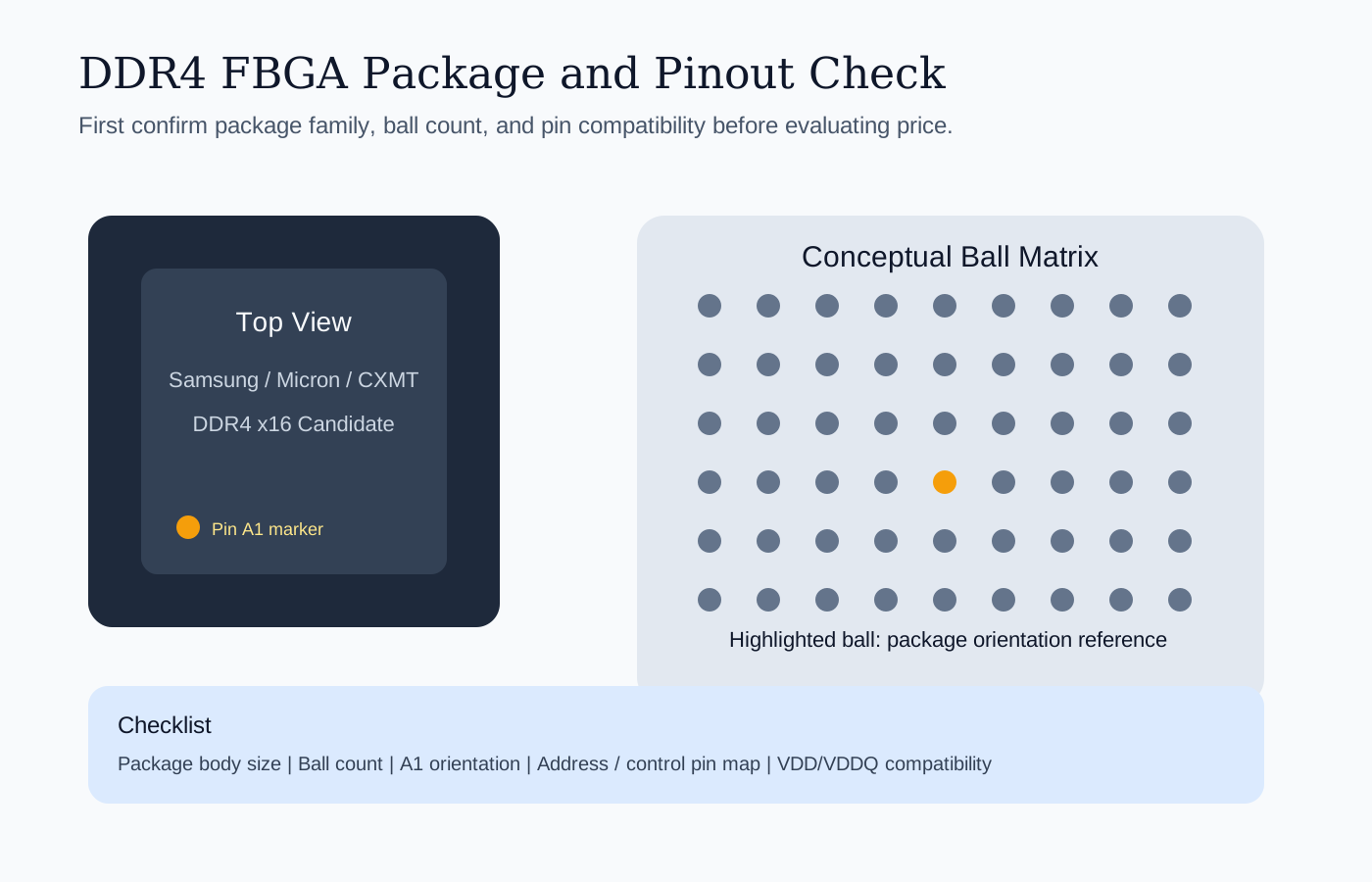
2. Quick Part Number Decoder: How to Read Samsung, Micron, SK hynix, and Alternative DDR4 SKUs
Many procurement delays happen because the part number looks like a private code. In practice, most DDR4 naming schemes still expose the fields buyers care about:
- density such as 4Gb or 8Gb
- organization such as
x16 - package family such as common FBGA options
- speed bin such as 2666, 3200, or vendor-specific speed suffixes
Here is the fast interpretation logic procurement teams can use before sending a part to engineering:
| Brand | Example Part Number | What Buyers Should Read First |
|---|---|---|
| Samsung | K4A8G165WB-BIRC | 8G points to 8Gb class, 16 signals x16 organization, suffix indicates process/package/speed family that must be checked against the datasheet. |
| Samsung | K4A4G165WE-BCRC | 4G signals 4Gb density, 16 indicates x16 organization, suffix separates lifecycle and speed-bin details. |
| Micron | MT40A512M16LY-062E | 512M16 points to 512M x16 organization, while the ending helps identify speed-grade and revision. |
| SK hynix | H5AN8G6NDJR-XNC | 8G6 commonly points buyers toward the 8Gb x16 family logic, while the final suffix distinguishes speed-bin and process-screen details that still need datasheet confirmation. |
| Micron | MT40A256M16GE-075E:G | 256M16 points to 256M x16 organization, with the suffix identifying speed and screening details. |
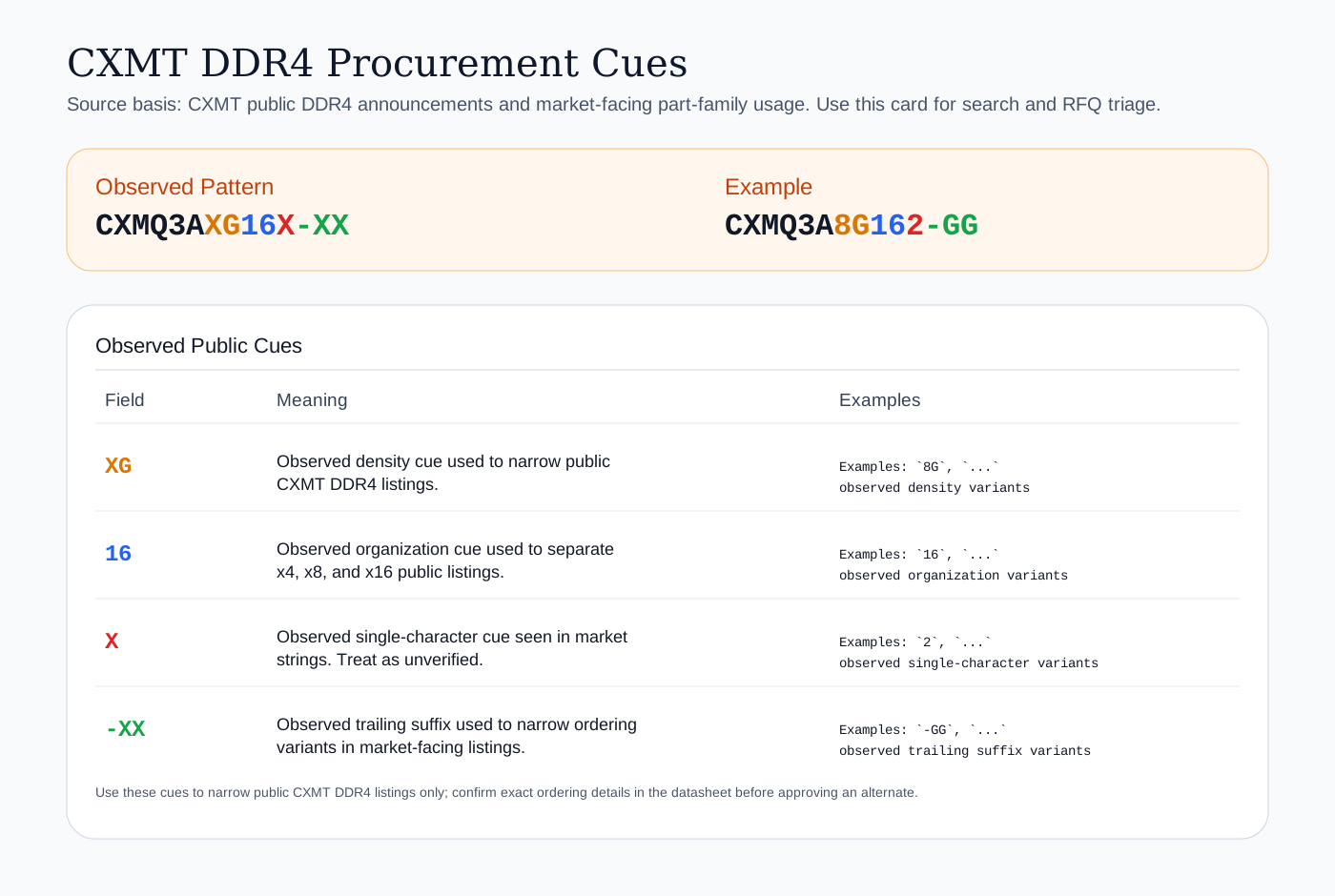
| CXMT | CXMQ3A8G162-GG | 8G indicates 8Gb class, and the core body identifies DDR4 organization and family; exact suffix still needs the matching datasheet or approved source sheet. |
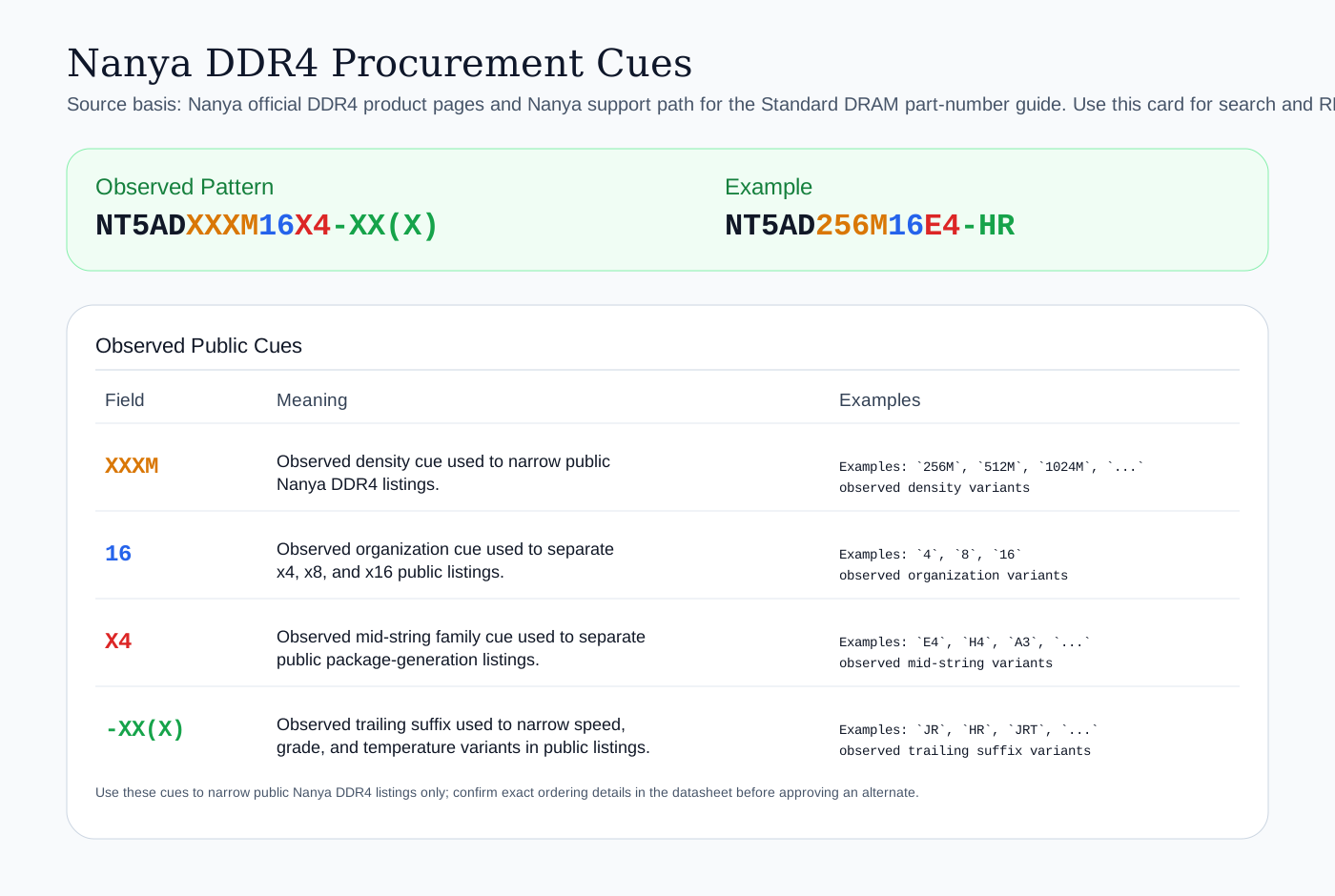
| Nanya | NT5AD256M16D4-HR | 256M16 indicates organization close to common 4Gb x16 DDR4 use cases, while the ending identifies speed and grade details. |
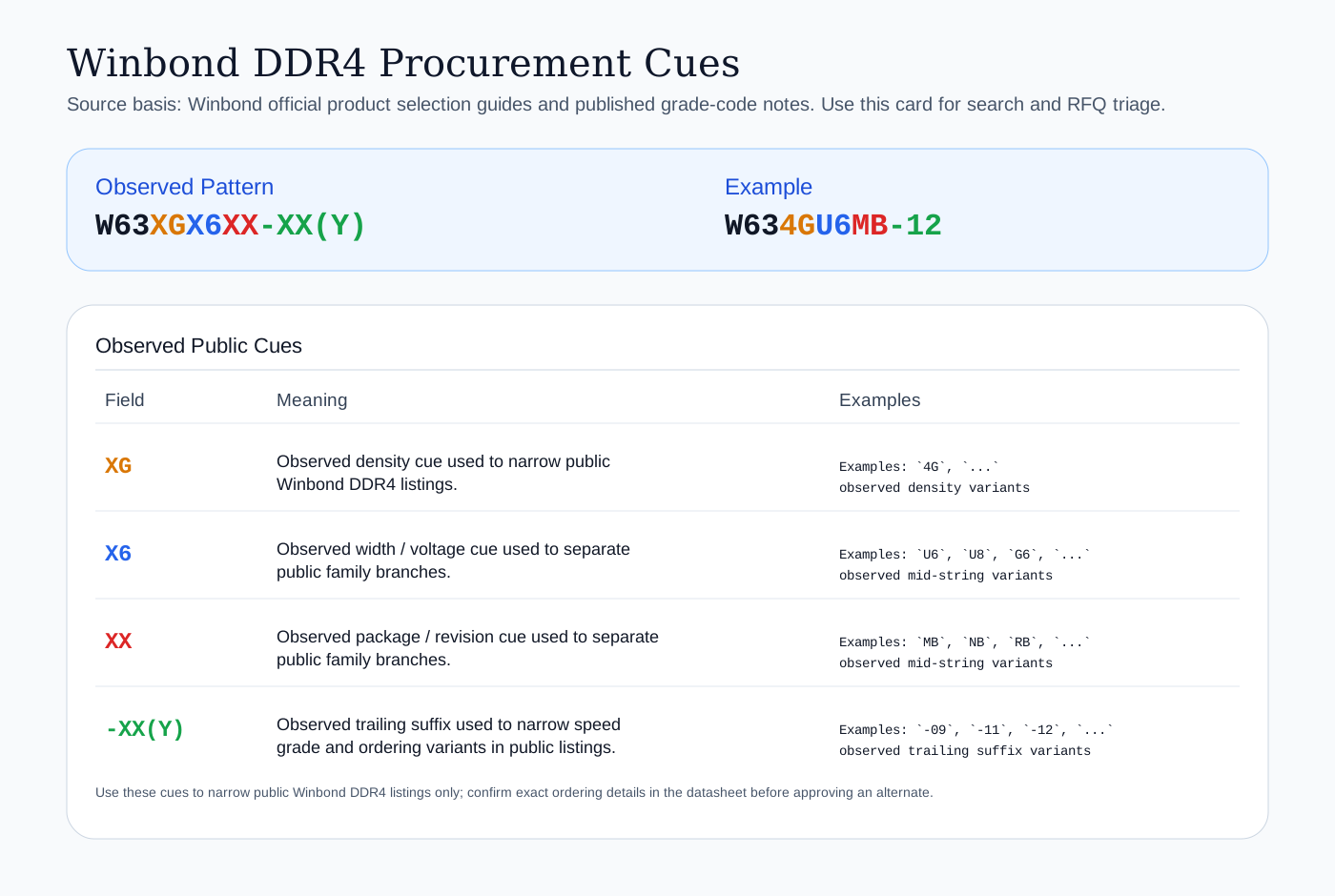
| Winbond | W634GU6MB-12 | The middle density and organization characters identify the 4Gb-class DDR4 family logic, while the tail typically separates speed-bin or screening information. |
The goal is not to turn procurement into a memory-design team. The goal is simply to remove the "black box" effect so that cross-reference work starts faster and with fewer wrong RFQs.
The six brand cards below are intentionally split into standalone files so they can be reused like mini datasheet notes in sales decks, RFQ replies, and engineering review docs. Where an official vendor guide publicly exposes the field meaning, the card states it directly. Where the vendor only exposes family-level product listings, the card labels the pattern as a public family cue rather than an official full-character decoder.
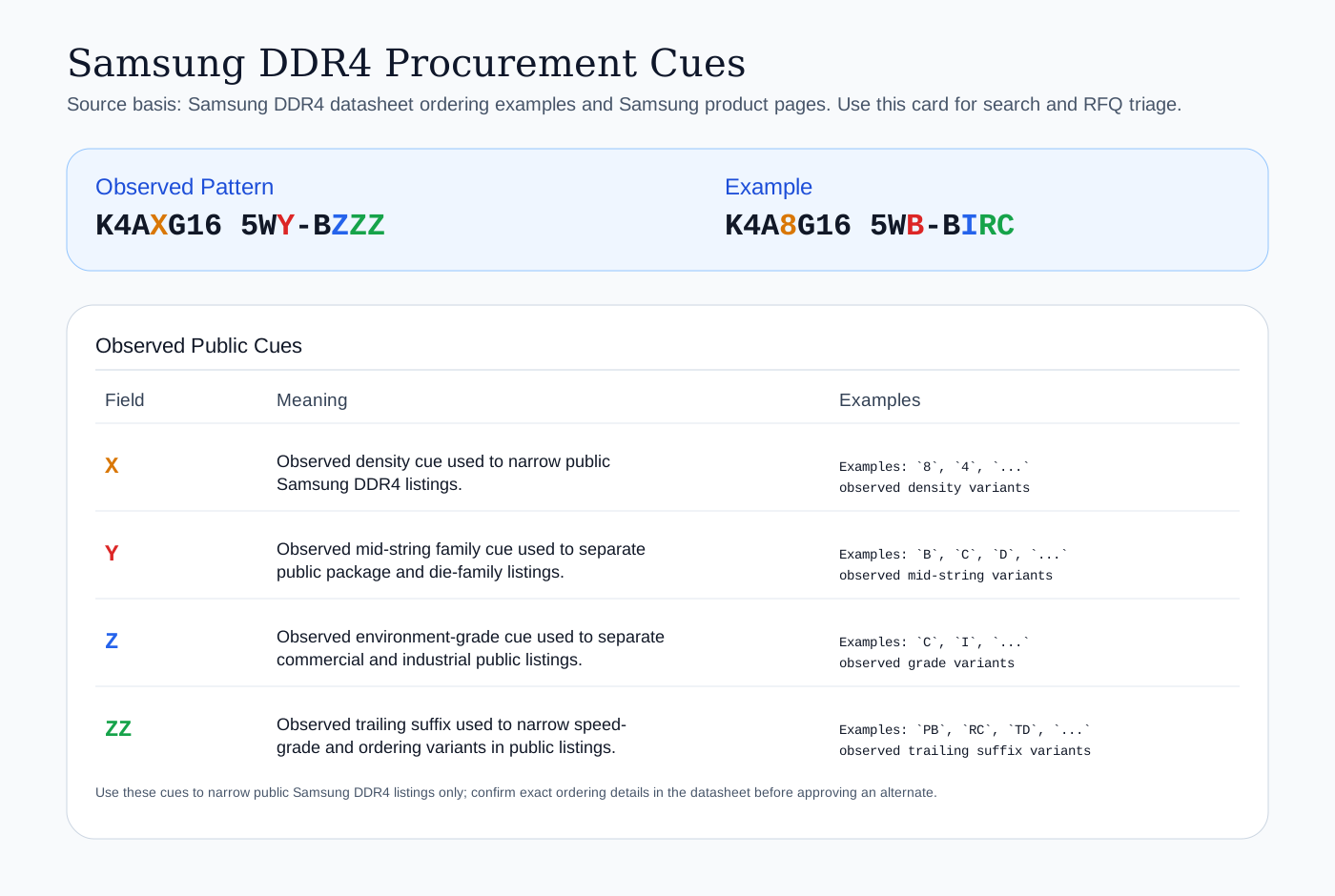
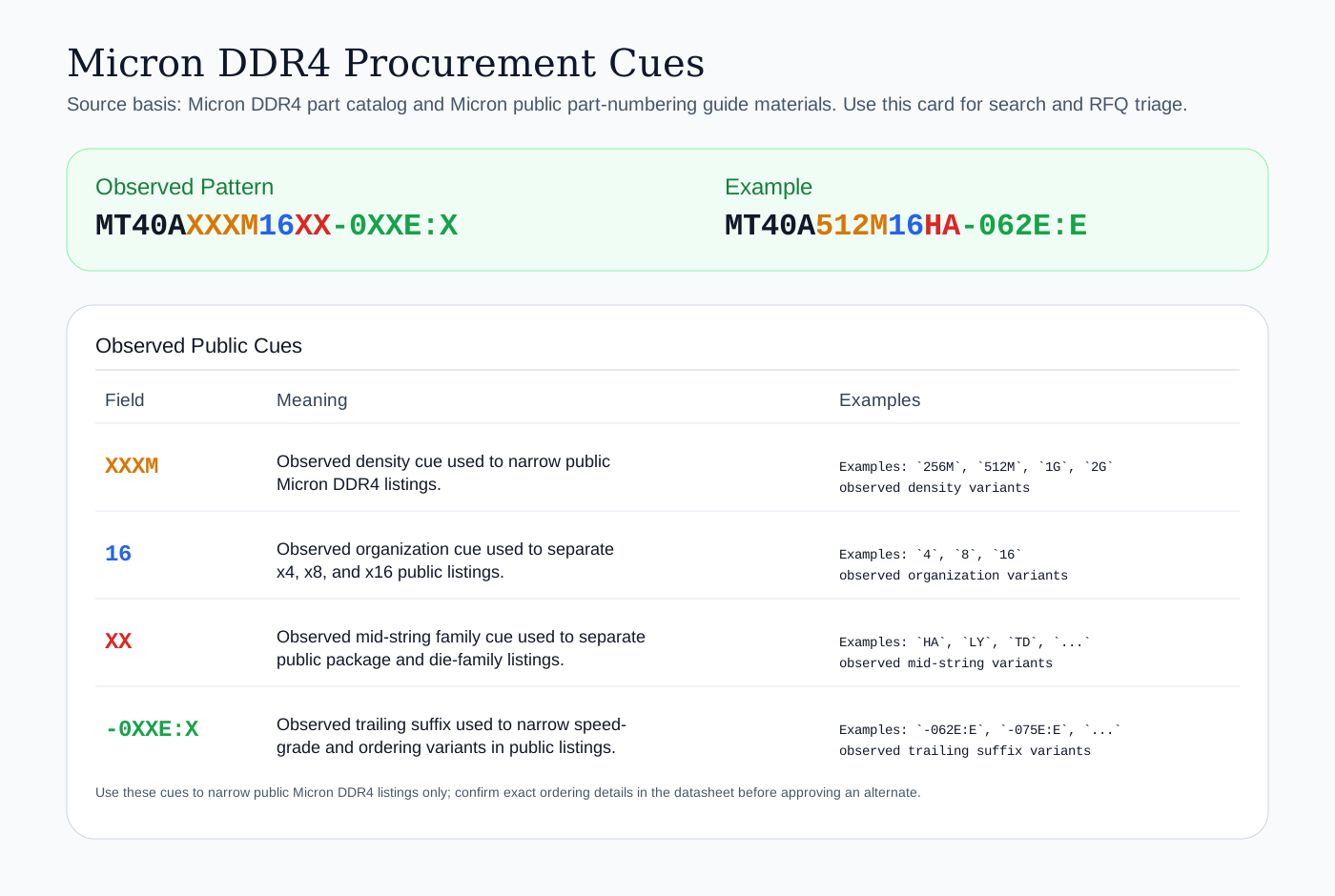
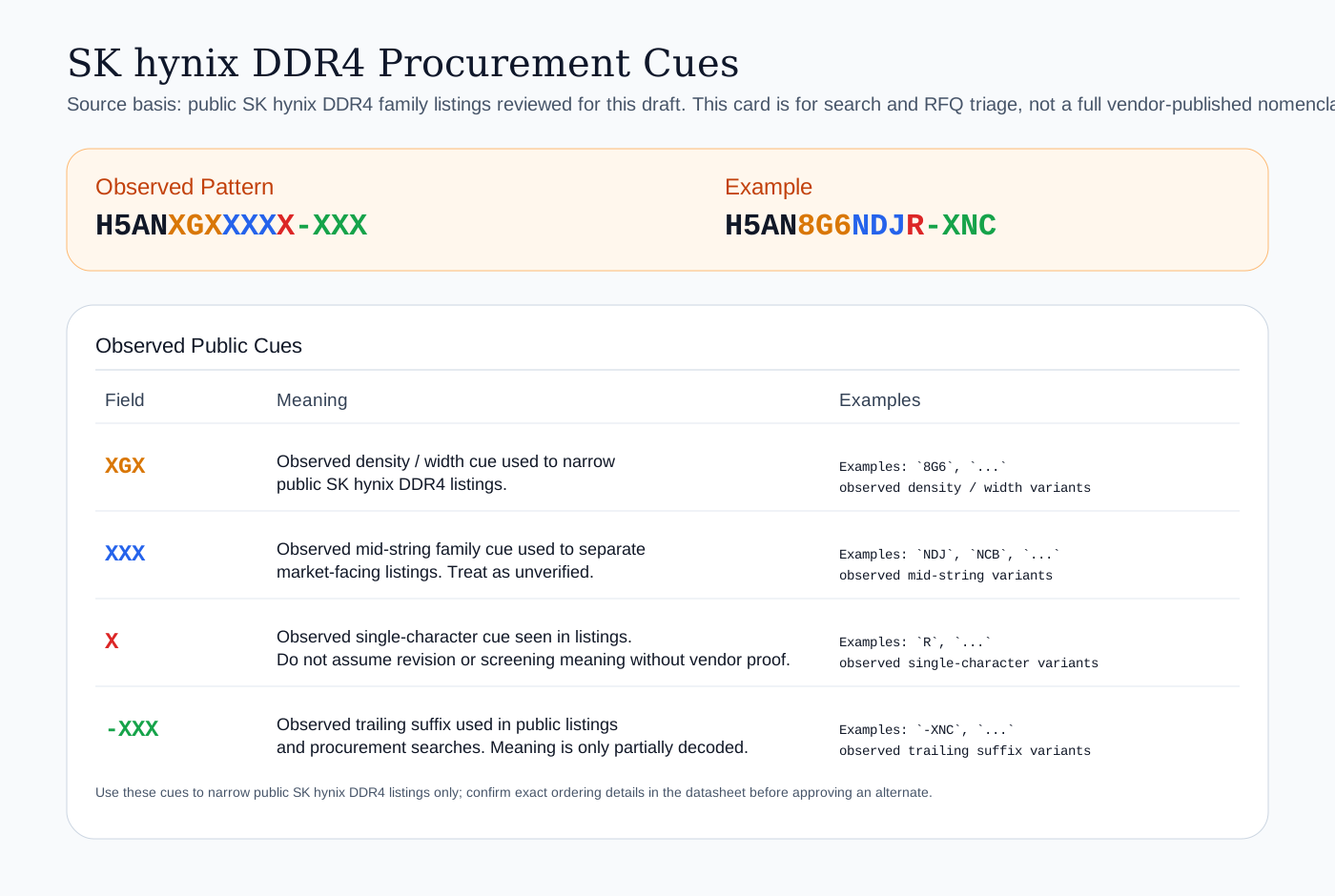
3. The Core 2026 DDR4 Cross-Reference Matrix
This is the part most buyers actually need: a practical table that maps common Samsung and Micron DDR4 references to cost-down evaluation targets. Treat the table as a technical-commercial shortlist, not as automatic one-click equivalence. Exact suffix, package code, speed bin, temperature grade, and lifecycle status still need verification before release to production.
| Application and Density | Samsung | Micron | Cost-Down Choice | 2026 Buyer Pain Point and Replacement Logic |
|---|---|---|---|---|
| Networking / smart hardware DDR4 8Gb (512Mx16) | K4A8G165WB-BIRC / K4A8G165WC-BCTD | MT40A512M16LY-062E:E / MT40A512M16HA-062E:E | CXMT: CXMQ3A8G162-GG | This is one of the highest-volume DDR4 replacement searches in 2026. Adding both the classic Micron LY suffix and the more common HA search path helps match what overseas networking and embedded buyers actually type into Google and RFQ systems. If package, pin map, and training behavior line up, CXMT is often the first cost-down evaluation path because the process is now considered much more mature than in its early ramp years. |
| Industrial control / smart home DDR4 4Gb (256Mx16) | K4A4G165WE-BCRC | MT40A256M16GE-075E:G | Nanya: NT5AD256M16D4-HR | Older 4Gb designs are exposed to supply rationalization. Nanya remains a trusted overseas alternative for many buyers who want stable compatibility and a conservative migration path. |
| Industrial service / automotive repair DDR4 4Gb low-speed long-life | K4A4G165WD-BCRC | MT40A256M16GE-083E:T | Winbond: W634GU6MB-12 | Long-life service programs care less about the absolute lowest price and more about continuity. Winbond is often reviewed when long lifecycle support matters more than chasing the newest mainstream source. |
| Embedded mini PC / gateway DDR4 8GB SO-DIMM module | M471A1K43DB1-CWE | MTA4ATF51264HZ-3G2E1 | Nanya: NT8GA64B88D0NS-PL | Module-level replacement is often the easiest cost-down move for edge gateways and medical boards. Buyers still need to confirm rank, SPD behavior, speed grade, and platform validation before approving an alternate module. |
The commercial attraction is obvious: when the technical gates pass, these alternatives can open room for lower unit pricing, better negotiation leverage, and reduced dependence on a single top-tier supplier.
Product-link note: the linked Samsung, Micron, Nanya, and Winbond examples already have TrustCompo detail pages. The CXMT row is intentionally left as a text-only evaluation target until a verified product page and matching source sheet are published; buyers should route that line through RFQ review rather than treating the table as a live catalog claim.
4. Technical Compliance Checks Before You Approve a DDR4 Replacement
This is where strong sourcing teams separate a real approval candidate from a risky look-alike. Price should come after these checks, not before.
4.1 Pin-to-Pin Compatibility
Start with the mechanical and electrical interface:
- package type and body size
- ball count, often 96-ball or 78-ball FBGA for common DDR4 devices
- pin assignment and reserved-ball behavior
- no-connect handling and board escape assumptions
If the original and candidate parts do not match at the pinout level, the discussion stops there. A lower price never compensates for a hidden board rework.
4.2 Voltage Alignment
Mainstream DDR4 is generally a 1.2V family, but buyers should still verify:
- operating voltage range
- VDD and VDDQ behavior
- any low-power or special-grade differences
- power-up sequence expectations
This is usually a fast check, but it should never be skipped just because both parts are labeled DDR4.
4.3 Speed Grade and Down-Bin Logic
Faster DDR4 parts can often be evaluated in lower-speed systems, but the rule is not "any faster part always works." Engineering should confirm:
- supported top data rate
- controller training margin
- timing table compatibility
- SPD or firmware assumptions for module use cases
In practice, a 3200 Mbps part may be evaluated in a slower design, but only when the platform validation logic supports it.
In 2026, many cost-down candidates from CXMT or Nanya are offered in 3200 Mbps (CL22)-class variants. If your legacy system runs at 2400 Mbps or 2666 Mbps, the question is not only whether the candidate advertises a higher maximum data rate. The real check is whether your memory controller BIOS or firmware can complete clean speed-down training without hanging, falling back unpredictably, or failing during first-boot validation.
4.4 Architecture and Refresh Behavior
This is the quiet compatibility trap. Beyond package and voltage, teams should verify:
- bank-group architecture
- refresh requirements
- page behavior
- initialization expectations
- whether firmware or memory-controller configuration needs adjustment
If these assumptions differ, the part may still function on the bench but fail as a true no-touch production substitute.
4.5 Lifecycle, Source, and Lot Traceability
The commercial source also belongs in the engineering review. Before adding a DDR4 alternate to the AVL, buyers should confirm:
- current lifecycle status or public product-family status
- authorized or traceable supply path
- date-code range and moisture-sensitive handling records
- sample-lot match between the tested material and the proposed production lot
- whether the candidate suffix is a normal orderable part or a distributor-specific listing
This is especially important when the alternate is being selected for long-life industrial service rather than a one-time spot build.
Once these checks are complete, procurement can compare price and lead time with cleaner confidence. Before that point, the part is only a candidate, even if the density, organization, and headline speed look correct.
5. Why CXMT, Nanya, and Winbond Are the 2026 Shortlist Brands
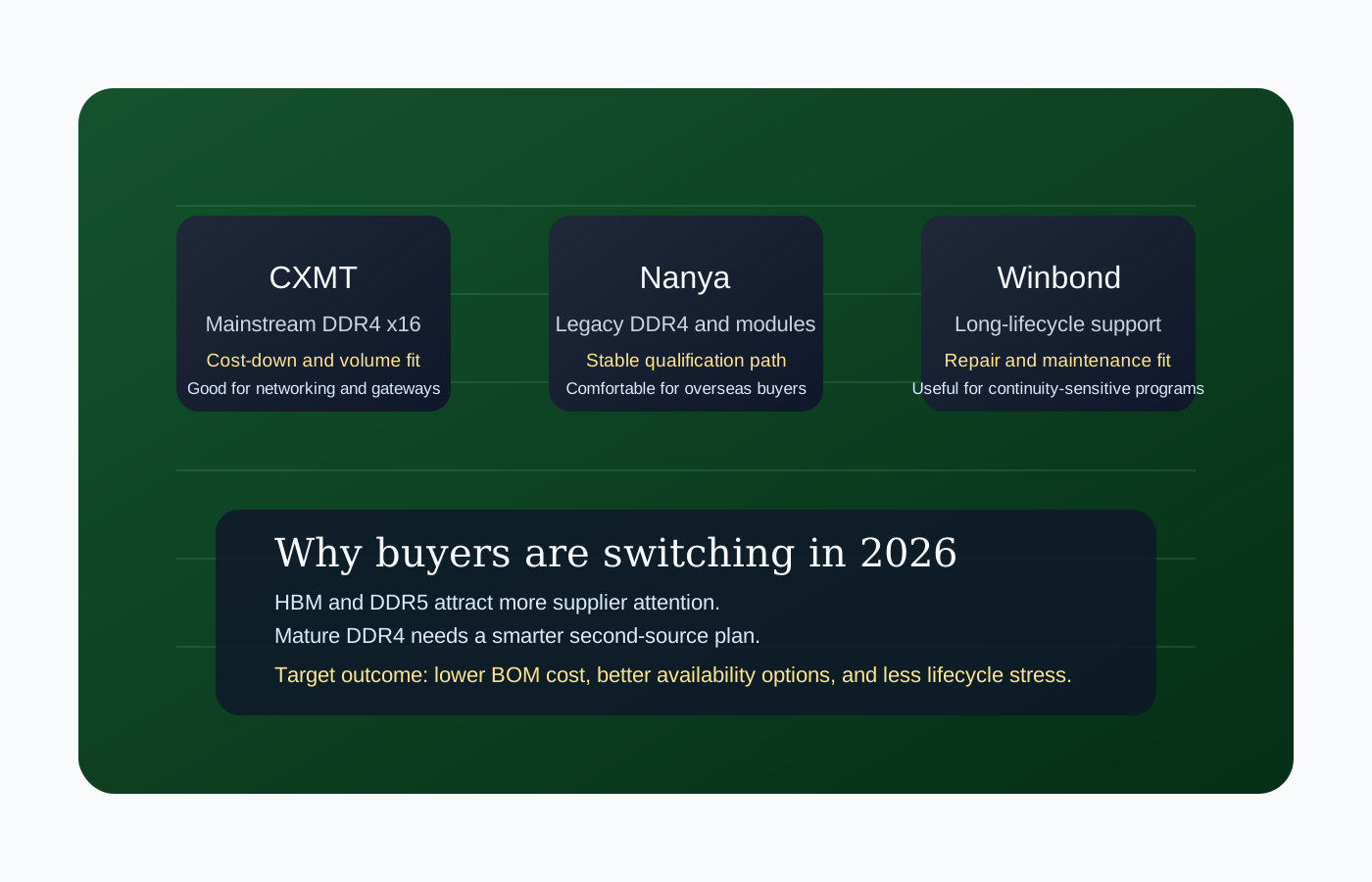
The reason these three brands keep appearing in DDR4 discussions is not only price. Each one fits a different sourcing goal.
CXMT: Best Known for Mainstream DDR4 Cost-Down Evaluation
CXMT has become much harder for global buyers to dismiss as an experimental option. In the 2026 market, it is increasingly treated as a real mainstream DDR4 second-source candidate, especially for high-volume x16 devices used in networking, gateways, smart hardware, and consumer-adjacent embedded systems.
Why buyers check CXMT first:
- stronger cost-down potential on mainstream DDR4 chips
- better fit for designs where the PCB should stay unchanged
- growing visibility in BOM-level second-source discussions
For many overseas buyers, CXMT also works as a geographic supply diversification tool. It provides a practical hedge and localized inventory support away from the heavily backlogged mega-fabs of the traditional Big Three.
The tradeoff is that buyers should still insist on exact suffix validation, package confirmation, and sample testing before assuming full interchangeability.
Nanya: Conservative, Familiar, and Easier for Overseas Qualification Teams
Nanya often wins where the buyer values stability and recognition more than the absolute lowest quoted price. For legacy 4Gb x16 DDR4 and finished module replacements, it is a comfortable option because it is already well known in many overseas markets.
Why Nanya remains attractive:
- strong acceptance in international procurement channels
- practical fit for old-platform cost-down projects
- useful bridge between top-tier originals and more aggressive cost-reduction paths
It also carries a supply-chain advantage in 2026: for buyers worried about concentration risk, Nanya gives them a cleaner Taiwan-based diversification path and a more comfortable qualification story than waiting on the most overloaded international memory lines.
For engineering managers, Nanya is often the brand that creates the least internal resistance when a team wants a lower-cost but still familiar alternative.
Winbond: Long-Lifecycle Insurance for Industrial and Repair Programs
Winbond is especially relevant when the sourcing problem is not only price but continuity. Industrial service, medical maintenance, and automotive-repair style demand often depends on parts that are no longer the favorite products of the largest DRAM makers.
Why Winbond belongs on the shortlist:
- better fit for long-life maintenance scenarios
- useful when continuity matters more than top-bin performance
- often easier to justify in service and repair programs where supply consistency matters most
That makes Winbond valuable not just as a price alternative, but as a supply continuity hedge for customers who want regional diversification and long-tail lifecycle support outside the most congested DRAM capacity lanes.
In these cases, the right question is not "Is this the cheapest DDR4 on the market?" It is "Will this keep a long-life program alive without reopening the full board design?"
6. Practical Buyer Workflow: How to Run a DDR4 Cost-Down Review
The fastest teams handle DDR4 replacement as a short gated workflow:
- collect the exact original part number, package, and current system speed
- shortlist one to three alternative candidates by density and organization
- compare package, pinout, voltage, speed, and architecture assumptions
- sample-test before commercial approval
- lock the approved alternate into the AVL before the next price swing
For procurement, that process creates leverage. For engineering, it keeps risk visible. For management, it turns a vague "find something cheaper" request into a controlled qualification exercise.
7. Final Recommendation for 2026 DDR4 Sourcing
If your product still depends on Samsung or Micron DDR4, 2026 is a good time to stop treating those parts as permanent defaults. The public market backdrop as of June 6, 2026 suggests that premium-memory demand will keep absorbing investment and capacity attention, and that makes mature DDR4 more exposed to commercial volatility than many teams expected.
The most practical response is not a forced redesign. It is a cross-reference playbook:
- use CXMT for mainstream DDR4 x16 cost-down evaluation
- use Nanya for stable legacy-chip and module replacement paths
- use Winbond for long-life industrial and maintenance demand
- approve only after the technical, firmware, lifecycle, and traceability checks pass
If you want a faster answer on a live BOM, send the exact DDR4 line items through submit a BOM review RFQ, request verified stock pricing, or global sourcing. TrustCompo can review the current memory lines, separate direct RFQ items from engineering-review items, and return alternative-source suggestions with qualification notes.
Review Scope and Sources
This article reflects public information reviewed on June 6, 2026 plus TrustCompo engineering and procurement judgment.
Public sources used for the market backdrop:
- Global Electronics Association via GlobeNewswire, April 13, 2026: AI-driven memory supply reallocation and manufacturer survey results
- Avnet Integrated, February 9, 2026: Riding the AI Supercycle: Navigating the 2026 Memory & Storage Market
- Tom's Hardware, April 30, 2026 reporting on Samsung and SK hynix warnings that AI-driven shortages are tightening the broader memory market
Important scope note: the cross-reference matrix in this article is a sourcing and engineering evaluation shortlist, not a blanket guarantee of automatic JEDEC-level equivalence on every suffix. Always reconfirm package code, speed bin, lifecycle status, and validation results before release to production.