- EOL
- PDN
- last time buy
- sourcing workflow
EOL and PDN Response Workflow for Electronic Component Buyers
A practical EOL and PDN response workflow for electronic component buyers, covering what to do today, this week, and before LTB: notice intake, deadline triage, alternate qualification, stock planning, and customer communication.
Quick facts
- An EOL or PDN response workflow should tell the team what to do today, this week, and before the Last Time Buy date.
- The first pass must capture the official notice number, issue date, affected parts, lifecycle stage, LTB and LTS dates, replacement references, and owner assignments.
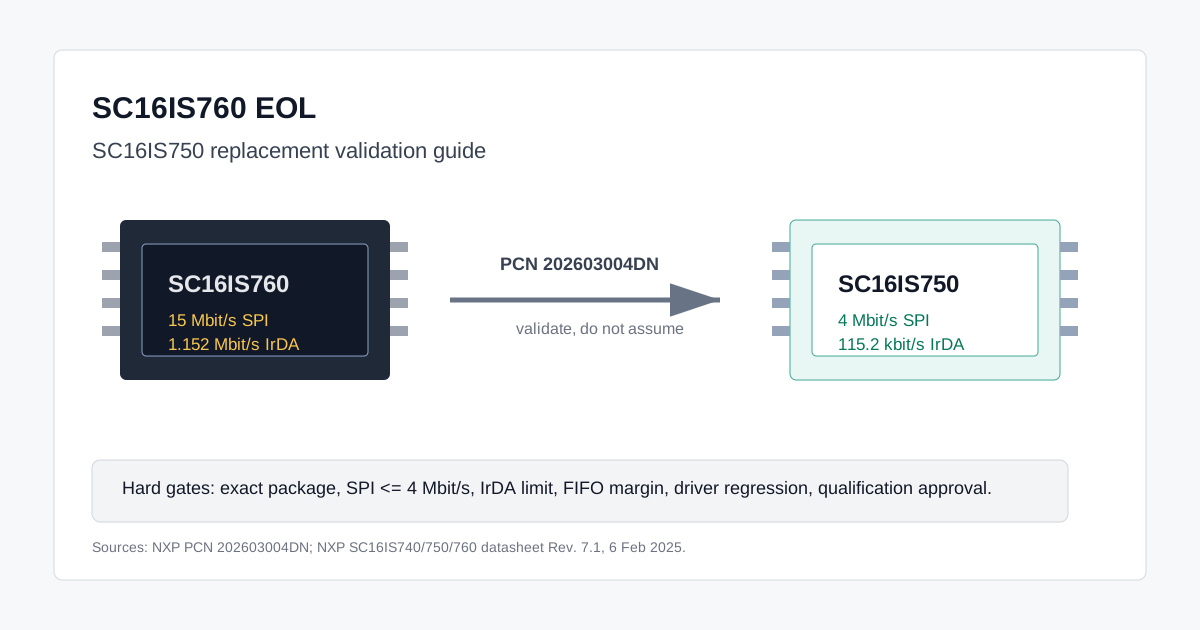
- A replacement part listed in a PDN or EOL notice is a qualification path, not an automatic equivalence claim.
- The fastest way to lose control is to treat discontinuance notices as document filing instead of BOM exposure and deadline triage.
What to do today, this week, and before LTB:
- If the notice hits a live BOM: same-day escalation.
- If no qualified alternate exists: stock bridge and qualification run in parallel.
- If LTB is near: demand review starts before substitute certainty.
- If only legacy demand remains: watchlist, owner, and customer hold rules.
An EOL or PDN notice is not just another lifecycle PDF. For a sourcing team, it is a deadline signal that can affect open builds, quoted programs, service stock, and customer commitments at the same time. The real question is not what the acronym means. The real question is what the team needs to do today, this week, and before the Last Time Buy date.
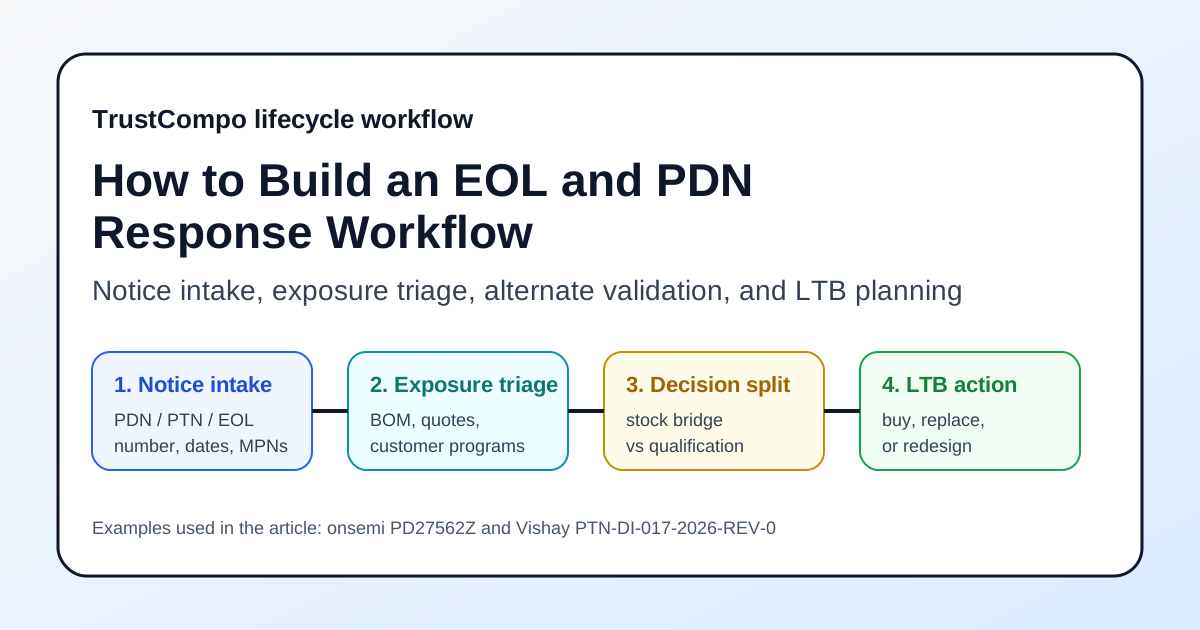
A practical EOL and PDN response workflow should do three things early: identify live BOM exposure, separate buy-time from qualification-time, and assign named owners before the remaining window starts shrinking.
Recent notice examples make the risk concrete. onsemi notice PD27562Z, issued on July 28, 2026, flagged product discontinuance for NSVF4015SG4T1G. Microchip notices such as CBOL-21ZKND337, CENO-22CETT730, and MFOL-23ZTQH701, surfaced in late July 2026, show the same operational pattern: buyers need exact-MPN intake, package awareness, and a response cadence tied to real dates rather than inbox filing.
The notice itself does not protect supply continuity. What protects continuity is a workflow that turns the notice into exposure review, decision ownership, and timed action.
This article stays focused on response execution rather than notice theory. If your team also needs a screening method for marking, site, firmware, or material changes, pair it with How to Read a PCN Without Stopping Your Line. If the upstream problem is earlier notice collection, the companion operating model is First-Hand Supplier Intelligence Workflow for Electronic Component Sourcing.
Written for procurement managers, BOM buyers, SQE teams, and sourcing operators handling semiconductor lifecycle risk in live production builds. Last reviewed on August 27, 2026.
Use this quick-action table first:
| If the notice says... | What buyers should do first | Escalate when |
|---|---|---|
| Product discontinuance, PTN, or EOL | Log the official notice number, affected MPNs, and LTB / LTS dates the same day | The part is on a live BOM or an active quote |
| Manufacturer-listed replacement | Treat it as a qualification candidate, not an approved equivalent | Package, electrical, firmware, or customer-approval scope changes |
| Last Time Buy is approaching | Compare remaining demand, stock on hand, and redesign timing in parallel | Redesign timing is longer than the remaining buy window |
| No current production exposure | Archive the notice with a watchlist trigger and owner | Customer reorders, service builds, or legacy demand still exist |
1. Quick answer: the workflow that protects buyers from late EOL surprises
For most sourcing teams, the safest EOL and PDN response workflow is:
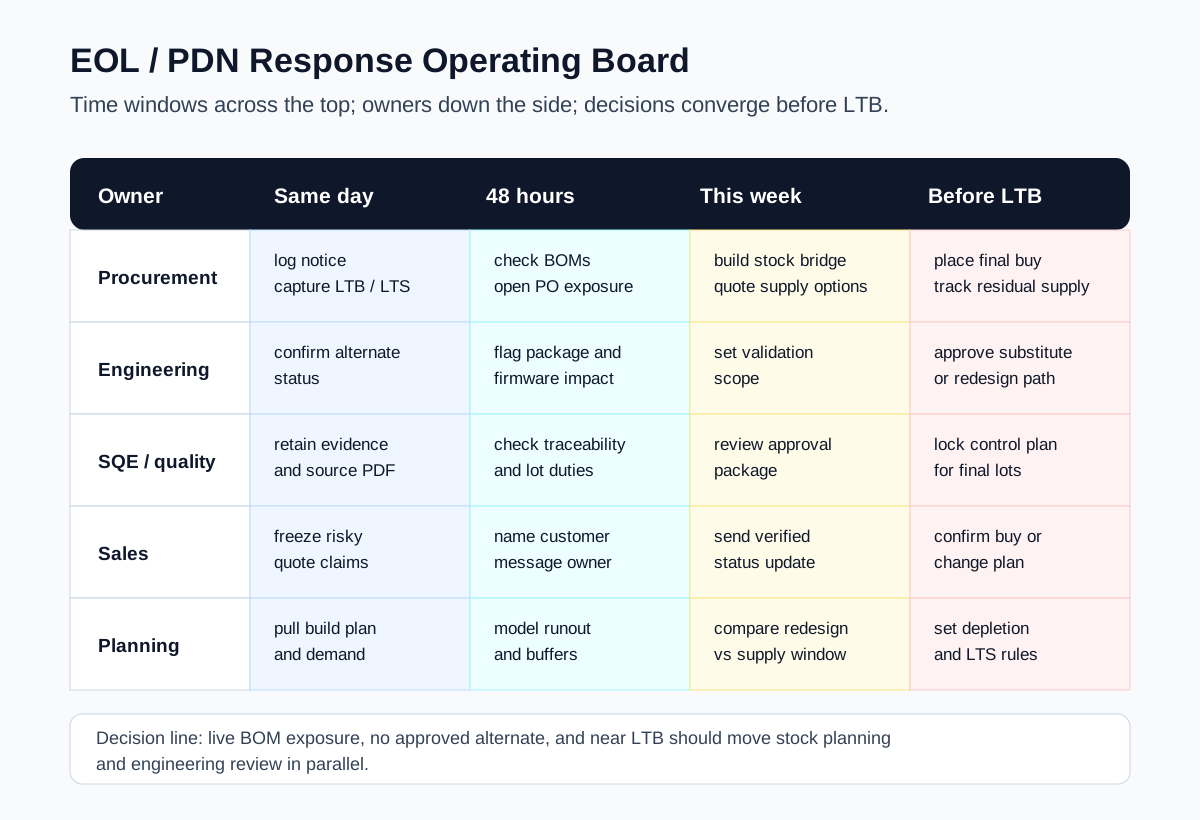
| Time window | Buyer action | Why it matters |
|---|---|---|
| Same day | Capture the official notice, affected MPNs, lifecycle wording, LTB, LTS, and owner | Prevents deadline drift and family-level confusion |
| Within 48 hours | Check live BOMs, open quotes, inventory, and open POs | Tells the team whether the notice is operational or urgent |
| Within 1 week | Split the response into stock bridge and alternate qualification | Stops the team from waiting too long for perfect substitute clarity |
| Before LTB | Commit final-buy or redesign actions with documented assumptions | Keeps supply decisions tied to real demand and approval scope |
That quick sequence is the core answer most buyers need first. A long glossary does not help much if the team still does not know who owns the notice, whether an active BOM is exposed, or whether the redesign window is already shorter than the supplier's remaining order window.
2. Start with the four questions that decide the response path
Every EOL or PDN should be reduced to four operational questions before the internal discussion gets complicated:
| Question | Why it matters | Output owner |
|---|---|---|
| Which exact MPNs, package variants, and customer programs are exposed? | Teams often know the family name but not the real BOM exposure | Procurement or document control |
| What are the hard dates? | LTB and LTS dates decide whether buy planning and redesign can happen in parallel | Procurement |
| Is there a validated alternate already approved? | This determines whether the workflow is stock-first, qualification-first, or redesign-first | Engineering plus sourcing |
| What customer or quality approvals are required? | Regulated, automotive, medical, and high-reliability programs may need more than an internal substitution decision | SQE, quality, and account owner |
The most expensive mistake is usually not misunderstanding the acronym. It is waiting too long to decide whether the part should be bought, replaced, or redesigned.
The first-pass routing can be kept simple:
| Notice condition | Immediate workflow path |
|---|---|
| Live BOM exposure and no approved alternate | Open buy-window review and engineering escalation the same day |
| Live BOM exposure and approved alternate exists | Validate stock bridge, approval scope, and lot-control plan |
| No live BOM exposure but active customer quotes exist | Freeze new-quote assumptions and update the quoting team |
| No live BOM or quote exposure | Archive with watchlist follow-up instead of urgent escalation |
3. Capture the notice fields before anyone argues about substitutes
An EOL response collapses when teams debate alternates before they have the same source facts. The intake sheet should capture at least these fields:
| Field | Why it belongs in the workflow |
|---|---|
| Official notice number | Creates a traceable reference for later audits and customer communication |
| Issue date | Tells the team when the clock started |
| Lifecycle language | Distinguishes PDN, PTN, product discontinuance, and formal EOL wording |
| Affected MPNs | Prevents family-level confusion |
| LTB date | Defines the last order checkpoint |
| LTS or last delivery date | Defines the supply bridge horizon |
| Replacement reference | Gives engineering a starting point, not a final answer |
| Inventory and open PO status | Shows whether there is time to qualify or only time to buy |
| Customer-program impact | Prevents hidden exposure in approved or quoted builds |
Use concrete examples in the sheet so the workflow stays product-facing instead of abstract. Representative affected parts from recent lifecycle and manufacturing notices include NSVF4015SG4T1G, ATTINY45-20XU, ATTINY45V-10XUR, MCP1640, PD70288ILQ-TR, and KSZ9563RNXI.
Those examples matter for two reasons. First, they remind the team that lifecycle response spans discrete semiconductors, MCU families, power-management devices, PoE controllers, and networking parts. Second, they force the workflow to stay at exact-MPN level rather than broad family language.
| Representative MPN | Supplier | Public-safe parameter or package clue | Why it helps this workflow |
|---|---|---|---|
NSVF4015SG4T1G | onsemi | Single affected OPN called out in PD27562Z | Useful opening example for direct discontinuance exposure |
ATTINY45-20XU | Microchip | 8L TSSOP package family context in CBOL-21ZKND337 | Good example of exact-MPN intake under assembly-site changes |
ATTINY45V-10XUR | Microchip | 8L TSSOP reel-suffix variant in the same notice family | Reminds teams not to collapse reel and package suffixes |
MCP1640 | Microchip | 6L SOT-23 family context in CENO-22CETT730 | Useful power-management example for notice field discipline |
PD70288ILQ-TR | Microchip | 38L VQFN package context in MFOL-23ZTQH701 | Shows why package and assembly detail belong in the intake sheet |
KSZ9563RNXI | Microchip | 64L VQFN networking-family example in CBOL-23HZDP733 | Keeps networking parts inside the same lifecycle-response framework |
In practice, this is where many teams either gain control or lose it. Notice number, lifecycle wording, dates, and affected MPNs come from the manufacturer source. The sourcing judgment starts after those fields are captured and mapped to the active BOM, quote queue, and customer build list. If the intake sheet is vague at the start, every later decision becomes slower and more expensive.
4. Build a role-based workflow instead of a generic inbox rule
The work is cross-functional even when the notice arrives in procurement first.
| Role | Day-0 responsibility | This-week responsibility | Before LTB responsibility |
|---|---|---|---|
| Procurement | Log the notice, affected MPNs, dates, open POs, and stock posture | Quantify BOM and quote exposure, request updated channel posture, and open buy-window scenarios | Place final orders if approved and maintain supply-bridge tracking |
| Engineering | Confirm whether an alternate already exists and define validation scope | Review package, electrical, firmware, qualification, and test impact | Sign off on substitute, redesign, or controlled lifetime-buy path |
| SQE or quality | Check document retention, traceability, and customer quality obligations | Review whether the alternate or remaining stock needs special control | Support approval package and lot-segregation rules |
| Sales or account owner | Freeze unsafe assumptions in open quotes | Notify exposed customers with verified facts and next steps | Keep customers aligned on stock bridge, substitute timing, or redesign risk |
| Operations or planning | Review build schedule and inventory consumption rate | Model buffer stock and final-ship risk | Coordinate phased depletion and last-ship commitments |
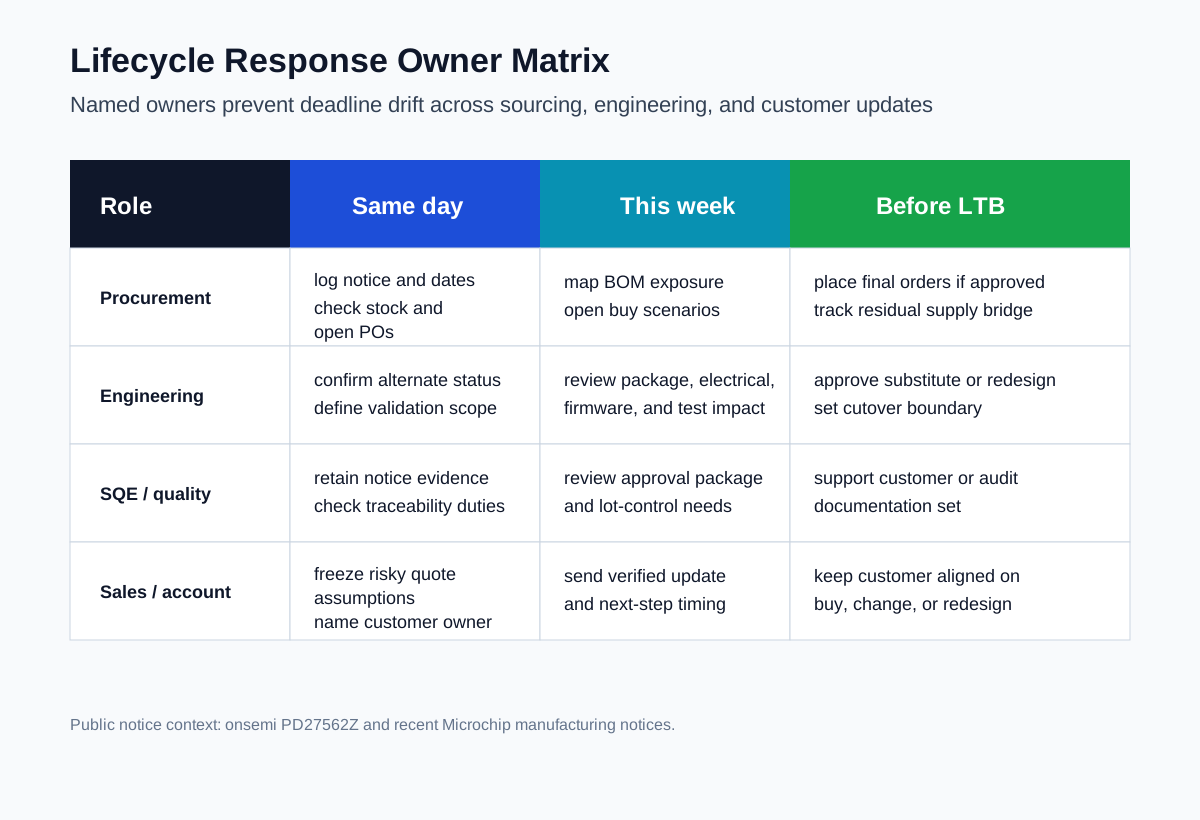
If these owners are not named early, the workflow usually falls into the same failure pattern. Procurement waits for engineering, engineering assumes procurement is buying time, and the customer only hears about the issue after the buy window is already narrower than the redesign window.
5. Separate stock-bridge decisions from alternate-qualification decisions
Many teams mix two different decisions into one meeting:
- Should we secure remaining stock before the LTB date?
- Should we qualify an alternate or redesign away from the part?
These are related, but they are not the same decision. A disciplined workflow evaluates both in parallel.
| Decision area | Questions to answer | Common failure mode |
|---|---|---|
| Stock bridge | How many months of demand remain, what inventory already exists, and what is the realistic final-order window? | Buying too late because the team waited for perfect redesign clarity |
| Alternate qualification | Is the proposed replacement already approved, or does it change package, performance, firmware, safety, or qualification scope? | Treating a supplier replacement reference as automatic equivalence |
| Redesign timing | If no safe alternate exists, how long will schematic, PCB, firmware, validation, and customer re-approval take? | Discovering too late that the LTB window is shorter than the redesign cycle |
The best use of remaining supply is to buy qualification time, not to avoid the qualification decision.
That is especially important when a notice includes a replacement suggestion. A listed substitute may be useful, but it still needs package, electrical, firmware, and customer-approval review. The safe wording is "replacement candidate after validation," not "drop-in replacement."
This is also where real procurement friction shows up. An apparently safe lifetime buy can still fail if the supplier applies NCNR terms, the authorized channel offers only a package variant outside the approved AVL, or the remaining stock window conflicts with shelf-life, MSL control, or customer payment terms. In high-reliability builds, treating an active TSSOP-8 variant as identical to an obsolete SOIC-8 variant without a PCB revision check can force an unplanned respin when the remaining LTB window is already too short to recover cleanly.
A second common failure pattern appears when procurement sees available channel stock and places a protective buy, but engineering later rejects the remaining lots because the date-code mix, packaging suffix, or moisture-control history no longer matches the customer build requirement. At that point the team has spent money without actually restoring usable supply.
6. Common failure modes in EOL and PDN response
Teams usually miss lifecycle deadlines in familiar ways:
| Failure mode | What it looks like in practice | Better response |
|---|---|---|
| Family-level thinking | The team logs only a series name and misses suffix- or package-specific exposure | Record the exact orderable MPN, package, and variant from the notice |
| Waiting for engineering before opening buy planning | Procurement delays demand and stock review until a full substitute answer exists | Start stock bridge and qualification review in parallel |
| Treating a listed successor as automatically safe | The supplier names a replacement and the team assumes drop-in equivalence | Re-run package, electrical, firmware, quality, and customer-approval checks |
| Telling the customer too late | Sales waits until final-buy decisions are complete | Send an early verified status update with current dates and next steps |
| Filing the PDF without a named owner | The notice exists in email but not in an action system | Assign owner, next review date, and exposure status on day 0 |
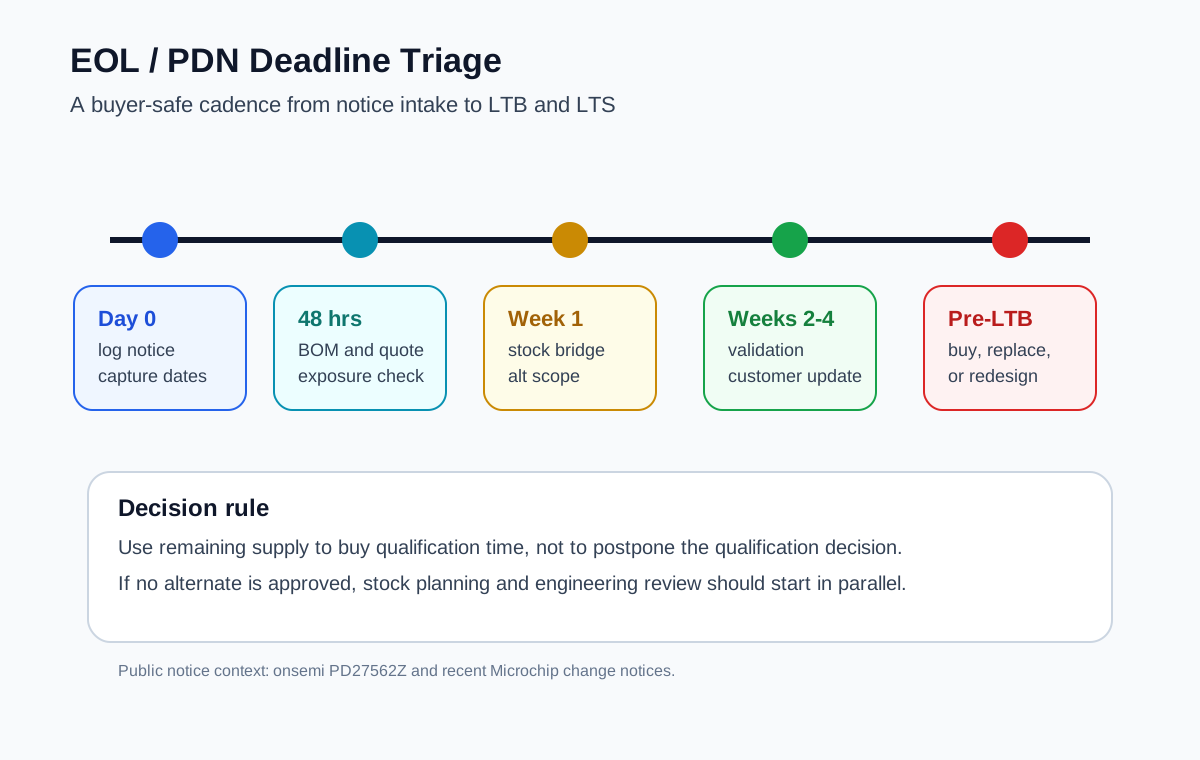
7. Use a deadline cadence the team can actually follow
The workflow should define time buckets, not just a final due date.
| Timing window | What the team should complete |
|---|---|
| Same day | Log the official notice, affected MPNs, dates, open exposure, and owner assignments |
| Within 48 hours | Determine whether the part is on a live BOM, quote, or approved customer build |
| Within 1 week | Decide stock-bridge options, alternate candidates, and engineering validation scope |
| Within 2 to 4 weeks | Run substitute review, customer communication, and preliminary buy-plan approval |
| Before LTB | Commit final-buy quantities only after demand, validation, and customer-risk assumptions are documented |
| Before LTS | Control last shipments, residual inventory, and cutover timing |
This cadence turns a vague lifecycle alert into a managed response sequence. It also makes internal escalation easier because each owner knows what "late" means.
8. Why LTB and LTS need plain-language handling
Manufacturer terminology is not always written the same way across portals, but the buyer-side meaning is consistent enough to operationalize:
LTBmeans the last date to place a final order under the discontinuance plan.LTSor final delivery date means the last manufacturer ship window for that discontinued item.PDN,PTN,product discontinuance, andproduct obsolescencewording should all trigger exact-MPN review rather than casual archiving.
onsemi's official product change notifications portal exposes fields such as PCN number, title, issue date, type, action, affected OPNs, and replacement-part columns. TI's official product withdrawal and discontinuance policy FAQ shows the same buyer expectation and explicitly ties discontinuance handling to J-STD-048. Microchip's official PCN and EOL notification system also explains notification status, affected CPN handling, and implementation timing. Together, these vendor policies reflect the JEDEC-style discipline buyers should expect when they evaluate withdrawal and change notices.
Even so, buyers should verify the exact manufacturer notice window every time instead of assuming every supplier follows the same timetable or offers the same practical amount of redesign time. A six-month-looking window on paper may translate into much less usable decision time once internal approvals, customer notice obligations, and qualification work are included.
9. Keep the customer communication and document trail as part of the workflow
The customer-facing side should not be bolted on at the end. If an exposed part sits on an approved build, a field-service commitment, or a regulated product, the communication trail is part of the sourcing workflow from the beginning.
At minimum, the response pack should keep:
- the original notice reference
- the internal exposure list
- the LTB and LTS dates
- the decision on buy, qualify, or redesign
- the current substitute status
- the customer message owner and latest update date
The goal is simple: anyone who reopens the case should be able to see the source notice, the exposed programs, the current decision path, and the next committed action without reconstructing the history from email.
If your team already sees lifecycle pressure on active programs, route the operational next step into Obsolete and EOL continuity support. If the part risk sits inside a broader assembly problem, use BOM exposure triage tools to map where the notice actually hits. If substitute control or lot identity becomes the bigger risk, move the review into quality assurance support.
Boundary note: This article is a sourcing workflow, not legal advice and not ERP implementation guidance. Teams with customer-specific contractual notice obligations still need to map this workflow into their own commercial and compliance process.
10. Conclusion
The best EOL and PDN response workflow is not the most complicated one. It is the one that forces the team to answer three questions early: where is the exposure, what is the deadline, and are we buying time or approving change?
For most sourcing teams, the practical workflow is straightforward:
- Create a one-page intake sheet that captures notice number, dates, affected MPNs, replacement references, and owners.
- Split lifecycle response into two parallel tracks: stock bridge and alternate qualification.
- Put customer communication on the same timeline as procurement and engineering review instead of treating it as the final step.
When that cadence is in place, EOL and PDN notices stop behaving like surprise events and start behaving like managed sourcing decisions. That is the difference between reacting late and controlling the outcome.
Need help with an exposed BOM?
If an active build is already inside the LTB window, start with Obsolete and EOL continuity support. If the main problem is unclear exposure, use BOM exposure triage tools. If the risk has shifted to substitute control, traceability, or lot acceptance, move the review into quality assurance support.