- TE Connectivity
- cross reference
- DEUTSCH DT alternative
- M12 connector replacement
TE Connectivity Cross-Reference Guide: DEUTSCH DT, M8/M12, and Dynamic Series Alternatives
A technical TE Connectivity cross-reference guide for DEUTSCH DT, Amphenol AT, M8/M12, and Dynamic Series alternatives, with mechanical, electrical, tooling, sealing, and approval checks.
Quick facts
- A connector is not a drop-in replacement until form, fit, function, tooling, and customer-approval checks are complete.
- Amphenol AT is a common review path for TE DEUTSCH DT applications, but housings, wedgelocks, contacts, seals, tools, and assembly instructions must be controlled as a kit.
- M8 and M12 alternatives require coding, shielding, pinout, shell/thread material, cable construction, IP rating, and protocol checks before approval.
- Dynamic Series alternatives are high-risk unless pitch, keying, latch, terminal geometry, plating, wire range, crimp tooling, and vibration behavior are validated.
When a distributor replies with a long lead time for a TE Connectivity connector, the risky move is to approve the first part that looks similar in a catalog photo. Connectors are system parts: the housing, mating face, keying, seal, contact, plating, crimp tooling, cable, and customer approval path all decide whether an alternate is usable.
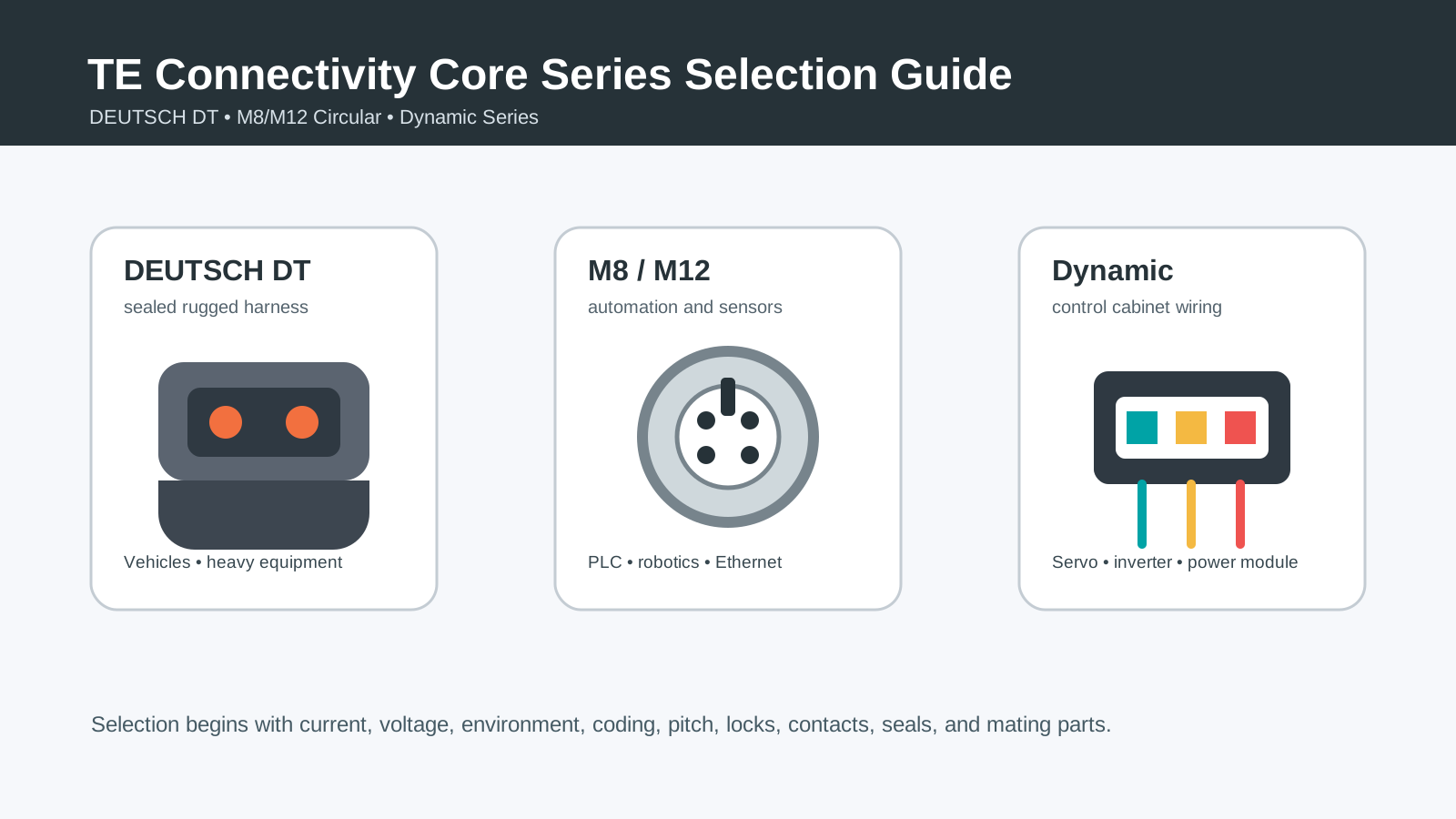
The correct response is controlled cross-referencing. This guide focuses on three common TE review lanes: DEUTSCH DT to Amphenol AT-style alternatives, M8/M12 industrial circular connector substitutions, and Dynamic Series alternatives for industrial wiring and equipment builds.
Evidence Boundary and Approval Rule
This article is a buyer and FAE review framework. It does not certify any third-party connector as a universal TE drop-in replacement. Exact approval depends on the current manufacturer drawing, mating part, contact system, tooling, application environment, customer AVL, and sample validation.
| Evidence lane | What it supports | What it cannot prove | Buyer use |
|---|---|---|---|
| TrustCompo product anchors | Exact TE and Amphenol example part numbers for structured RFQ review | Universal intermateability or production approval | Start the comparison from real MPNs, not generic connector descriptions |
| Manufacturer drawings / datasheets | Dimensions, ratings, materials, contact systems, tooling boundaries | Field reliability in every harness or machine | Confirm form, fit, function, and assembly process |
| Application notes and customer AVL | Whether alternates are allowed in automotive, industrial, or service contexts | Waiver of customer approval | Decide if cross-reference work can proceed or must stay exact-source |
| TrustCompo FAE judgment | Practical risk ranking for buyer triage | A guarantee that an alternate is drop-in | Route approve / sample / test / reject decisions |
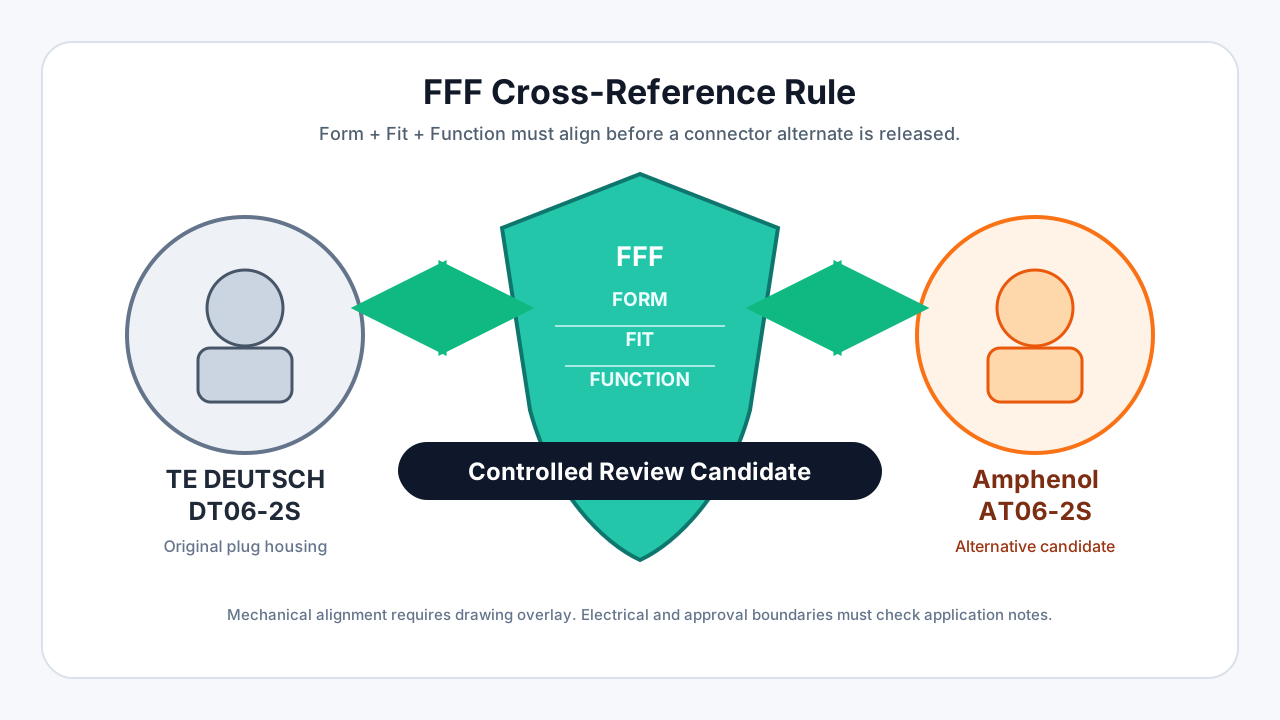
In connector sourcing, a true drop-in replacement must pass the FFF rule plus assembly approval:
| FFF Rule | What Must Match | Buyer Risk If Ignored |
|---|---|---|
| Form | Envelope, cavity count, pitch, coding, keying, latch, mating face, mounting geometry | The connector does not mate, cannot fit the enclosure, or blocks nearby components. |
| Fit | Contacts, seals, wedgelocks, accessories, cable diameter, PCB footprint, crimp tooling | The housing arrives but the assembly line cannot build a qualified harness. |
| Function | Current, voltage, insulation, temperature, IP rating, shielding, vibration, protocol behavior | The alternate passes visual inspection but fails in the machine, vehicle, or network. |
| Approval | Drawing revision, customer AVL, sample test, PPAP / process requirement where applicable | The part works on the bench but cannot be released to production. |
TrustCompo treats cross-reference work as an FAE-controlled process, not a catalog keyword search. For TE continuity issues, the sourcing team can compare TE originals against European and US connector families, franchised-distribution options, original stock, and selected qualified OEM alternatives where the application allows it. In automotive and harsh-environment projects, customer AVL, PPAP, or other release requirements must be checked before any alternate is presented as production-ready.
1. DEUTSCH DT Cross-Reference Ecosystem
TE DEUTSCH DT connectors are common in automotive, commercial transportation, agricultural equipment, construction machinery, outdoor control systems, and rugged harness assemblies. They are also one of the first connector families buyers search for during a shortage because one missing housing, wedgelock, or contact can hold back the entire harness build.
The DT system is attractive because it is practical: sealed rectangular housings, common 2/3/4/6/8/12 cavity arrangements, size 16 contact systems, and field-proven use in harsh environments. That also means substitutes must be reviewed as a complete connector system, not as isolated plastic bodies.
Candidate Alternative Family: Amphenol AT Series
For many DEUTSCH DT continuity cases, Amphenol AT Series is the first serious cross-reference family to review. In practical sourcing language, Amphenol AT is often treated as a strong premium candidate for TE DEUTSCH DT-style sealed connections because the housing concept, mating interface, environmental intent, and application space are close. It still requires drawing, accessory, contact, tooling, and customer-approval review.
Typical cross-reference examples:
| TE DEUTSCH DT Original | Common Amphenol AT Candidate | Review Confidence | FAE Review Notes |
|---|---|---|---|
| DT06-2S plug housing | AT06-2S plug housing | Strong candidate for compatible DT-style systems | Confirm color, keying, seals, contacts, wedgelock, and exact customer AVL status. |
| DT04-2P receptacle housing | AT04-2P receptacle housing | Strong candidate for compatible DT-style systems | Confirm mating side, contact gender, panel/flange details, and sealing requirement. |
| DT06-4S plug housing | AT06-4S plug housing | Candidate after drawing review | Confirm cavity map, latch clearance, and harness drawing notes. |
| DT04-4P receptacle housing | AT04-4P receptacle housing | Candidate after drawing review | Confirm the complete kit: housing, contacts, wedge, seals, and tooling. |
RFQ action: Upload your BOM for a controlled cross-reference review
DEUTSCH DT Mechanical Compatibility Checks
Before a DT-style alternate is treated as production-ready, the review should cover the complete connector set, not only the housing.
| Compatibility item | What to compare | Release risk if skipped |
|---|---|---|
| Cavity count and keying | 2/3/4/6/8/12 position layout, key orientation, polarization, color / option code | Wrong part may not mate or may allow a mis-mate. |
| Shell and latch geometry | Envelope, latch travel, flange / panel feature, strain-relief clearance | Harness cannot install in the same bracket or enclosure. |
| Seal system | Interface seal, rear wire seal, blanking plugs, wire OD range, IP target | Water ingress or poor retention under vibration. |
| Terminal system | Pin / socket gender, size 16 contact family, wire range, plating, retention feature | Crimped terminal may not retain or may change contact resistance. |
| Wedgelock and accessories | TE W-series vs Amphenol AW-series components, colors, removal tools, work instructions | Assembly line mixes accessories and creates latent reliability defects. |
| Tooling and process | Hand tool, applicator, pull-force requirement, inspection gauge, operator instruction | Alternate cannot be built consistently at production volume. |
Cost-Down Alternative: Qualified Domestic or OEM-Compatible Sources
In some projects, the buyer does not need a premium Western-brand replacement. They need a stable, sealed, cost-controlled alternate that can keep a harness line moving after engineering approval. This is where TrustCompo may evaluate qualified domestic automotive-grade brands or high-quality OEM manufacturers that can meet the required sealing, flame-retardant material, contact finish, dimensional tolerance, and traceability expectations.
The decision depends on the application:
| Application | Alternate Strategy | Approval Requirement |
|---|---|---|
| Prototype harness | Premium cross-reference or sample-ready compatible set | Engineering sample approval and mating test. |
| Maintenance repair | Available equivalent kit with correct contacts and seals | Physical intermateability, wire range, and field environment review. |
| Production automotive harness | Customer AVL or formal alternate approval | Drawing comparison, PPAP/AEC/customer process where required. |
| Agricultural or heavy equipment service | Rugged compatible kit with traceability | Seal, vibration, wire gauge, and accessory completeness checks. |
Never present a low-cost alternate as a drop-in production replacement until the engineering approval path is clear. In connectors, a cheap body can become expensive if it causes water ingress, contact fretting, poor crimp retention, or a warranty claim.
Wedgelock Pitfall: Bodies May Mate, Internal Locks May Not
The most common DEUTSCH DT cross-reference mistake is assuming that all internal accessories can be mixed freely. Even when TE DEUTSCH DT and Amphenol AT housings are compatible at the mating interface, wedgelocks, colors, removal tools, and assembly-line instructions may differ.
For example, a TE DT assembly may use TE wedgelocks such as W2S or W4S, while an Amphenol AT build may use Amphenol AW-series wedge components. The buyer sees a two-position plug and thinks the body is the whole story. The harness operator sees a different wedge color, a different removal hook, or a line instruction that no longer matches the kit.
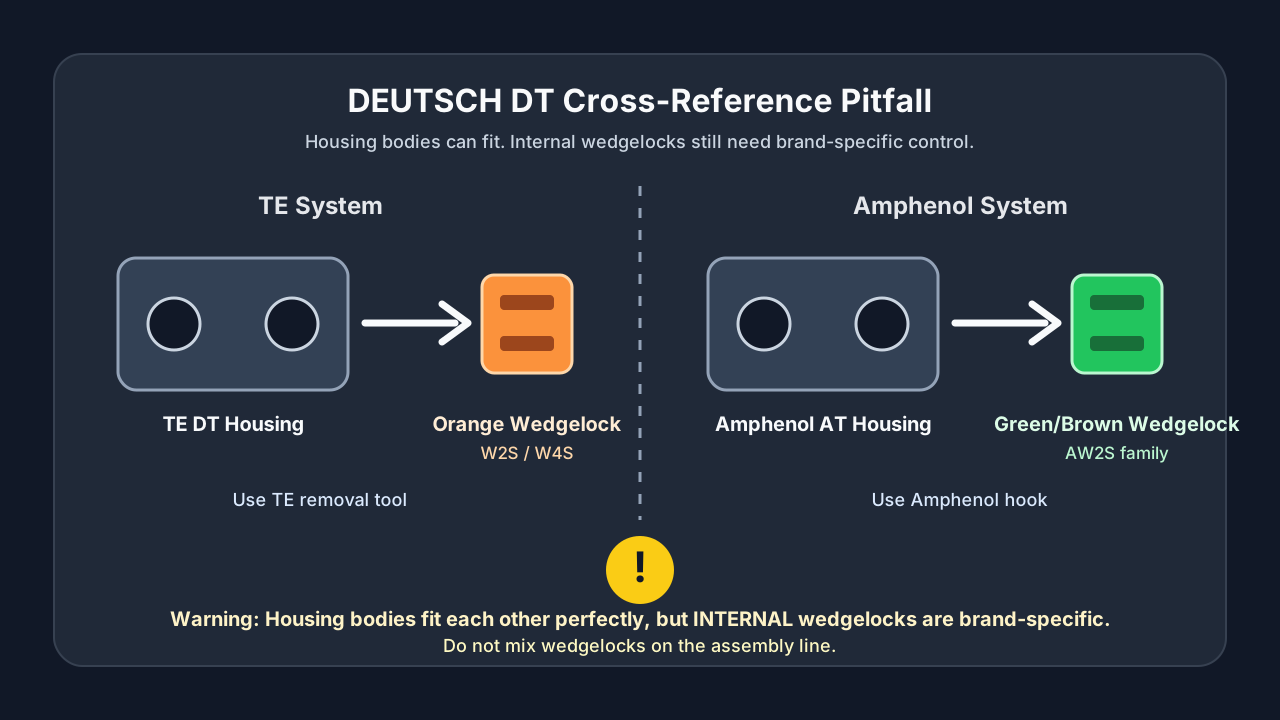
Procurement rule: if you switch the housing brand for a DT-style connector, review the whole assembly set. That means plug, receptacle, socket contacts, pin contacts, wedgelocks, seals, removal tools, and packaging labels.
2. M8 and M12 Industrial Circular Connector Substitution
Industrial automation buyers do not have the luxury of long analysis when a production line is down. A missing M12 cable assembly can stop a PLC I/O branch, sensor network, robot cell, or industrial Ethernet link. The temptation is to search by diameter and buy whatever is available today.
That is risky. M8 and M12 connectors are standardized families, but the replacement still needs a technical check. The same M12 thread size can hide different coding, pin counts, shielding behavior, cable construction, and protocol suitability.
Strong Alternative Families to Review
When a TE M8/M12 circular connector is constrained, TrustCompo commonly evaluates industrial connector alternatives from:
| Alternative Manufacturer | Typical Strength | FAE Review Focus |
|---|---|---|
| Molex Brad | Broad industrial automation and M12 cable assembly ecosystem | Coding, cable length, shield, pinout, molded vs field-installable construction. |
| Phoenix Contact | Strong industrial connectivity portfolio for sensors, panels, and field wiring | Protocol, thread, conductor size, termination style, and protection rating. |
| Binder | Mature circular connector platform with industrial Ethernet options | Shielding, metal shell design, pin arrangement, and environmental rating. |
| Selected qualified manufacturers | Cost-down or urgent open-market support | Dimensional drawing, insulation, shell material, traceability, and sample approval. |
RFQ action: Upload your BOM for a controlled cross-reference review
M8/M12 Replacement Review Points
For an M12 alternate, do not approve by visual appearance. Review these items:
| Checkpoint | What to Confirm | Why It Matters |
|---|---|---|
| Coding | A-code, B-code, D-code, X-code, L-code, or other coding | Coding controls the mating interface and application class. |
| Gender and pin count | Male/female side, 3/4/5/8/12 pins, pin assignment | Wrong gender or pinout can make a cable unusable even if the shell fits. |
| Shielding | Shielded vs unshielded, 360-degree shell continuity, cable shield termination | Industrial Ethernet and noisy factory environments may require EMI protection. |
| Thread and shell material | Metal thread, plastic thread, full metal shell, hybrid body | Mechanical durability and grounding behavior can change. |
| Cable construction | PUR/PVC jacket, conductor size, twisted pairs, cable category, oil resistance | A sensor cable and Ethernet cable are not interchangeable just because both use M12. |
| Environmental rating | IP67, IP68, IP69K, temperature range, chemical exposure | A clean cabinet substitute may fail outdoors or in washdown service. |
| Mechanical / electrical boundary | Buyer question before approval | Example failure mode |
|---|---|---|
| Pitch and pin arrangement | Does the alternate preserve the exact pin map and coding of the TE original? | Sensor power and signal pins are swapped or unusable. |
| Shell / thread / coupling nut | Is the thread material and torque requirement suitable for the field environment? | Plastic thread strips where the original metal shell survived. |
| Shielding path | Is 360-degree shield continuity required by the network or machine design? | Industrial Ethernet link becomes unstable near drives or welding equipment. |
| Cable and jacket | Does the substitute match conductor size, pair twist, oil resistance, drag-chain need, and bend radius? | Cable survives electrical test but fails mechanically in the machine. |
| IP and chemical rating | Does the alternate match washdown, dust, coolant, outdoor, or temperature exposure? | Cabinet-rated connector fails in IP67 / IP69K field service. |
For TE-side comparison anchors, exact part numbers such as T4110001041-000, T4111001041-000, and T4051110003-001 are more useful than a generic "M12 connector" description. They give the FAE team a concrete starting point for coding, pin count, cable structure, and drawing comparison.
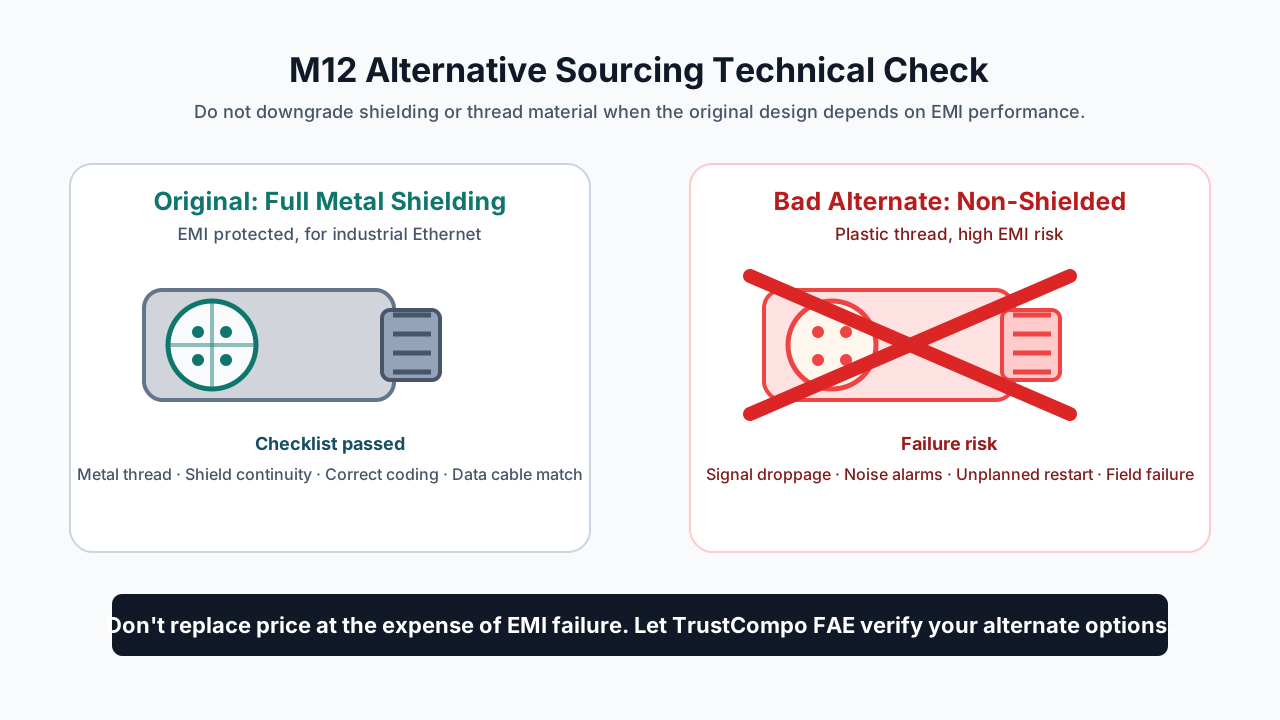
The most dangerous downgrade is replacing a shielded metal M12 industrial Ethernet connector with an unshielded plastic-thread connector. The part may fit mechanically, but a machine exposed to motor drives, inverters, welding equipment, or long cable runs may suffer EMI-related errors. If the original BOM calls for a shielded D-code or X-code M12 connection, shielding is not an optional cosmetic feature.
3. Dynamic Series Replacement Thresholds
TE Dynamic Series connectors create a different substitution problem. They are often used inside servo drives, control cabinets, inverters, industrial equipment, and compact internal wiring where space is limited and vibration can be severe. The plastic housing is visible, but the real reliability story often sits inside the contact system and crimp process.
For Dynamic replacements, JST, Molex, and other established Japanese, US, or European connector families may be reviewed as functional alternatives. But this is rarely a casual drop-in decision. Dynamic connectors involve pitch, current class, housing keying, latch behavior, PCB footprint, wire range, contact plating, and production tooling.
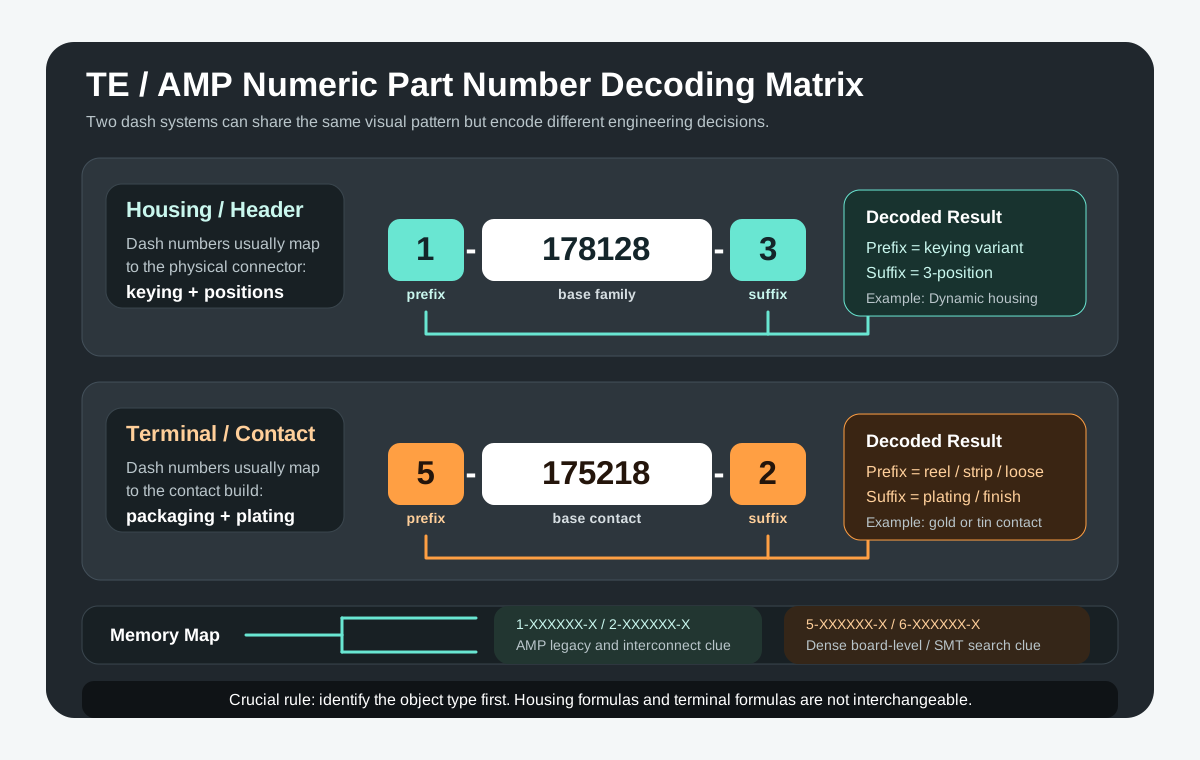
If the original BOM includes TE Dynamic examples such as 1-178128-3, 1-178128-2, or 1-175218-2, keep the exact housing, mating part, and terminal relationship visible in the RFQ. That relationship is what separates a real alternate from a lookalike.
Why the Housing Is the Easy Part
Many buyers think a 1:1-looking housing solves the problem. It does not.
The hard part is the terminal. Contact geometry decides insertion force, normal force, plating behavior, low-level signal stability, current carrying, and vibration resistance. TE Dynamic designs are known for industrial locking and robust contact concepts. If a low-quality substitute terminal uses weak spring geometry or poor plating, it may work on day one and fail after months of servo vibration.
The failure mode is usually not dramatic at first. It starts as fretting corrosion, micro-motion, rising contact resistance, intermittent alarms, or random motor fault codes. By the time the buyer sees the field failure report, the low-cost alternate has become a root-cause investigation.
Dynamic Cross-Reference Decision Table
| Replacement Situation | Recommended Path | Avoid |
|---|---|---|
| Same PCB footprint required | Stay with exact TE part or formally approved drop-in | A similar pitch housing without footprint overlay. |
| Harness-only redesign allowed | Review JST, Molex, or qualified industrial connector families | Mixing contact systems without pull-force and crimp validation. |
| Servo or high-vibration application | Require sample test, contact resistance review, vibration consideration, and approved tooling | Unknown terminals with no plating or spring-force data. |
| Emergency repair | Use exact part, approved alternate, or controlled temporary build with engineering sign-off | Treating a visual clone as production-approved. |
RFQ action: Upload your BOM for a controlled cross-reference review
| Dynamic check | What must match or be requalified | Why it matters |
|---|---|---|
| Pitch and PCB footprint | Board layout, solder tail / press-fit geometry, stack height, latch clearance | Similar pitch is not enough if the footprint or latch envelope changes. |
| Keying and mating pair | Housing polarization, mating header, contact gender, cavity assignment | Wrong mating pair can pass purchasing review and fail at assembly. |
| Contact and plating | Normal force, plating type/thickness, current class, low-level signal behavior | Poor contact system creates fretting, heat, or intermittent faults. |
| Crimp tooling | Approved applicator, hand tool, pull force, crimp height, inspection method | A good terminal can fail if the assembly process is not controlled. |
| Vibration and environment | Cabinet, servo, inverter, vehicle, or field-service exposure | Low-cost alternates may pass static tests and fail after vibration aging. |
The rule is simple: housings are easy to copy; qualified terminals are not. Any Dynamic alternate should be reviewed with the contact drawing, wire range, plating, crimp tool, applicator, mating header, and customer approval path visible.
TrustCompo's 4-Step Alternative Safety Validation Flow
When a buyer sends a TE BOM for cross-reference, TrustCompo uses a validation flow designed to protect both delivery and reliability.
| Step | Validation Work | Output for the Buyer |
|---|---|---|
| 1. Drawing Comparison | Mechanical drawing overlay, envelope check, mating face, keying, latch, cavity map, and accessory review | Candidate alternate list with risk notes. |
| 2. Electrical Testing Review | Rated current, voltage, insulation, temperature, shielding, plating, and application derating checks | Electrical compatibility boundary and required exclusions. |
| 3. Intermateability Test | Physical mating, contact fit, crimp, retention, lock, seal, and assembly trial where samples are available | Sample-level pass/fail feedback before volume order. |
| 4. Sample Approval | Small-batch sample shipment for customer machine, harness, or cabinet testing | Engineering-approved path toward cost-down or lead-time recovery. |
For TE continuity gaps, the goal is not only to find stock. The goal is to find a technically defensible supply path: original stock where possible, premium cross-reference where appropriate, qualified cost-down options where the application allows, and clear rejection of risky lookalikes.
What to Send in an RFQ
For the fastest response, send:
- Original TE part numbers and quantities.
- Target delivery date and acceptable split shipments.
- Whether alternates are allowed.
- Application notes: automotive, industrial Ethernet, servo drive, outdoor equipment, washdown, or cabinet interior.
- Existing mating part numbers, photos, drawings, or harness notes.
- Wire gauge, cable type, shield requirement, IP rating, and customer AVL restrictions.
- Whether samples are required before the production order.
For single urgent lines, use request verified stock pricing. For multi-line connector BOMs, upload the full file through RFQ Submit. For formal cross-reference work, start from Alternative Solutions and include the application notes that engineering will need for approval.
Conclusion
TE Connectivity cross-reference work is sensitive because connectors are not commodity hardware. A connector can look interchangeable while failing the seal, contact, shielding, crimp, tooling, IP-rating, or vibration requirement that made the original design reliable.
The right alternate strategy depends on the connector family. For DEUTSCH DT, Amphenol AT is often a strong premium candidate path, but wedgelocks and assembly accessories must be controlled. For M8/M12, coding, shielding, thread material, IP rating, pinout, and cable construction decide whether the replacement works in the real machine. For Dynamic Series, the terminal and crimp process are the high-risk zone; a copied housing is not enough.
Approval rule: do not release a TE alternate to production because it mates once on the bench or looks equivalent in a marketplace listing. Release it only after the drawing, mating pair, terminal system, seal, tooling, electrical rating, environmental boundary, sample result, and customer approval path are visible.
If a distributor quote creates a delivery gap, send the BOM, drawings, and application notes to TrustCompo before the line is already stopped. The FAE team can build a controlled alternate layout that protects both delivery and reliability.