- TE Connectivity
- DEUTSCH DT
- M12 connectors
- M8 connectors
TE Connectivity Core Series Selection Guide: DEUTSCH DT, M8/M12, and Dynamic Connectors
TE Connectivity connector selection guide for DEUTSCH DT, M8/M12, and Dynamic series, with BOM kit checks and sourcing tips.
Quick facts
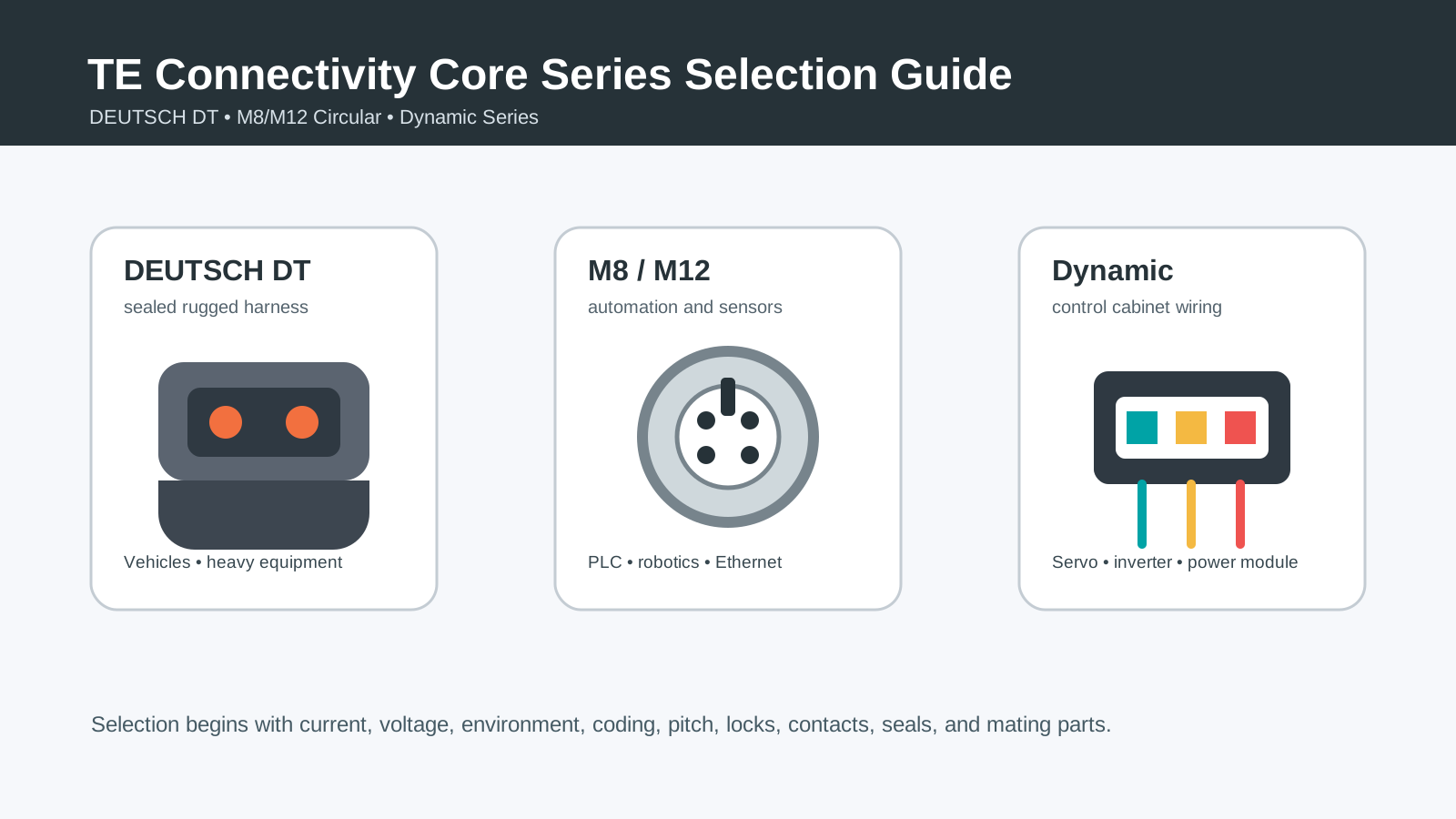
- TE Connectivity connector selection should start with current, voltage, connector type, environment rating, pitch, and locking method.
- DEUTSCH DT is a common choice for sealed wire-to-wire connections in vehicles, heavy equipment, agricultural machinery, and rugged outdoor systems.
- M8 and M12 circular connectors are widely used for sensors, PLC interfaces, industrial robots, and factory automation networks.
- TE Dynamic series connectors are often selected for control cabinets, servo drives, power modules, and high-density PCB wiring.
TE Connectivity is one of the connector brands engineers and sourcing teams keep returning to when a design needs reliable signal integrity, rugged mechanical retention, sealed interconnects, or long-term industrial availability. The brand covers a very wide product range, but most buying decisions in automotive, industrial automation, control cabinets, and equipment wiring come down to a smaller set of practical questions: which series, which pitch, which coding, which contact system, and which accessories are required to build a complete connection.
This guide focuses on three high-demand TE connector families that often appear in BOM reviews and urgent sourcing requests: DEUTSCH DT, M8/M12 circular connectors, and Dynamic series connectors. It is written for buyers, engineers, maintenance teams, and EMS/OEM sourcing managers who need a fast but technically grounded way to choose the right TE series and avoid incomplete orders.
The commercial pressure is real as well. When franchised distributors quote 16+ weeks for high-demand TE parts, a controlled open-market search, pre-bundled connector kit, or partial-build sample plan can keep a prototype run or maintenance repair from slipping while engineering confirms the final approved source.
Wrong connector selection can create expensive problems. A non-sealed connector used in a wet enclosure can lead to corrosion or short circuits. A pitch mistake can make a PCB footprint unusable. A cable-side plug without the correct contacts, wedgelock, or seal may look like a valid purchase order but still fail on the assembly line. For TE connectors, the "part number" is often only one piece of a complete interconnect system.
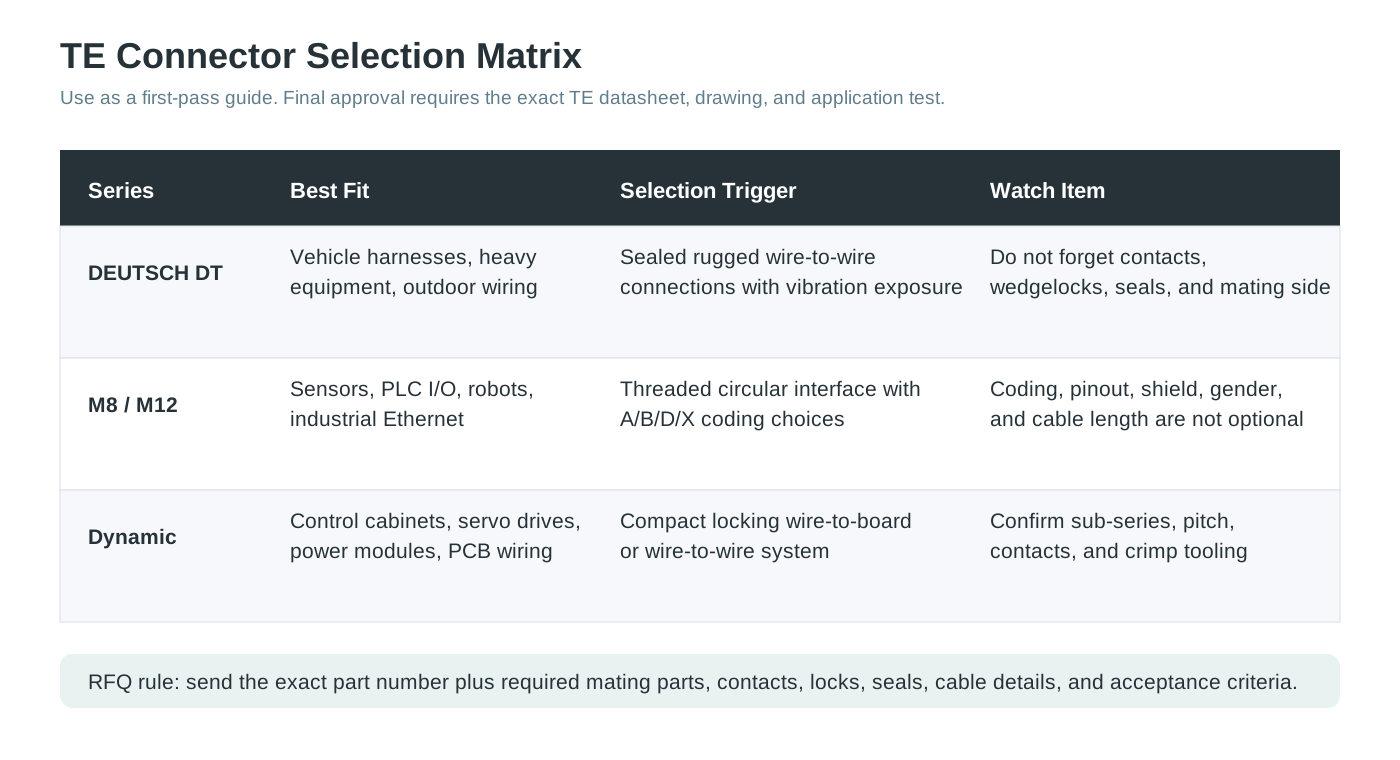
TE Connector Selection Checklist Before Choosing a Series
Before comparing individual TE part numbers, confirm the four engineering inputs below. They prevent most avoidable sourcing mistakes.
| Selection Factor | What to Confirm | Why It Matters |
|---|---|---|
| Electrical rating | Rated current, rated voltage, wire size, contact plating, creepage/clearance where applicable | A housing family may support several contact systems, but the final current limit depends on contact, wire, and thermal conditions. |
| Connection type | Wire-to-board, wire-to-wire, board-to-board, panel mount, field-installable cable, or molded cable assembly | The same application may need a plug, receptacle, PCB header, cable assembly, and mating accessories. |
| Environment | IP rating, vibration, temperature range, fluid exposure, UV exposure, and enclosure location | Automotive and outdoor equipment often need sealed systems; cabinet interiors may prioritize density and serviceability. |
| Mechanical structure | Pitch, contact count, coding/keying, latch, thread, polarization, PCB footprint, and assembly tooling | A mechanically similar connector can still be incompatible if coding, pinout, height, or locking style differs. |
Procurement note: when a BOM lists only a TE housing, ask for the mating connector, contacts, seals, wedgelocks, backshells, and tooling assumptions before placing a volume order.
Series A: DEUTSCH DT for Harsh and Heavy-Duty Environments
The DEUTSCH DT series is one of the most recognizable sealed connector families in vehicle and heavy-equipment wiring. It is commonly used in automotive, construction machinery, agricultural equipment, heavy trucks, off-road vehicles, and outdoor control systems where water, dust, vibration, and serviceability matter.
The key sourcing reason to consider DEUTSCH DT is not only the housing shape. It is the sealed system: plug, receptacle, contacts, wedgelocks, seals, wire range, and cavity count must all match. TE's DEUTSCH DT family is designed around rugged wire-to-wire and wire-to-device connections, and TE product literature commonly positions DT connectors for environmentally sealed transportation and industrial applications. For sealed DT designs, buyers should verify the exact IP rating, seal system, wire range, and accessory set from the current TE datasheet instead of assuming every nearby part number has the same environmental performance.
Pay close attention to wire gauge and insulation diameter. In DT sourcing conversations this is often shortened to wire insulation O.D. or "Blk Dia." TE DT builds may use standard seals for larger insulation diameters or Reduced Diameter (RD) seal options for thinner automotive wires. Matching the wire insulation outside diameter with the cavity seal is critical if the assembly is expected to perform as a sealed connector system in the field.
Typical DEUTSCH DT configurations include 2, 3, 4, 6, 8, and 12 positions. That flexibility makes the family useful for sensors, lamps, actuators, valve controls, machine harnesses, CAN-related wiring, serviceable modules, and mixed vehicle subassemblies.
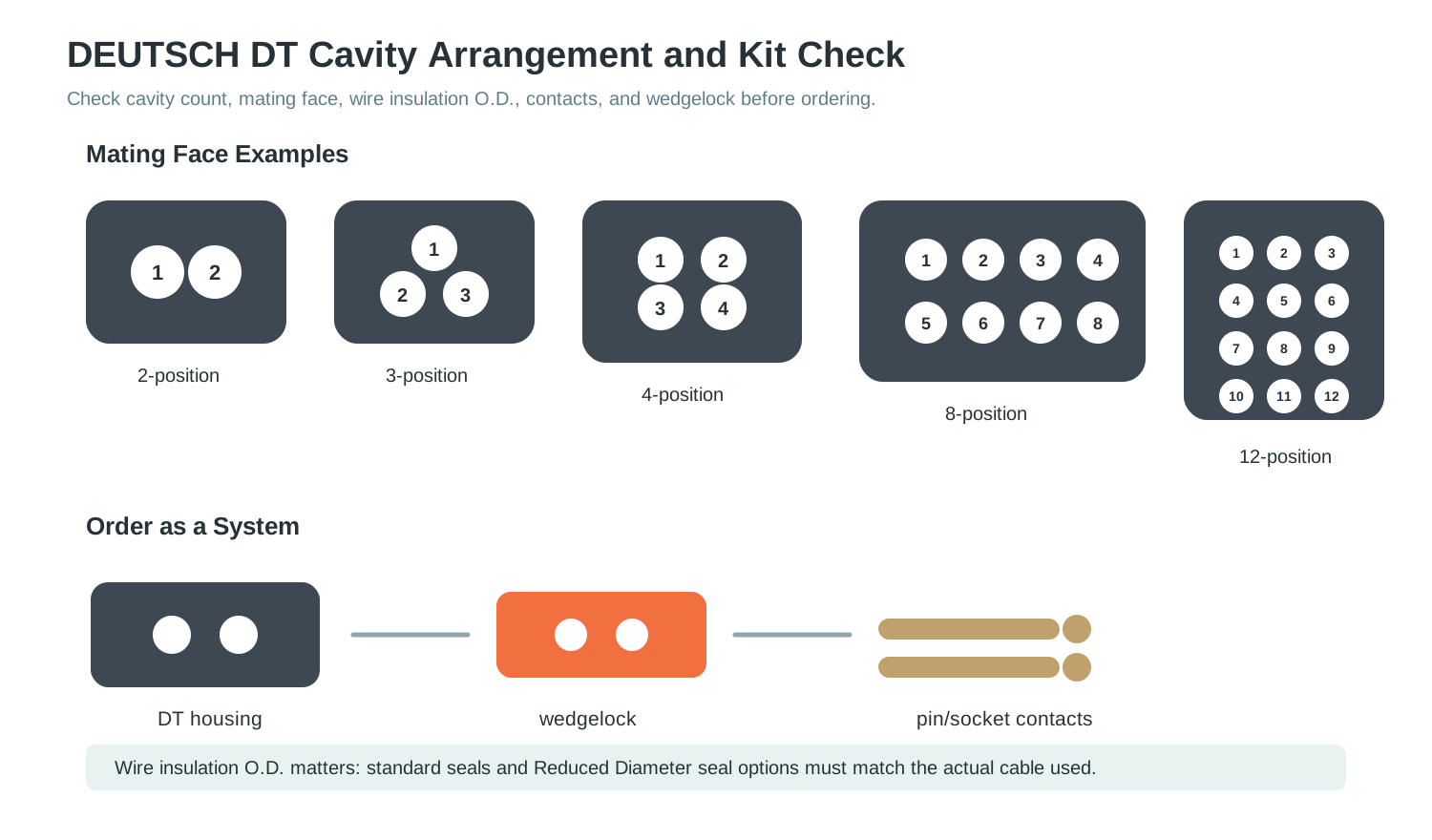
Representative DEUTSCH DT buying anchors:
| Function | Representative TE Part | Article Link Placeholder | Sourcing Note |
|---|---|---|---|
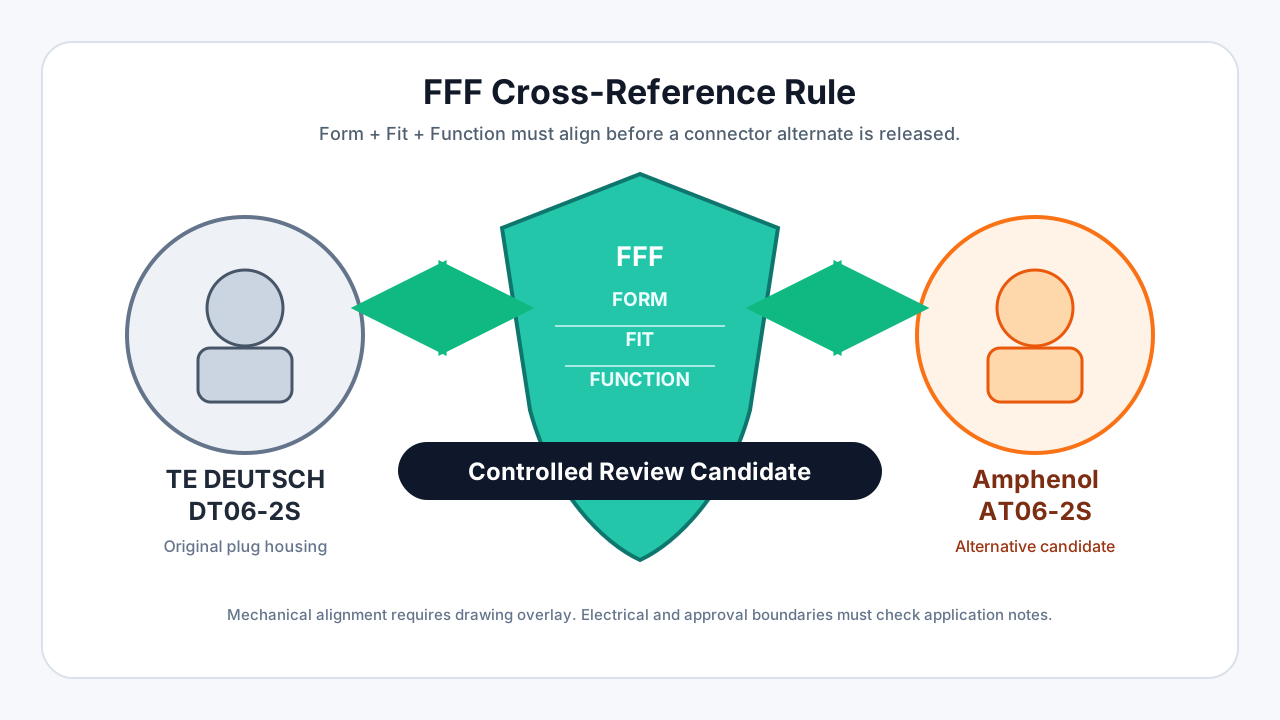
| Plug housing | DT06-2S | DT06-2S | Classic 2-position plug housing; confirm keying, contacts, wedgelock, and seal requirements. |
| Plug housing | DT06-4S | DT06-4S | 4-position plug option for compact harness branches and equipment wiring. |
| Receptacle housing | DT04-2P | DT04-2P | Mating receptacle housing for 2-position DT connections. |
| Receptacle housing | DT04-4P | DT04-4P | Mating receptacle housing for 4-position DT connections. |
| Wedgelock | W2S, W4S | W2S, W4S | Secondary lock components are often missed when only housings are ordered. |
| Socket contact | 0462-201-16141 | 0462-201-16141 | Confirm wire size, plating, reel/loose packaging, and crimp tooling. |
| Pin contact | 0460-202-16141 | 0460-202-16141 | Confirm the matching contact system and termination requirements. |
The biggest DEUTSCH DT procurement trap is ordering only the plastic housing. In many real builds, a usable DT connection requires at least the plug housing, receptacle housing, socket contacts, pin contacts, wedgelocks, seals where required, and sometimes backshell or boot accessories. For fast prototype builds, a pre-bundled connector kit can reduce assembly delays. If your team needs a complete 2-position waterproof set, use the controlled BOM RFQ channel and request a DEUTSCH DT 2-pin plug and receptacle kit with contacts and wedgelocks included.
Series B: M8 and M12 Circular Connectors for Industrial Automation and Sensor Networks
TE M8 and M12 circular connectors are widely used in industrial automation because they fit the way modern machines are wired: distributed sensors, PLC I/O, robot end-effectors, factory buses, compact actuators, and field-serviceable cable runs. The threaded metal interface also helps in environments where vibration and accidental disconnects are a concern.
The most common M8/M12 sourcing mistake is buying the right diameter but the wrong coding. Coding defines the keyway and electrical use case. It is not just a visual detail. Use the coding-key visual near the top of this guide for fast warehouse comparison, then confirm pinout and drawing details before approving the purchase.
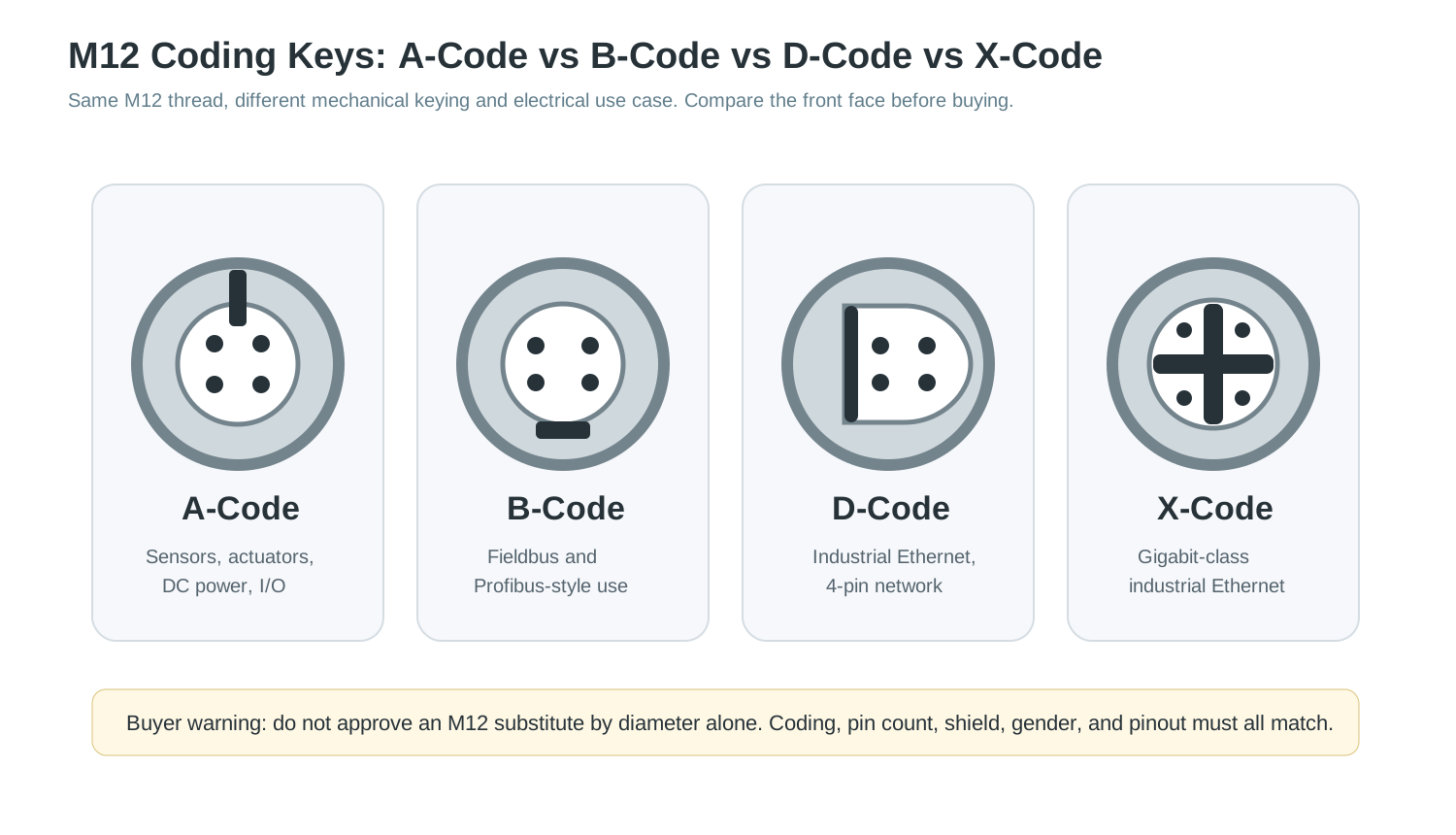
| Coding / Type | Common Use | Buyer Check |
|---|---|---|
| M12 A-code | Sensors, actuators, DC power, general industrial I/O | Confirm pin count, male/female gender, shield, cable exit, and voltage/current rating. |
| M12 B-code | Fieldbus and Profibus-style signal applications | Do not replace with A-code only because the shell size is similar. |
| M12 D-code | Industrial Ethernet, commonly 4-position Ethernet use cases | Confirm data rate, shielding, and cable category. |
| M12 X-code | Higher-speed industrial Ethernet, often selected for Gigabit-class links | Confirm shielding, pair layout, and mating connector compatibility. |
| M8 3/4-pin | Compact sensors and small actuators | Confirm straight/right-angle style, cable length, molded cable vs field-installable design, and pin assignment. |
Representative M8/M12 buying anchors:
| Function | Representative TE Part | Article Link Placeholder | Sourcing Note |
|---|---|---|---|
| M12 A-code 4-pin male board-side connector | T4110001041-000 | T4110001041-000 | Confirm panel/PCB mounting style, pin count, and coding. |
| M12 A-code 4-pin male cable connector | T4111001041-000 | T4111001041-000 | Use as an A-code field-installable cable connector example; do not substitute by thread size alone. |
| M8 3-pin straight cable connector | T4051110003-001 | T4051110003-001 | Confirm cable length, conductor size, wiring color code, and molded cable details. |
For industrial buyers, the safe RFQ format is more specific than "M12 connector." Include coding, pin count, gender, mounting style, cable length if applicable, shield requirement, wire gauge, rated voltage/current, IP rating, and target protocol. A-code sensor connectors and D-code Ethernet connectors may both be M12, but they should be sourced as different technical items.
Series C: Dynamic Connectors for Control Cabinets and High-Density PCB Wiring
TE Dynamic series connectors are common in modern control cabinets, servo drives, inverters, power modules, industrial power supplies, and internal machine wiring. The series is often selected where a design needs compact wire-to-board or wire-to-wire connectivity with a positive locking feel and a more serviceable structure than generic friction-fit connectors. The latch feedback is useful in production because it helps operators identify whether the mating action is fully seated, but final assembly standards should still define visual inspection and pull-test requirements.
The family is broad, so the first decision is the performance class:
As illustrated in the PCB footprint diagram below, switching between Dynamic sub-series directly impacts board keepout zones, connector height, wire routing, and terminal crimp tooling constraints.
| Dynamic Family | Typical Positioning | Selection Focus |
|---|---|---|
| D-1000 | Compact signal and small-wire applications, often associated with tight PCB layouts | Pitch, pin count, signal current, harness density, and service access. |
| D-2000 | Signal and mid-range wiring requirements | Balance density, current, and available housings/headers. |
| D-3000 | Power and control wiring in equipment and cabinets | Contact current, wire size, latch behavior, header orientation, and tooling. |
| D-5000 | Higher-current power interconnect requirements | Thermal margin, wire gauge, housing temperature, and assembly process. |
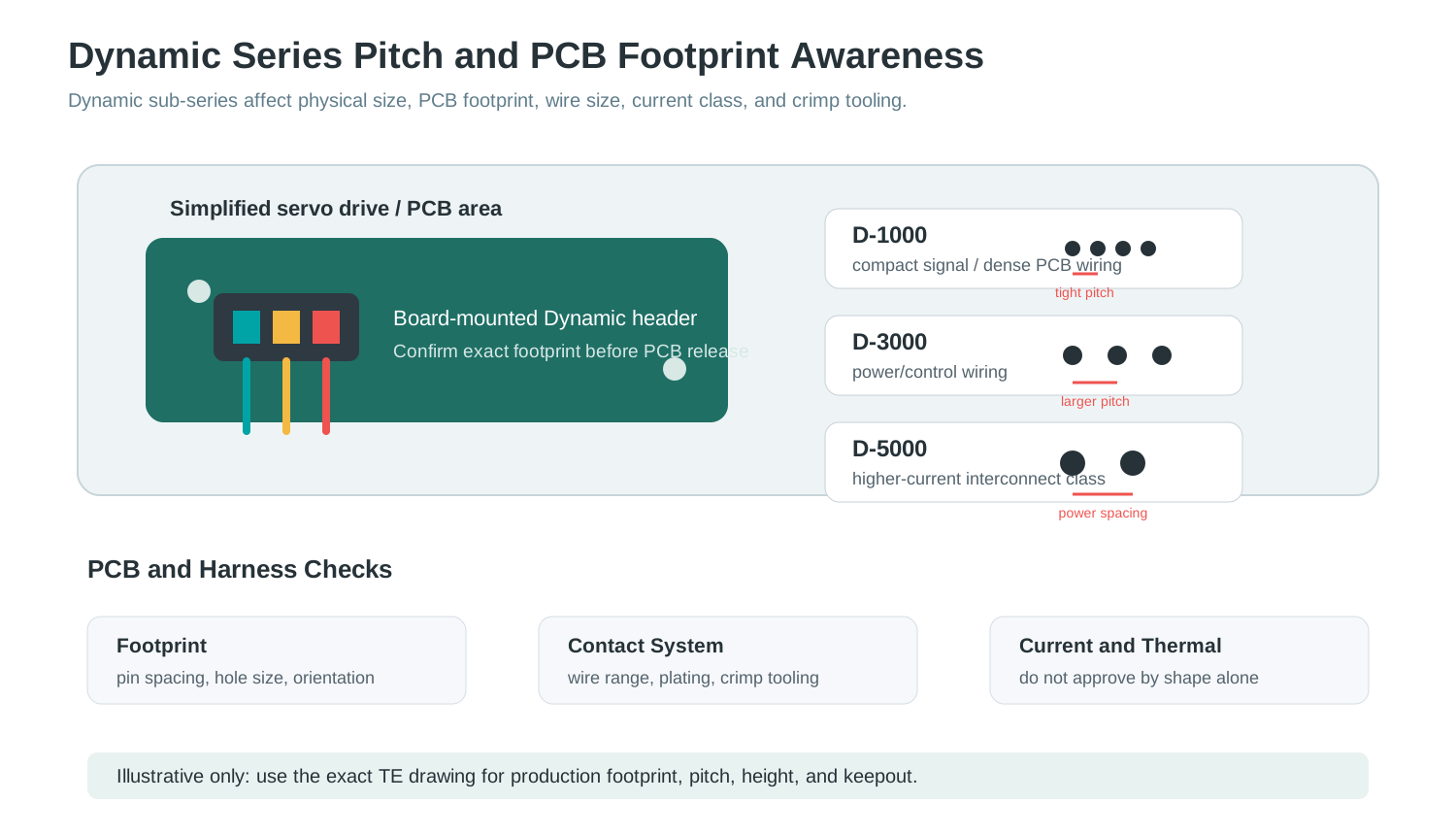
Representative Dynamic buying anchors:
| Function | Representative TE Part | Article Link Placeholder | Sourcing Note |
|---|---|---|---|
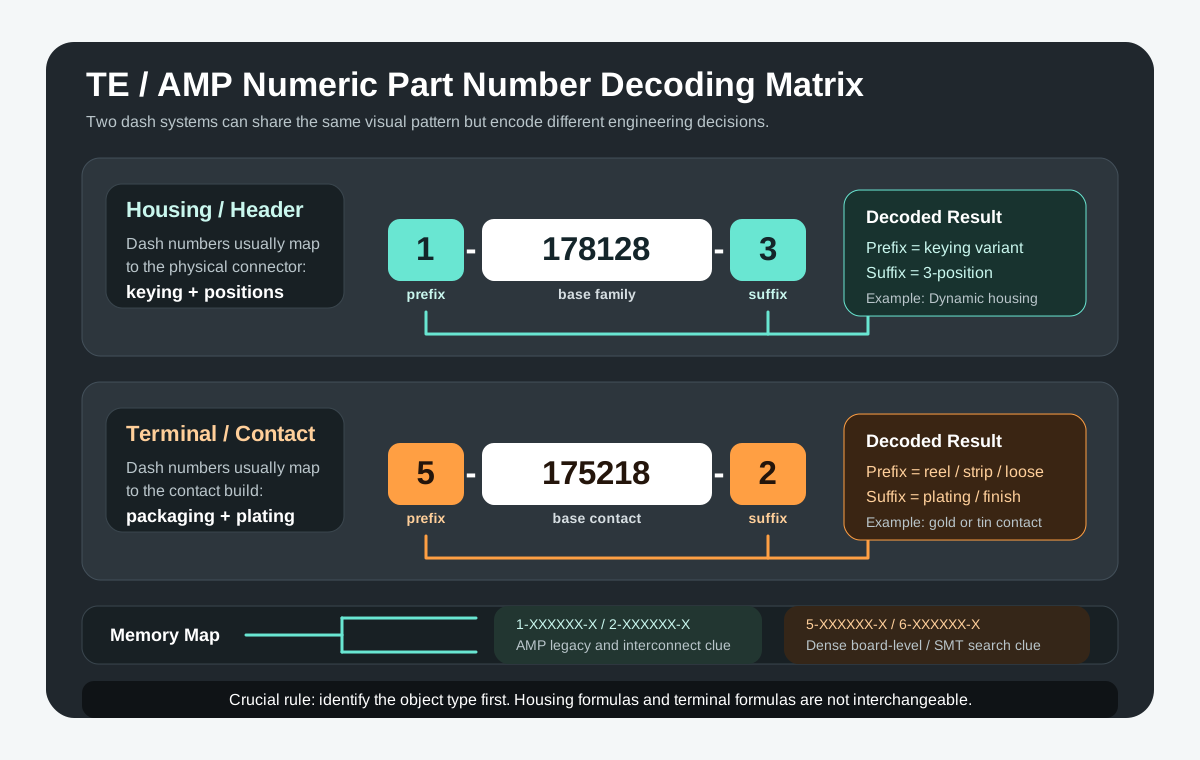
| D-3200 board-side receptacle/header, 3-position example | 1-178128-3 | 1-178128-3 | Confirm exact series, position count, PCB layout, and mating housing. |
| D-3200 wire-side housing, 3-position example | 1-178128-2 | 1-178128-2 | Confirm mating direction, keying, and compatible contacts. |
| D-3000 crimp terminal example | 1-175218-2 | 1-175218-2 | Confirm contact size, wire range, plating, and crimp tooling. |
Dynamic connector sourcing should always include the contact and tooling question. A housing may be available, but a production line still cannot build a harness if the correct crimp terminal, applicator, or approved hand tool is missing. For service and maintenance buyers, also check whether the mating header is installed on an existing PCB and whether the replacement harness must match color, keying, and cable length.
How to Choose Between DEUTSCH DT, M8/M12, and Dynamic
Use the table below as a practical first-pass selector. Final approval still requires datasheet review and application testing.
| Application Scenario | Best Starting Series | Why |
|---|---|---|
| Vehicle harness exposed to water, dust, vibration, or outdoor service | DEUTSCH DT | Sealed rugged wire-to-wire system with common multi-position options. |
| Heavy equipment sensor harness or actuator branch | DEUTSCH DT or M12 A-code | DT works well inside vehicle harness systems; M12 A-code works well for industrial sensor interfaces. |
| Factory sensor connected to PLC I/O | M8 or M12 A-code | Common industrial sensor form factors with threaded retention. |
| Industrial Ethernet on machines or robots | M12 D-code or X-code | Coding and shielding support network-specific connector selection. |
| Servo drive or inverter internal wiring | Dynamic D-3000 / D-5000 | Compact wire-to-board or wire-to-wire power/control interconnects. |
| Dense PCB signal wiring inside a control module | Dynamic D-1000 / D-2000 | Smaller pitch and serviceable locking options for cabinet or equipment interiors. |
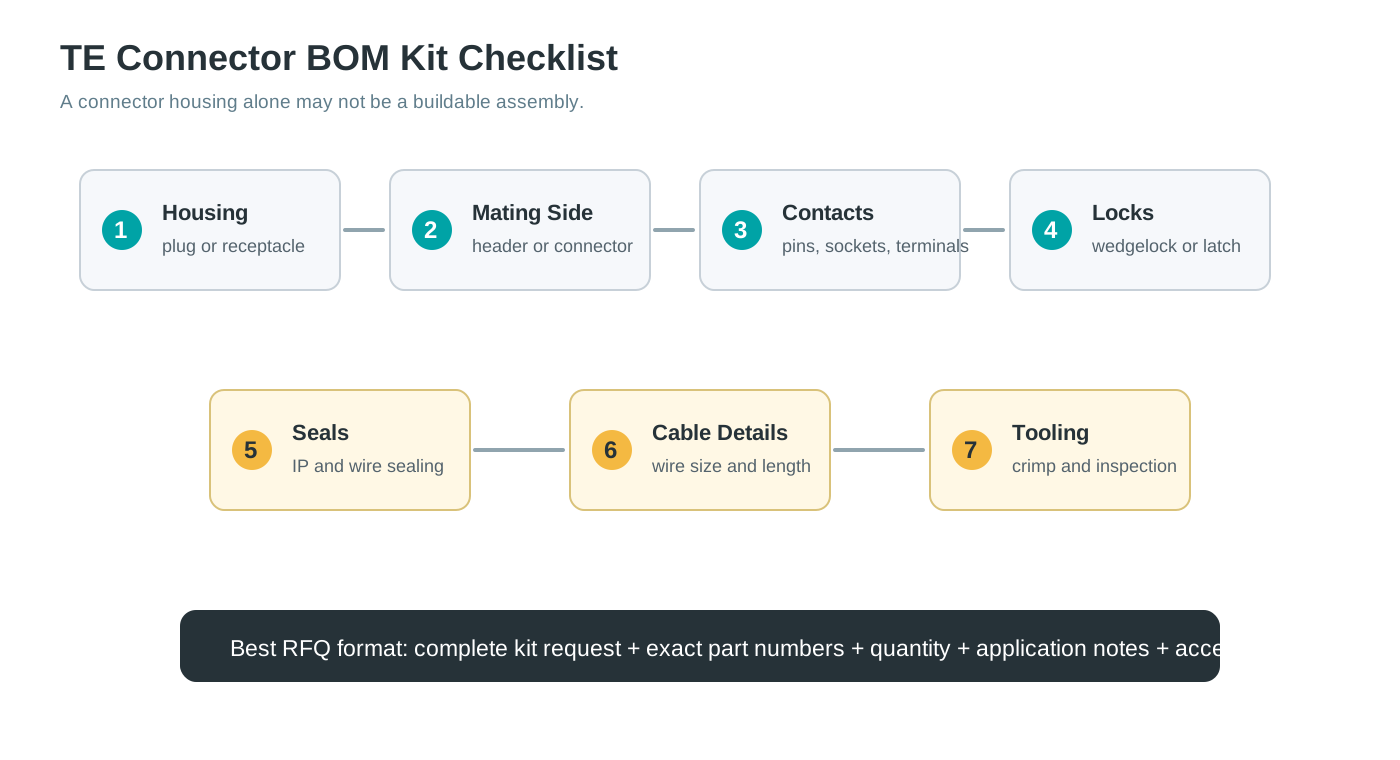
Procurement Checklist: How to Avoid Incomplete TE Connector Orders
For each TE connector line in the BOM, ask seven questions before approving a purchase:
- Is the part a housing, a contact, a header, a plug, a receptacle, or a cable assembly?
- What is the required mating part number?
- Are contacts, pins, sockets, terminals, seals, wedgelocks, backshells, or strain relief parts required?
- Does the order need loose-piece contacts, reeled contacts, or finished cable assemblies?
- Are the wire size, insulation diameter, plating, crimp tooling, and pull-force requirements confirmed?
- Does the connector require a specific coding, keying, color, latch style, or IP rating?
- Is the selected part active, available for the project lifecycle, and acceptable under the customer's AVL?
This is especially important for DEUTSCH DT because wedgelocks and contacts are frequently purchased separately, and for Dynamic because the connector is only as useful as the matching contact and crimp process. M8/M12 circular connectors add another layer: cable length, shielding, coding, pinout, and molded vs field-installable construction can all change the final buying decision.
TrustCompo RFQ Path for TE Connector Projects
For a clean RFQ, send the BOM with manufacturer part numbers, required quantities, target date codes if relevant, delivery window, and whether alternates are acceptable. If the BOM is incomplete, TrustCompo can help separate the items into plug housings, receptacle housings, contacts, locks, seals, cable assemblies, and broader search targets.
Recommended RFQ paths:
- For urgent single-part sourcing, use request verified stock pricing with the exact TE part number and quantity.
- For a multi-line harness or control cabinet BOM, use RFQ Submit and attach the full BOM.
- For connector replacement or cross-reference work, use Alternative Solutions and include photos, mating part numbers, and application notes.
- For inspection-sensitive open-market buys, review Quality Assurance requirements before approving the supplier.
If you are buying DEUTSCH DT parts, consider asking for kit pricing: plug housing, receptacle housing, contacts, and wedgelocks in one sourcing request. It reduces the chance that assembly is delayed because one low-cost accessory was missed.
Conclusion
TE Connectivity selection is easier when the connector is treated as a system rather than a single plastic part. DEUTSCH DT is the strong starting point for sealed rugged harnesses. M8/M12 circular connectors fit industrial sensors, PLC interfaces, and machine networks when coding and pinout are checked carefully. Dynamic series connectors are a practical choice for control cabinets, servo drives, power modules, and dense PCB wiring where locking, current capacity, and serviceability matter.
The fastest path is not to buy the first matching-looking connector. Start with the environment, electrical load, mating interface, mechanical constraints, and accessory list. Then turn the final selection into a complete RFQ package so the right housings, contacts, locks, seals, and cable options arrive together.
Final verification should still use the current TE datasheet, drawing, customer specification, and approved vendor list; the representative part numbers here are RFQ anchors, not universal drop-in recommendations.