- Zener diode
- cross reference
- BZX84C5V1
- electronics procurement
Domestic vs. Imported Zener Diodes: When Can You Safely Cross-Refer?
A procurement-focused guide to Zener diode cross-referencing, covering parameter consistency, thermal drift, surge resistance, and when verified domestic suppliers are safe to use.
Quick facts
- A Zener diode that looks identical on a room-temperature tester can still behave very differently under heat, surge stress, and long production runs.
- For mission-critical, automotive, and high-precision designs, premium imported Zener brands remain the safest default because process control and qualification discipline reduce field-failure risk.
- For standard consumer electronics, verified tier-1 domestic sources can support disciplined cost-down programs when traceability, datasheets, and application boundaries are controlled.
In electronics procurement, Zener diodes are often treated as commodity parts. When a single diode costs less than two cents, it is easy to assume that any supplier can deliver the same result as long as the headline specifications match.
That assumption becomes tempting when production moves from prototypes to hundreds of thousands of boards. Once the BOM is scaled, even a small price difference between premium imported brands such as onsemi, Diodes Incorporated, and Nexperia and lower-cost domestic supply can become commercially significant.
This is where the sourcing question becomes more serious than the unit price suggests: When is a domestic Zener diode a safe cross-reference, and when does that substitution create avoidable risk?
This guide answers that question from a procurement and engineering-control perspective. It separates surface-level datasheet similarity from the deeper behaviors that decide whether a Zener diode remains stable in the field.
1. The Surface Similarity: Why Specs Match on Paper
On paper, the comparison often looks simple. Take a standard part family such as BZX84C5V1 in SOT-23. A premium imported version and a verified domestic version may both present the same three commercial anchor points:
- nominal Zener voltage: 5.1 V
- power dissipation: 350 mW
- package: SOT-23
At a stable 25°C room temperature, both parts may appear to pass a basic bench test without any visible difference. They clamp near the intended breakdown point, and both sit within their published tolerance band. That is exactly why brokers and mixed-channel sellers often describe them as easy drop-in replacements.
The problem is that a room-temperature pass is only the first and easiest checkpoint. It says very little about how the part behaves after thermal cycling, repeated surge events, or long production exposure across multiple lots.
2. The Technical Disparities: What Premium Pricing Really Buys
The premium paid for top-tier imported semiconductor brands is not just a label premium. It usually reflects tighter process control, more predictable material behavior, stronger qualification discipline, and lower dispersion across very large production volumes.
Those differences matter because a Zener diode is rarely bought for its catalog description. It is bought for the stability of the function it performs on the board.
A. Parameter Consistency and Precision
A Zener diode is often expected to behave as a stable voltage-reference or clamping device. Premium manufacturers invest heavily in wafer-level consistency so that the real Vz distribution across a very large production run stays tight and predictable.
Lower-end or unverified supply can still fall inside a published plus or minus 5 percent tolerance and yet create real-world problems:
- wider lot-to-lot voltage spread
- broader unit-to-unit clustering inside the same reel
- more drift in practical clamping behavior across production batches
In a low-risk protection path, that may be acceptable. In a precision design, it can become a hidden source of calibration drift. If the Zener supports an ADC reference, bias point, or threshold-detection network, those small differences can shift measurement baselines and slowly erode system consistency.
B. Thermal Stability and Voltage Drift
Zener diodes operate in reverse breakdown, so heat is not an edge case. It is part of normal behavior. Once ambient temperature rises or enclosure heat builds up, the device's temperature coefficient begins to matter.
Premium manufacturers typically control doping and process variation tightly enough that thermal drift remains more predictable and more linear across the expected operating range. Lower-grade generic silicon may still work at room temperature but show less controlled voltage movement under heat.
That is where the sourcing risk becomes practical:
- the clamp level shifts more than expected
- a reference point moves with temperature
- a once-stable margin in the circuit becomes narrow
- long-duration thermal stress increases the chance of intermittent behavior
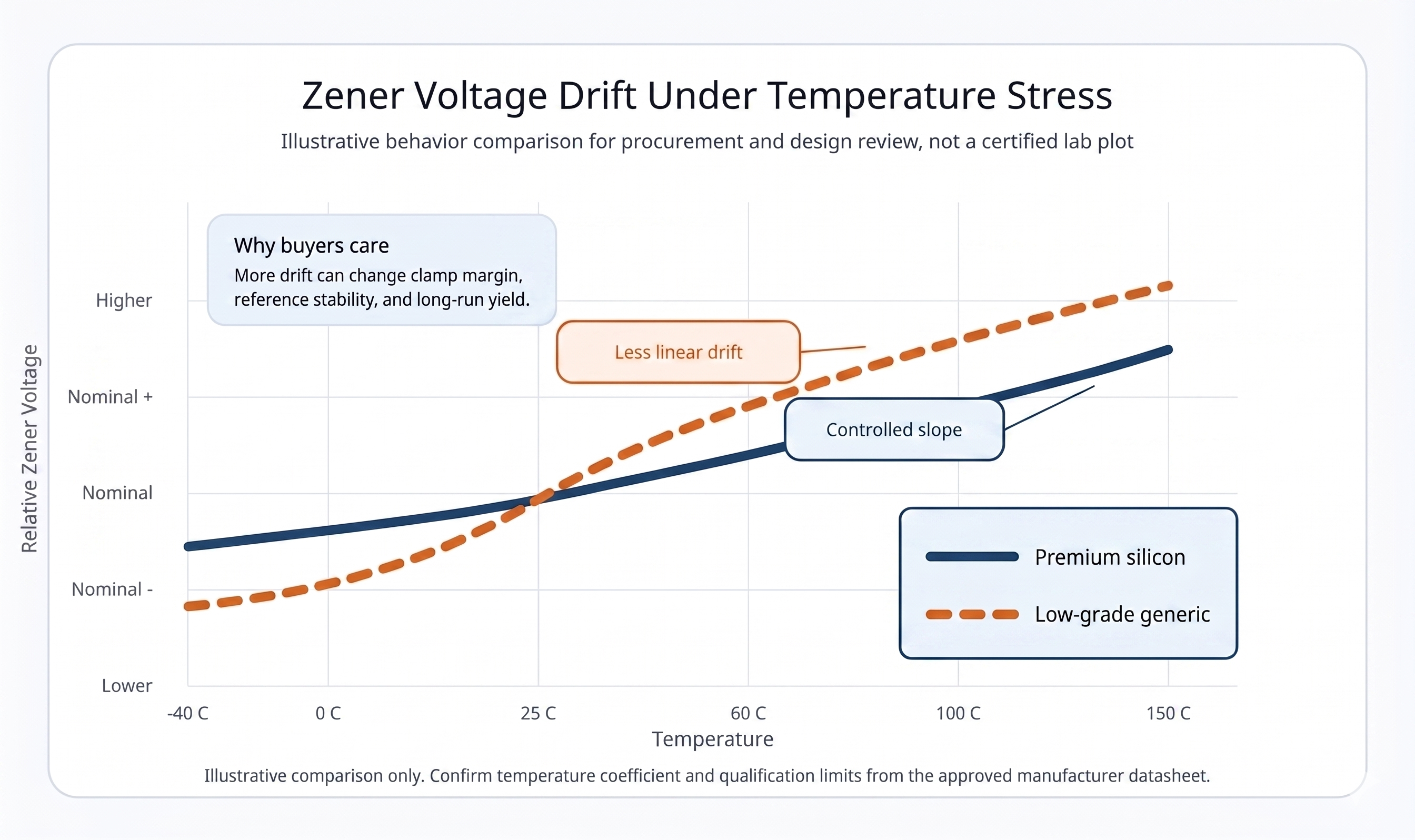
This does not mean every domestic part is unstable. It means buyers should not assume equivalent thermal behavior unless the supplier, product family, and application boundary have been qualified.
C. Transient Surge Resistance and Die Size Discipline
In protection circuits, the Zener diode is often the first sacrificial barrier against:
- transient overvoltage
- ESD events
- power-entry spikes
- inductive switching disturbance
Surge survival is where internal die design discipline becomes critical. Premium tier-1 brands tend to control die dimensions and process windows tightly enough to deliver more consistent energy-handling behavior. Low-end factories chasing the absolute minimum cost can reduce internal margin so aggressively that the component still passes incoming inspection but fails early in field stress.
The failure pattern is dangerous because it often appears only after the first real event. A device that looked fine on the reel can short, open, or degrade after an actual surge, leaving the downstream MCU or analog front end exposed.
3. The B2B Sourcing Matrix: How to Reduce Cost Without Losing Control
The right sourcing decision depends on what the Zener diode is doing inside the product. A buying policy that is safe for a smart-home board may be unacceptable for a medical instrument or outdoor inverter.
| Application Classification | Sourcing Protocol | Recommended Action |
|---|---|---|
| Mission-critical and high-precision systems | Zero-risk tolerance | Stay with premium imported brands such as onsemi, Diodes Incorporated, Vishay, or Nexperia. The cost of field failure overwhelms any BOM saving. |
| Harsh-environment operation | Certified compliance | Use suppliers and product families with the required qualification path for the target market, such as automotive-grade (AEC-Q101) or otherwise formally qualified lines where applicable. |
| Standard consumer and commercial electronics | Approved cross-reference zone | Verified domestic manufacturers can be used for disciplined cost-down programs if datasheets, lot traceability, and application limits are controlled. |
The key phrase is verified domestic manufacturers, not anonymous spot-market stock.
For procurement teams, that means a domestic cost-down program should only proceed when all of the following are true:
- the supplier is traceable
- the datasheet is public and stable
- quality documentation can be reviewed
- the application is not safety-critical
- sample validation is completed on the exact part family
- incoming lots remain under the same approval rule
Practical Buyer Rule
If the article's answer must be compressed into one sentence, it is this:
Use domestic Zener diodes for controlled cost reduction only after the application is classified as commercially tolerant of variance; use premium imported brands whenever failure cost, thermal stress, surge exposure, or precision dependency is high.
4. The Real Procurement Risk: Channel Quality, Not Only Country of Origin
Many failures blamed on "domestic alternatives" are actually channel failures.
The real danger usually comes from:
- white-label parts with weak traceability
- mixed-lot market stock
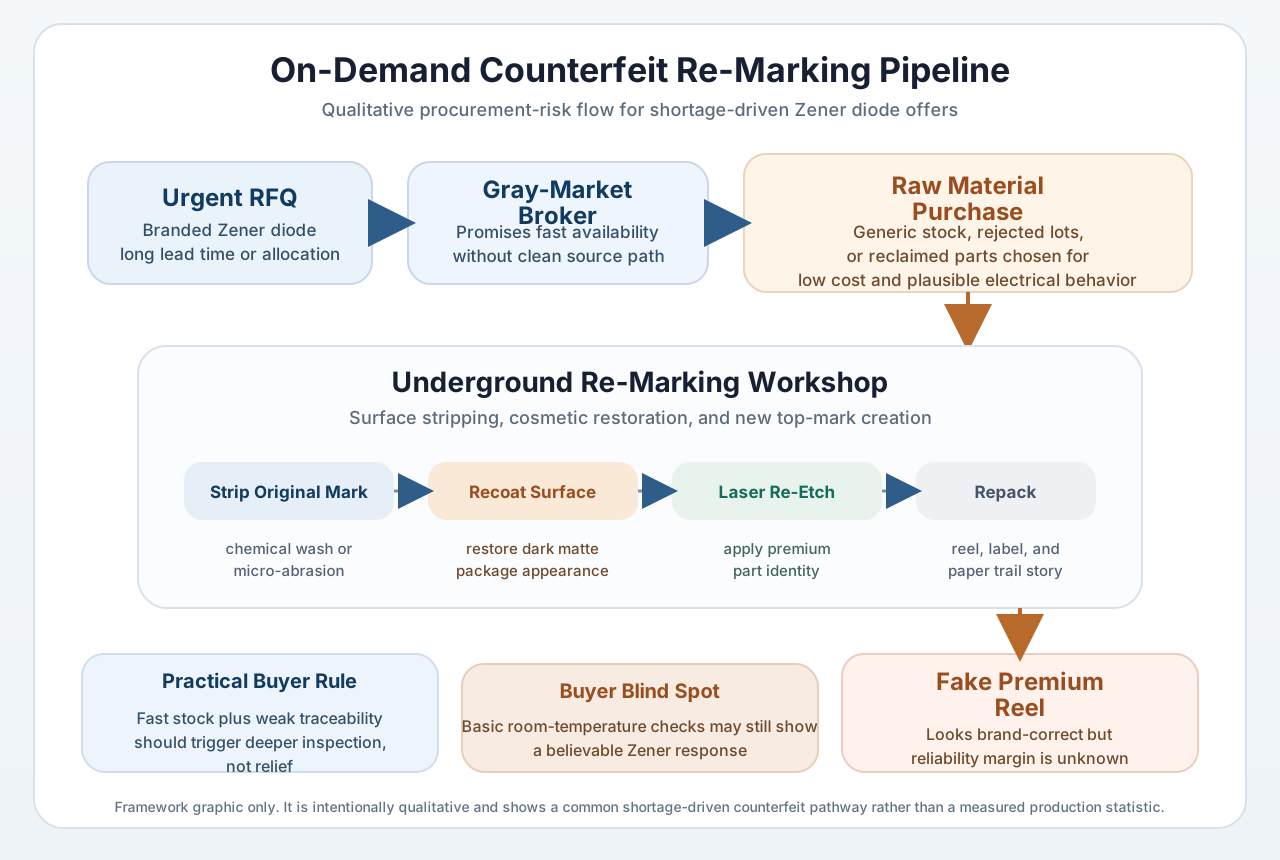
- parts re-packed or re-marked outside controlled channels
- datasheets that cannot be tied to a real manufacturer
- supply that changes die source without formal notice
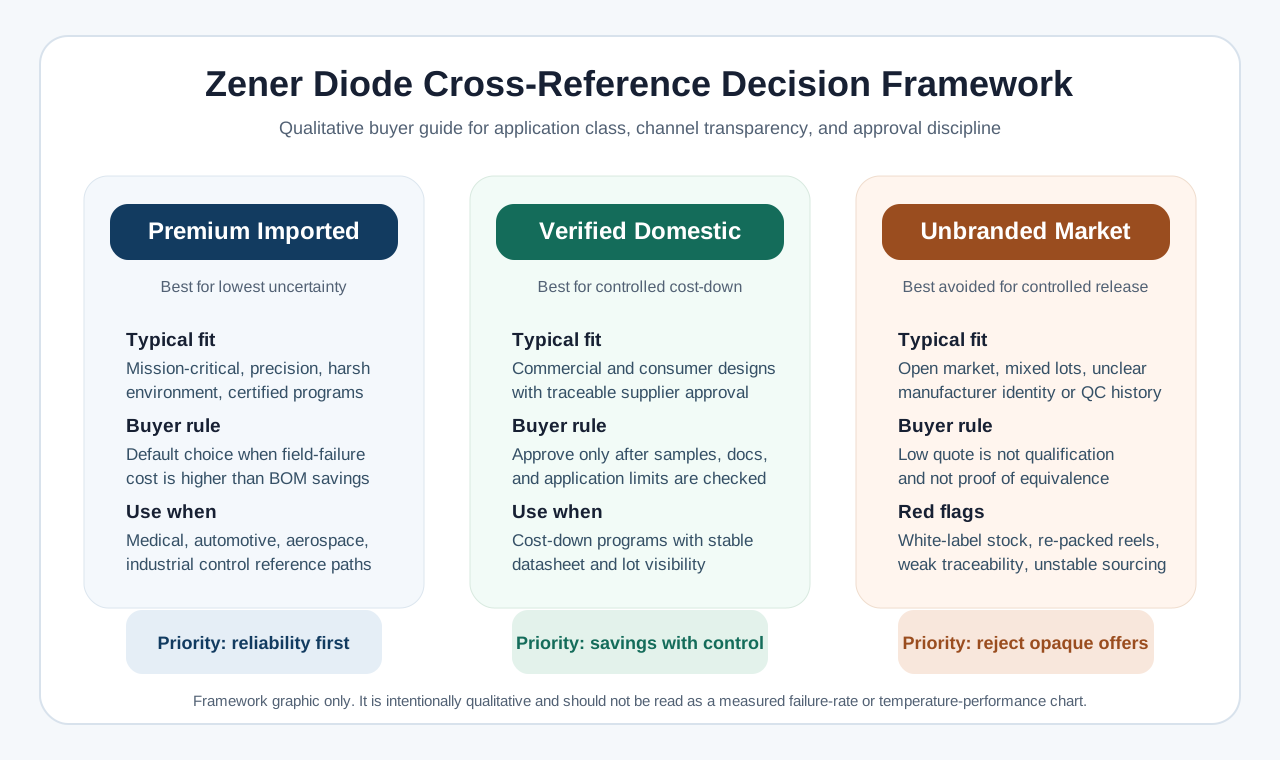
That is why the sourcing policy should separate three lanes instead of two:
| Supply Lane | Typical Commercial Appeal | Actual Risk Level |
|---|---|---|
| Premium imported tier-1 brands | highest price | lowest uncertainty |
| Verified domestic tier-1 brands | balanced price and traceability | manageable if application fit is controlled |
| Unbranded or opaque spot-market supply | lowest quote | highest long-term risk |
The third lane is where many cost-down efforts fail. A buyer thinks the company switched from imported to domestic. In reality, the company switched from traceable manufacturing to unverified channel exposure.
5. TrustCompo's Sourcing Position: Cost Reduction With Traceable Boundaries
Reducing production cost is a valid business objective, but it only works if the sourcing path stays transparent.
At TrustCompo, the practical rule is straightforward:
- when the design needs uncompromised reliability, source premium original inventory through traceable channels
- when the application allows controlled cost-down, offer verified domestic supply only from transparent, reviewable manufacturers and channels
- never treat generic, unverified open-market stock as equivalent to a qualified cross-reference
That approach gives procurement teams two usable paths:
- Premium path: original-brand sourcing for hardware that cannot tolerate uncertainty
- Cost-down path: controlled domestic substitution for commercial-grade designs that have been technically screened
For urgent BOM reviews or substitution screening, buyers can use submit a BOM review RFQ for multi-line sourcing requests or request verified stock pricing for immediate price-and-availability checks.
Conclusion
Domestic and imported Zener diodes can look nearly identical in a datasheet table, but they are not automatically equivalent in the field. The real difference shows up in parameter consistency, thermal drift behavior, surge survival, and the quality discipline behind the supply channel.
For mission-critical, harsh-environment, and high-precision applications, premium imported brands remain the safest choice. For standard consumer and commercial products, verified domestic manufacturers can be a sound cost-down option when traceability, validation, and application limits are controlled.
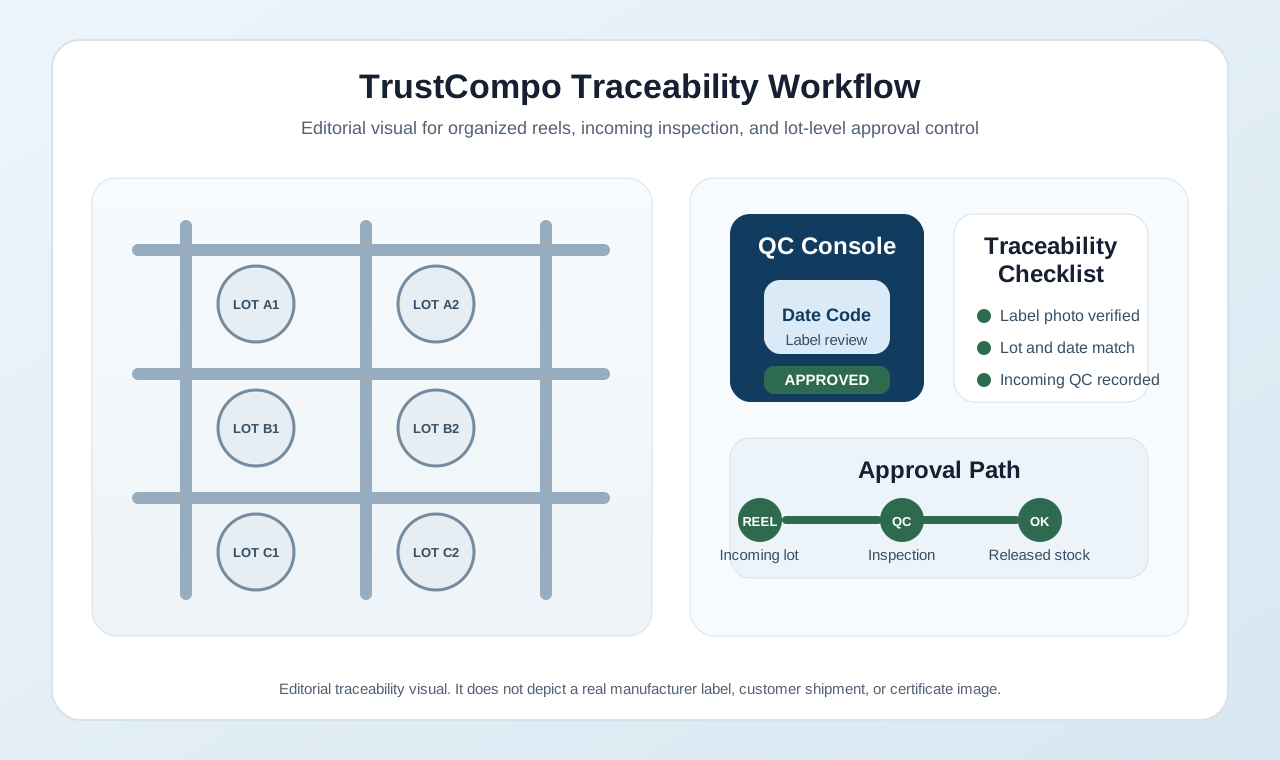
A stable production line depends less on the cheapest quote and more on whether the source behind that quote can still be trusted after the first thermal cycle, the first surge event, and the first large-volume shipment.
Upcoming in This Series
Choosing the right brand strategy is only the first layer of risk control. The next article should examine a more dangerous gray-market issue: how re-marking workshops turn low-end generic diodes into counterfeit premium-branded stock.