- counterfeit components
- Zener diode
- re-marking
- incoming inspection
Counterfeit Zener Diode Re-Marking: Package, Marking, and Traceability Checks for Buyers
A technical buyer and IQC guide to suspected Zener diode re-marking, covering package-surface clues, top-mark consistency, lot traceability, and electrical-screening limits.
Quick facts
- A room-temperature Zener breakdown check can confirm that a device behaves like a Zener diode; it cannot prove brand authenticity, lot history, surge margin, or long-term reliability.
- Suspected re-marking should be reviewed as a combined evidence problem: package surface, top mark, reel label, date-code logic, supplier traceability, and electrical-screening results.
- For branded spot-market Zener lots, the approval rule is simple: do not release production stock based only on readable markings and a basic electrical pass.
A counterfeit Zener diode problem rarely starts with a failed bench reading. It usually starts earlier, at the point where procurement accepts a branded open-market lot because the part number is familiar, the top mark is readable, and a quick breakdown-voltage check looks close enough.
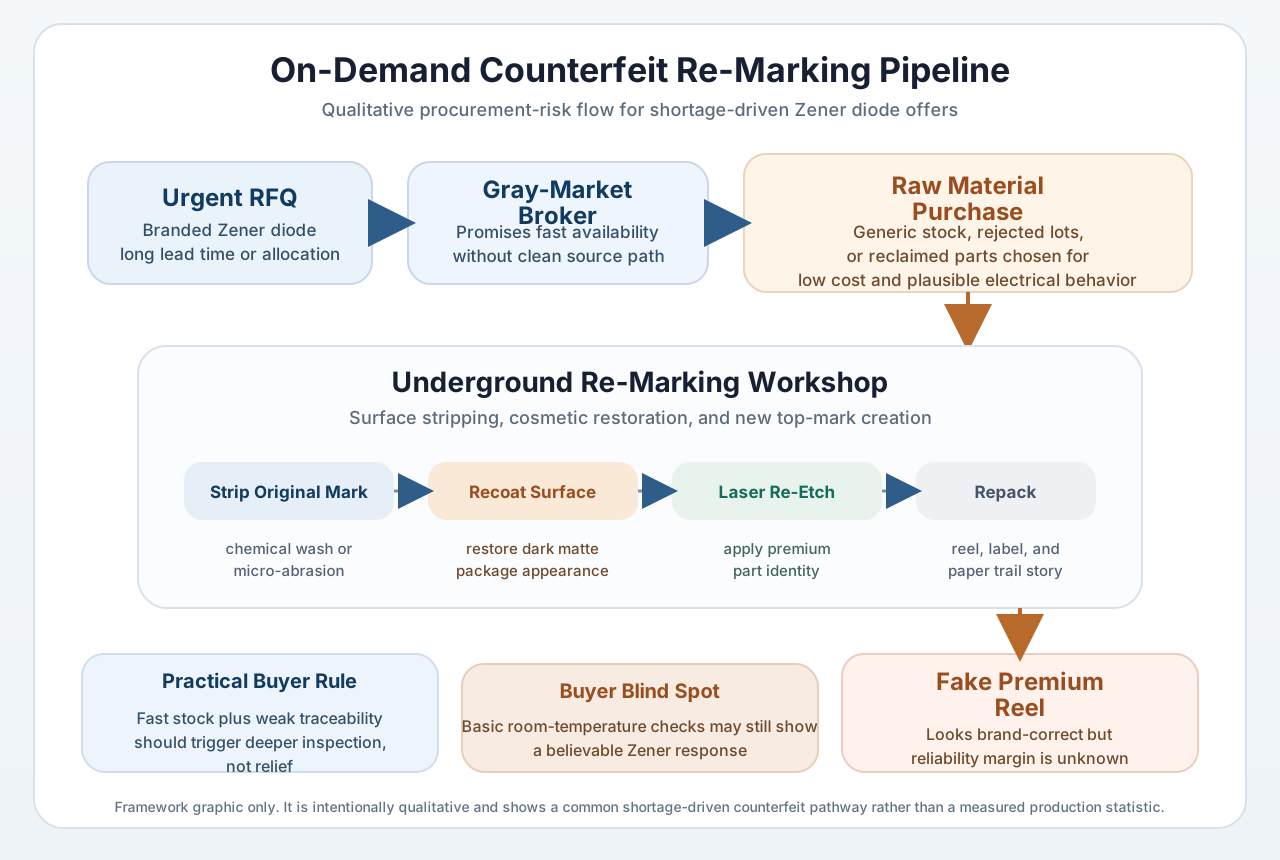
That is the inspection trap. A small Zener in a SOT-23, SOD-123, or similar package can behave like a working voltage regulator during a simple incoming test while still being wrong for the purchase order. The die may be from an unknown manufacturer. The part may be reclaimed. The package may have been stripped and re-marked. The reel label may not belong to the devices inside it. None of those risks is solved by proving that the device conducts in reverse near a nominal voltage.
This guide is written for buyers, IQC, SQE, and sourcing teams reviewing suspicious Zener diode lots, especially BZX84/BZX series parts such as onsemi BZX84C5V1LT1G, Diodes Incorporated BZX84C5V1-7-F, and Nexperia BZX84-C5V1,215. The goal is not to call every low-cost offer counterfeit. The goal is to define what a defensible inspection record should include before a branded spot-market lot reaches production.
Source and Evidence Boundary
This article is a technical procurement guide, not a claim about one named illegal workshop or one verified enforcement case. The evidence should be separated into three layers before any lot decision is made.
| Evidence layer | What belongs in this layer | How buyers should use it |
|---|---|---|
| Direct observations | Package-surface photos, top-mark shape, mold condition, terminal condition, reel label, date code, lot code, packaging condition, sample electrical readings | Record these as facts. Use consistent magnification, known-good comparison samples, and photo retention where possible. |
| Engineering inference | Possible stripping, abrasion, recoating, remarking, mixed-lot consolidation, reclaimed stock, or lower-grade substitution | Treat these as hypotheses. They justify quarantine and deeper review, but they should not be presented as final proof without supporting evidence. |
| TrustCompo procurement judgment | Whether the lot should be approved, quarantined, tested deeper, returned, or replaced through an approved alternate path | Base this judgment on combined risk: traceability, commercial pressure, visual anomalies, datasheet fit, and application criticality. |
The standard anchors for this kind of control are also process-oriented. SAE AS5553 frames counterfeit electronic parts control around avoidance, detection, mitigation, disposition, and reporting. SAE AS6171/2 gives a useful reference point for external visual inspection, remarking/resurfacing checks, and surface-texture analysis methods for suspect electronic parts. IDEA-STD-1010 is commonly used in open-market component inspection practice. Manufacturer datasheets remain the source of truth for the claimed part's electrical limits, package, marking conventions, and qualification boundaries.
1. What a Basic Zener Receiving Test Can Miss
For a 5.1 V BZX84-family Zener, an incoming team may confirm reverse breakdown near the expected voltage at the datasheet test current. That is useful, but it is only one slice of the acceptance problem.
A room-temperature parameter screen can miss several counterfeit or misrepresented-lot conditions:
| Hidden issue | Why a basic check can miss it | Production risk |
|---|---|---|
| Unknown original manufacturer | The device can be electrically similar at one test point | Buyer assumes the process control, qualification, and reliability history of the claimed brand. |
| Wider voltage distribution | A small sample may sit inside the expected range | Full reel may include devices outside the required tolerance band. |
| Weak surge margin | Normal breakdown voltage does not prove transient-energy survival | Field failures may appear after load dump, ESD, switching spikes, or clamp events. |
| Reclaimed or thermally stressed stock | The die can still function after prior use or removal | Solderability, package integrity, and early-life failure risk increase. |
| Re-marked package body | The mark can be readable even after surface processing | Wrong identity, wrong date code, or wrong source path enters the AVL-controlled build. |
| Mixed lots under one label | A small sample may come from the better portion of the reel | Lot-to-lot behavior becomes unpredictable inside the same purchase line. |
The important distinction is this: a Zener test proves a function under defined conditions; it does not prove identity. Authenticity needs package, marking, label, lot, source, and test evidence to agree with each other.
2. Package and Top-Mark Inspection Workflow
Start visual inspection before electrical screening. If the lot is already visually suspect, the electrical test plan should be upgraded instead of used as a shortcut to approval.
For small Zener packages, review the package body under magnification and compare it with a known-good reference from the same manufacturer family whenever available.
Primary package checks:
| Checkpoint | What to inspect | Suspicious pattern | What it can support |
|---|---|---|---|
| Top-surface finish | Gloss, matte level, texture, flatness, and reflectivity | Patchy finish, sanding lines, cloudy coating, or a top surface that looks different from sidewalls | Possible resurfacing, abrasion, or recoating. |
| Mark geometry | Font weight, stroke ends, spacing, alignment, logo shape, polarity mark, and code position | Characters that are readable but not factory-consistent | Possible re-marking or non-original marking process. |
| Mold definition | Package edges, parting lines, pin-1 orientation features, and body shape | Softened edges, uneven mold lines, unusual corner rounding | Possible prior surface processing or uncontrolled package source. |
| Terminal condition | Lead finish, coplanarity, oxidation, residue, scratches, and solderability clues | Oxidized or stressed leads on stock sold as new | Possible reclaimed stock or poor storage. |
| Lot uniformity | Same body finish, same mark quality, same orientation, same terminal appearance across samples | Mixed appearance inside one reel or one bag | Possible lot consolidation or relabeling. |
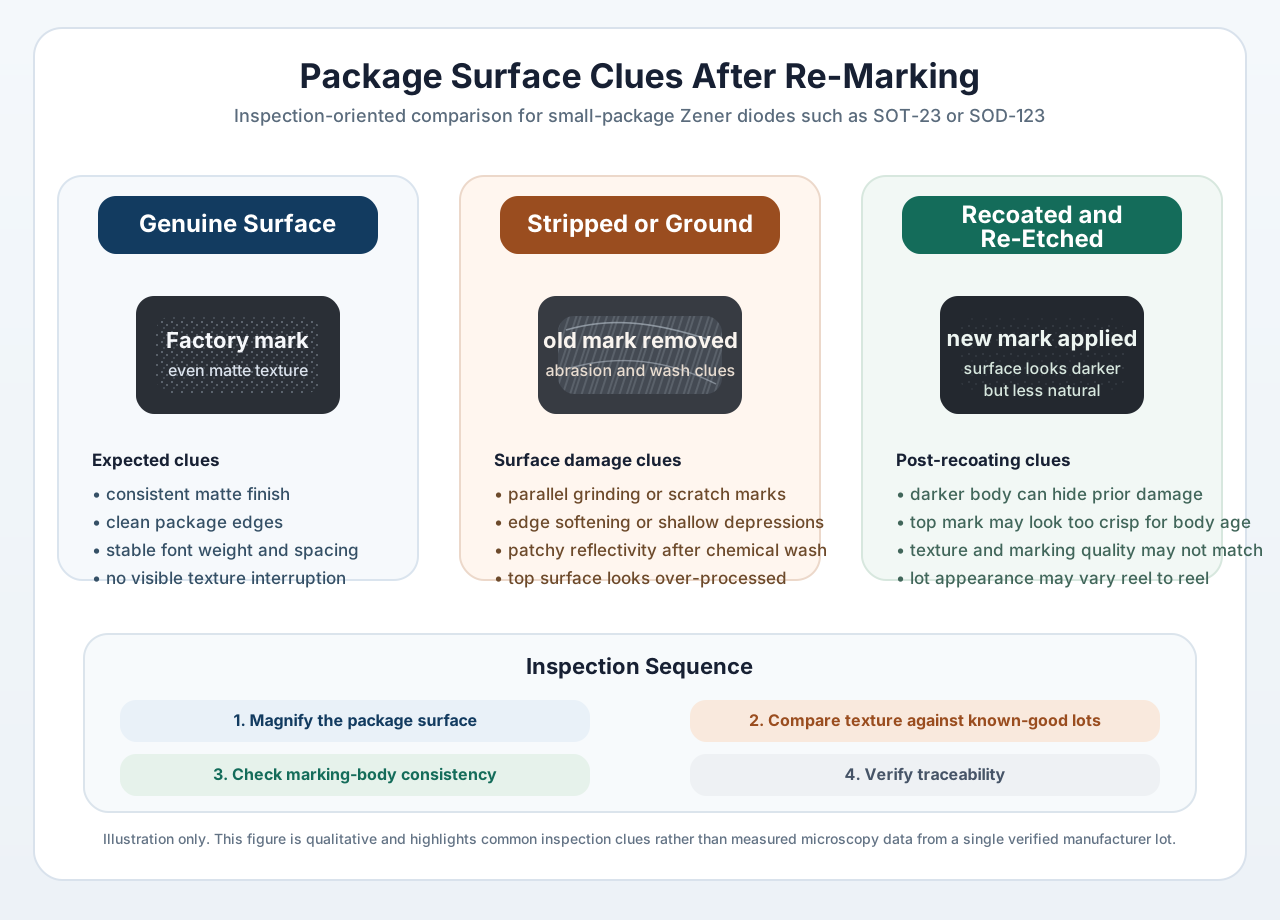
Avoid overclaiming from a single visual cue. A dull package top does not automatically prove fraud. A slightly different mark does not automatically prove counterfeit. But if the top mark, package finish, label, and source path all look weak, the lot should move out of routine IQC and into suspect-lot handling.
3. Lot, Label, and Chain-of-Custody Checks
Re-marking risk is not only a component-body problem. Many suspicious lots fail because the commercial paperwork is thinner than the physical mark.
For a branded Zener diode lot, buyers should request and retain:
- original manufacturer or authorized-distributor label photos
- reel, bag, or box condition photos before parts are opened
- full manufacturer part number, package suffix, and orderable suffix
- date code, lot code, and quantity alignment across all packaging levels
- certificate of conformance where applicable
- supplier invoice path or source-path statement
- evidence that cut tape, partial reels, and full reels came from controlled packaging
The date-code logic matters. One purchase order line that contains several date codes is not automatically unacceptable, especially for brokered or partial-reel supply. But mixed date codes, mixed label formats, and mixed package conditions should raise the approval threshold. The supplier must be able to explain the chain of custody in a way that makes sense for the quantity, packaging type, and claimed origin.
Use commercial conditions as part of the risk screen. Re-marking and relabeling risk rises when the RFQ has all of these features:
- the requested branded MPN has limited authorized-channel availability
- the open-market quote arrives unusually fast
- the supplier cannot show a clean source path
- price looks inconsistent with the claimed brand and date-code window
- packaging arrives as cut tape, partial reel, or mixed-condition stock
- the buyer is under schedule pressure to release material quickly
None of those points proves counterfeit by itself. Together, they define a high-risk approval environment.
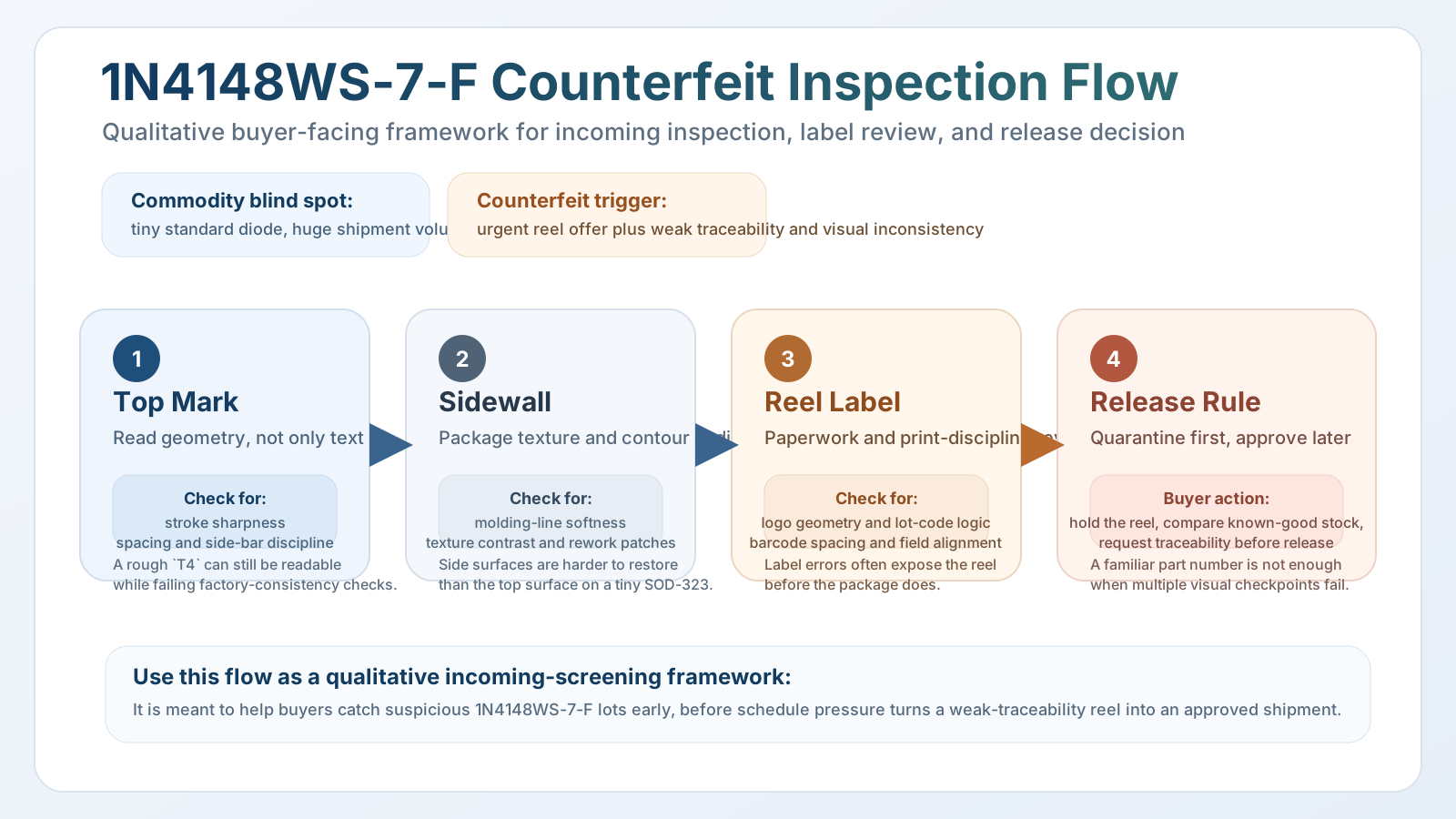
4. Related Visual Case: 1N4148WS-7-F Inspection Lessons
TrustCompo does not currently present this article as a Zener-specific photo case study. That boundary matters. The available owner-provided comparison set is for Diodes Incorporated 1N4148WS-7-F, which is a small-signal switching diode, not a Zener diode.
The case is still useful because the visual inspection pattern transfers across many small molded diode packages. The electrical limits do not transfer.
| 1N4148WS-7-F case observation | What it teaches for Zener lot review | Boundary |
|---|---|---|
| Top-mark geometry differed between genuine and counterfeit samples | Do not inspect a Zener top mark as text only. Review stroke weight, spacing, alignment, polarity marks, and consistency against a known-good sample. | A switching-diode top code does not define a BZX84 or BZX series marking rule. Use the claimed Zener manufacturer's datasheet or marking guide where available. |
| Side-profile texture and package finish were visibly different | Review sidewalls and package texture, not only the top face. Recoating or abrasion may be more visible away from the mark itself. | Surface clues are escalation indicators. They are not final proof without traceability and test evidence. |
| Reel-label format and lot-code presentation did not match cleanly | Treat label discipline as part of authenticity. Lot code, date code, barcode, and packaging condition should agree with the source story. | Label anomalies can come from legitimate repackaging, so the supplier must explain the custody path. |
| The part number looked familiar enough to invite a low-friction receiving process | Commodity discretes should not bypass inspection simply because they are inexpensive. High-volume low-cost parts can create large downstream failure exposure. | The electrical test plan must remain device-specific: switching diode tests for 1N4148WS, Zener voltage/leakage/impedance/stress checks for BZX84/BZX lots. |
The full photo-based inspection walkthrough is available in How to Spot Counterfeit IN4148WS-7-F: Marking, Label, and Package Checklist. Use it as a visual training example for small-package diode inspection, not as Zener electrical evidence.
5. Electrical-Screening Limits and Escalation Points
Electrical testing should be tied to the claimed datasheet, not to a generic "does it regulate" test. For the representative BZX84 5.1 V class, the public manufacturer pages show why exact-part review matters: package, power rating, tolerance band, test current, leakage current, and temperature limits are not just catalog decoration. They define the acceptance target.
For example:
| Representative anchor | Claimed class to verify | Buyer check |
|---|---|---|
| onsemi BZX84C5V1LT1G | 5.1 V Zener, SOT-23 class, low-power surface-mount regulator | Confirm orderable suffix, package, tolerance, test current, leakage, and packaging path against the current manufacturer datasheet. |
| Diodes Incorporated BZX84C5V1-7-F | 5.1 V Zener, SOT-23 package family, manufacturer-specific suffix | Confirm package, power rating, marking expectation, PCN history, and reel-label consistency. |
| Nexperia BZX84-C5V1,215 | BZX84-C tolerance family, SOT-23 voltage-regulator diode | Confirm tolerance family, voltage range, package drawing, and orderable packaging suffix. |
A stronger incoming test plan may include:
| Inspection or test method | What it can show | What it cannot prove by itself |
|---|---|---|
| Visual inspection | Surface anomalies, mark inconsistency, terminal condition, package damage, mixed-lot appearance | It cannot prove die origin or full electrical reliability. |
| Label and date-code review | Packaging consistency, lot-code logic, source-path plausibility | A good-looking label can still be copied or transferred. |
| X-ray or decapsulation, when available | Die size, bond-wire layout, internal construction differences, possible reclaimed damage | It may still need known-good comparison and expert interpretation. |
| Curve tracer or parameter screen | Breakdown behavior, leakage, forward voltage, dynamic response at selected conditions | Passing selected parameters does not prove authenticity, surge margin, or full temperature behavior. |
| Temperature and surge stress sampling | Drift, leakage change, clamp behavior, and early weakness under stress | Sampling cannot guarantee every unit in a mixed lot. |
| Supplier traceability review | Whether the source path supports the claimed brand and packaging | Documentation can be incomplete or falsified; it must match physical evidence. |
Escalate beyond routine IQC when any of these appear:
- visual anomalies and weak traceability appear together
- electrical data passes at room temperature but has wide distribution
- supplier cannot provide original label or source-path evidence
- date codes or package conditions are mixed without a credible explanation
- the application uses the Zener for surge clamp, protection, safety-related biasing, field-repair equipment, or long-life industrial service
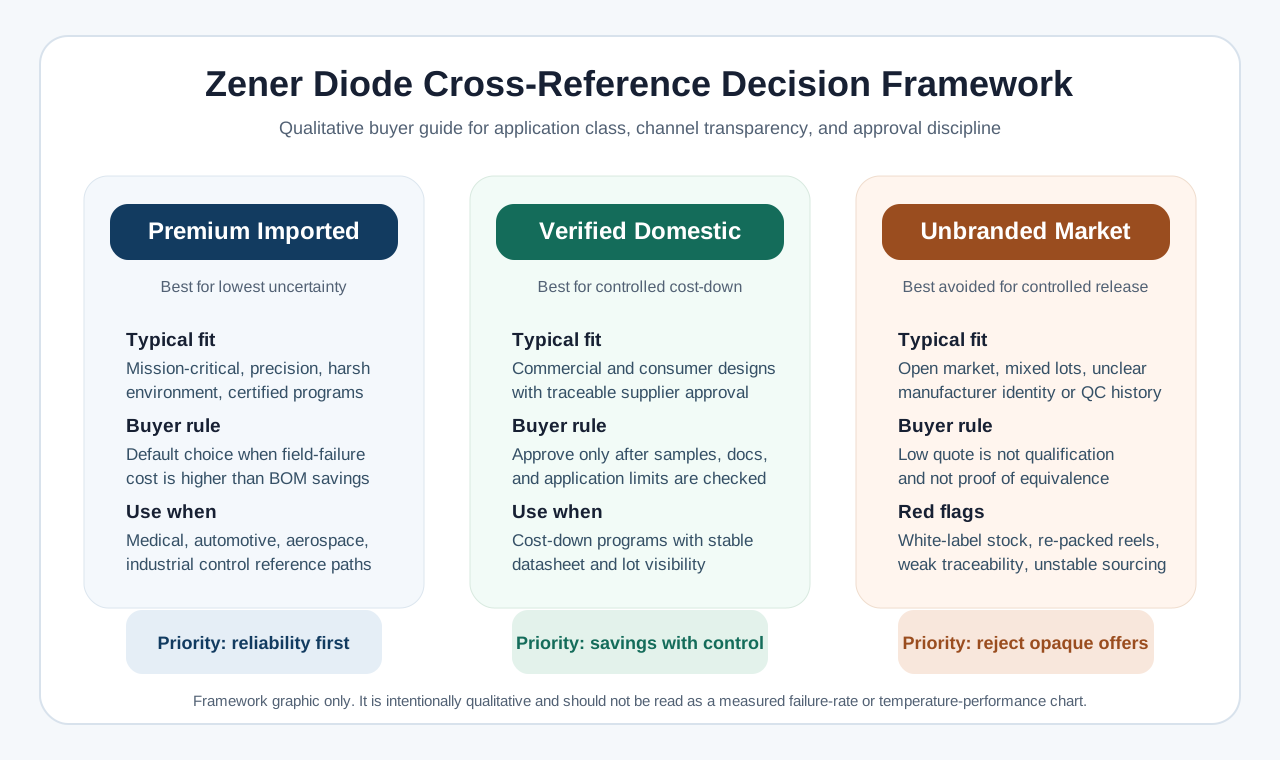
6. Buyer Decision Matrix: Approve, Quarantine, Test Deeper, or Reject
Use the decision table below as the release gate for branded spot-market Zener lots.
| Lot condition | Buyer decision | Required next step |
|---|---|---|
| Authorized source, intact original packaging, consistent label/date code, package and electrical checks normal | Approve through normal IQC | Retain packaging photos and inspection record. |
| Open-market source, but original packaging evidence is strong and visual/electrical checks are normal | Conditional approval or controlled sample release | Document traceability, sample plan, and application risk before full release. |
| Readable top mark, but package finish or label format is abnormal | Quarantine | Request supplier explanation, compare with known-good samples, and escalate to SQE. |
| Mixed date codes, mixed packaging condition, weak source path, or relabeled reel | Test deeper or reject depending on application risk | Add broader sampling, electrical distribution review, and traceability audit before any production use. |
| Visual anomalies plus supplier cannot document chain of custody | Reject for branded approval | Source through authorized/controlled channels or qualify an approved substitute. |
| Basic breakdown pass but surge, temperature, leakage, or lot-distribution data is weak | Do not approve for production | Escalate to engineering and quality; define stress screening or replacement path. |
The practical rule is intentionally strict: do not approve a branded spot-market Zener lot based only on readable markings and a room-temperature electrical pass.
If the real business issue is urgent continuity, a controlled substitute review is usually safer than forcing a doubtful lot into production. Route suspicious or schedule-critical lines through Quality Assurance, Alternative Solutions, or a traceability-focused review through Global Sourcing. For urgent single-line checks, use request verified stock pricing. For larger BOM exposure, use submit a BOM review RFQ with the MPN, quantity, target date-code window, packaging requirement, and end-use risk level.
7. RFQ and IQC Handoff Checklist
The handoff between sourcing and IQC should not be a box of parts plus a purchase order. For suspicious Zener lots, attach a minimum review packet:
| Field | What to record |
|---|---|
| Claimed manufacturer and MPN | Include full suffix, package, tolerance family, and reel quantity. |
| Datasheet basis | Store manufacturer datasheet URL or revision, package drawing, and electrical limits used for screening. |
| Source path | Authorized distributor, approved vendor, broker source statement, or other custody evidence. |
| Packaging evidence | Photos of reel, label, bag, moisture barrier if used, carton, and any secondary label. |
| Date-code logic | All date codes present, lot codes, quantity per code, and explanation for any mixture. |
| Visual inspection result | Package surface, top mark, terminal condition, mold condition, and known-good comparison notes. |
| Electrical screen | Sample size, test conditions, pass/fail limits, distribution data, and tester identity. |
| Disposition | Approve, conditional release, quarantine, deeper test, return, reject, or alternate-source review. |
That packet is what turns counterfeit prevention from "someone looked at the reel" into a defensible procurement and quality record.
Conclusion
Counterfeit Zener diode re-marking is dangerous because it can look technically plausible at the easiest inspection point. A small diode may show a believable breakdown voltage while the package, label, lot history, and supplier evidence fail to support the claimed brand.
The stronger approval habit is to treat authenticity as a convergence test. Package surface, top mark, label, date code, source path, datasheet parameters, and electrical results should all point in the same direction. When they do not, the lot belongs in quarantine or deeper screening, not production.
For buyers comparing this issue with legitimate replacement work, keep the boundary clear: a verified alternate Zener diode and a re-marked counterfeit are not the same sourcing situation. A substitute can be evaluated openly against datasheets and application limits. A falsely branded lot removes the very traceability that production approval depends on.